
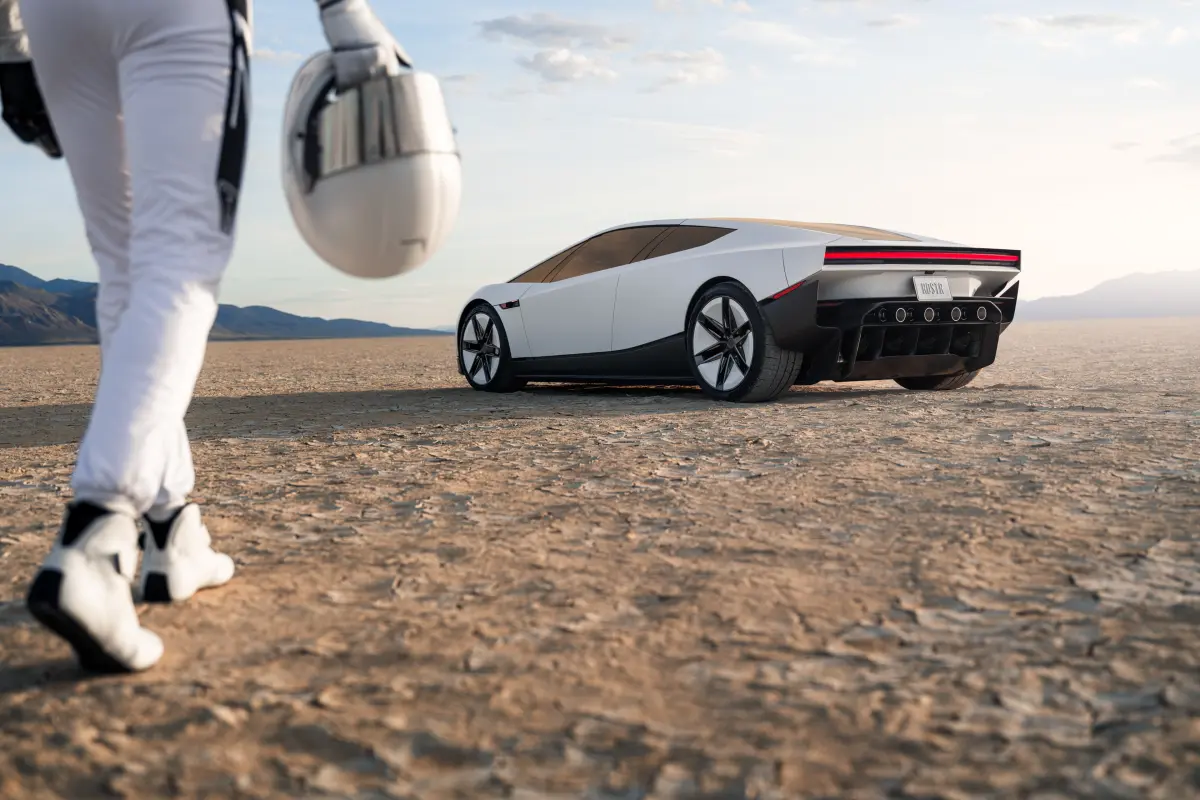


The Tesla Flying Roadster is no longer just an Elon Musk idea buried in a product roadmap. Tesla has shown a next-generation Roadster that can briefly leave the ground, flip in the air, and land using compressed-air thrusters developed with SpaceX, though the flying capability isn’t approved for public roads and production isn’t expected until 2028.
This is not a flying car in the everyday sense. It is a high-performance electric sports car with rocket-inspired hardware that can perform short aerial maneuvers. Even so, the Tesla Flying Roadster could reshape how people think about mobility, safety, performance, and the boundary between cars and aircraft.
What the Tesla Flying Roadster Actually Does
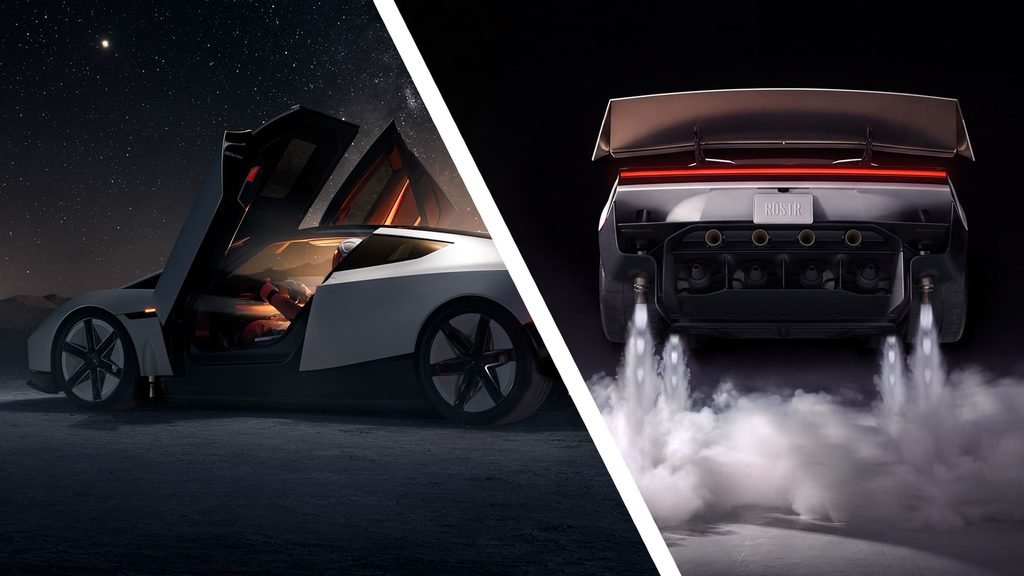
The Tesla Flying Roadster uses cold gas thrusters, high-pressure air tanks, and a multi-mode suction system. During Tesla’s demonstration, the car drove up a curved ramp, launched into the air, rotated, and landed using thrusters. It also jumped over several parked Tesla vehicles.
Tesla says the system uses ten thruster nozzles and about 600 liters of compressed air. The air is stored under extreme pressure and released through nozzles to create upward, rearward, and rotational force. Unlike a rocket, it does not burn fuel; the compressed air can be recompressed and reused.
The underbody suction system is equally important. Fans pull the car toward the road, increasing grip during acceleration and cornering. That same system helped the prototype climb a steep ramp and even travel upside down during the demonstration.
Elon Musk Flying Car Vision
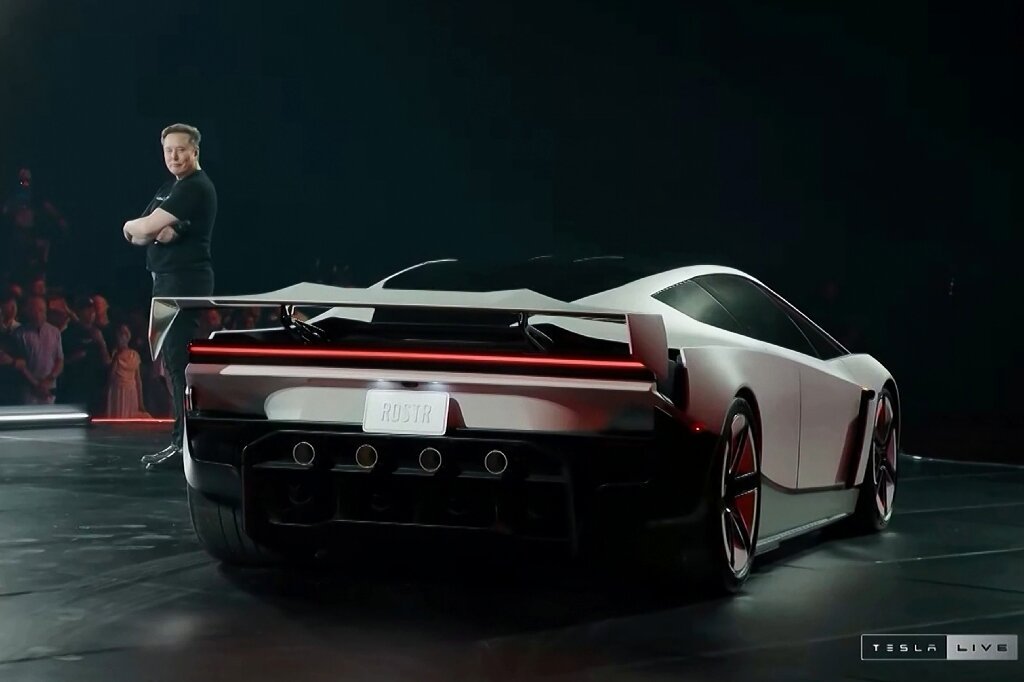
The Elon Musk flying car concept has always been about more than spectacle. Musk has suggested for years that a SpaceX package could give the Roadster short jumps, hovering ability, and acceleration beyond what normal vehicles can achieve. The new demonstration finally put hardware behind that claim.
Musk called the vehicle a collaboration between Tesla and SpaceX, and the connection is obvious. Tesla brought electric vehicle engineering, battery expertise, and automotive design. SpaceX contributed knowledge of thrusters, pressure systems, and controlled propulsion.
But the Elon Musk Flying Tesla should be understood carefully. It does not yet offer sustained flight, vertical takeoff, or the ability to replace an aircraft. Aviation experts have described the demonstrated movement as closer to controlled hopping than true flight.
Flying Roadster Features
The Flying Roadster features fall into three broad categories: road performance, thrust-assisted acceleration, and aerial maneuvering. Tesla has outlined three versions, and the flying hardware is reserved for the most extreme model.
| Version | Main Capability | Flying Hardware |
|---|---|---|
| Performance | Road ready electric sports car | Suction system, no thrusters |
| Thrust | Race focused acceleration | Rear mounted cold gas thrusters |
| Rocket | Invite only, single seat aerial version | Full perimeter thruster system |
The claimed acceleration is extraordinary. Tesla says the Roadster can reach 60 mph in less than one second, with reports citing a demonstration time of 0.81 seconds. The company also claims a top speed above 230 mph for the Rocket version.
The most important Flying Roadster features are not just speed. The combination of suction downforce, electric drive, and directional thrusters could create a new category of vehicle: one that manages grip, stability, and motion in ways conventional cars cannot.
Why It Matters for Transportation
The Tesla Flying Roadster car may not solve traffic congestion tomorrow, but it could accelerate serious innovation. If thruster assisted stability becomes reliable and affordable, it could eventually support safer emergency maneuvering, better control on slippery roads, and new forms of short range aerial transport.
There is also a psychological shift. For decades, flying cars have been treated as fantasy. A working Tesla Flying Roadster demonstration makes the idea feel less like science fiction and more like an engineering problem waiting to be solved.
The bigger transportation impact may come indirectly. Technologies tested in an expensive halo vehicle often move downstream. Better energy storage, lightweight materials, autonomous stability systems, and precision propulsion could eventually influence ordinary electric cars, drones, air taxis, and emergency vehicles.
The Safety and Regulation Problem
The hardest part is not making a car jump. It is making that capability safe, legal, and practical in public spaces. Tesla itself says the Rocket version is not approved for public road use, and Musk has acknowledged that the vehicle may not be legal in every jurisdiction.
A vehicle that can lift off the ground introduces questions that normal cars never face. Who is responsible if a thruster fails? What training should a driver need? How do regulators classify a machine that behaves partly like a car and partly like an aircraft?
These barriers explain why the Tesla Flying Roadster is likely to remain a limited, specialist product for years. The road ready Performance version may arrive first, while the full flying system will probably face the slowest path to public approval.
Flying Roadster Price and Availability
Tesla has not announced a final Flying Roadster price. However, reservation requirements offer a clue about how exclusive the vehicle will be. The Performance model requires a 50,000 dollar deposit, while the Thrust version requires a 250,000 dollar deposit.
The invite only Rocket version, which includes the full flight system, has no public price. Industry reporting suggests the Roadster could cost hundreds of thousands of dollars when it eventually reaches customers.
Production is expected to begin in 2028, although Tesla has delayed the Roadster repeatedly since first previewing a next generation version in 2017. Buyers should treat the timeline as ambitious rather than guaranteed.
What Buyers Should Watch
Anyone considering a Tesla Flying Roadster should separate marketing from ownership reality. The first question is not whether the car can fly, but where the owner will legally be allowed to use that ability.
The second question is practicality. Compressed air systems, thrusters, specialized safety equipment, and low-volume production will make maintenance complex. The Flying Roadster price will likely reflect not only performance but also the cost of supporting an entirely new type of vehicle.
For most drivers, the Tesla Flying Roadster will remain an object of fascination rather than a daily commuter. For the industry, however, it may become a proving ground for technologies that eventually make transportation faster, safer, and more flexible.