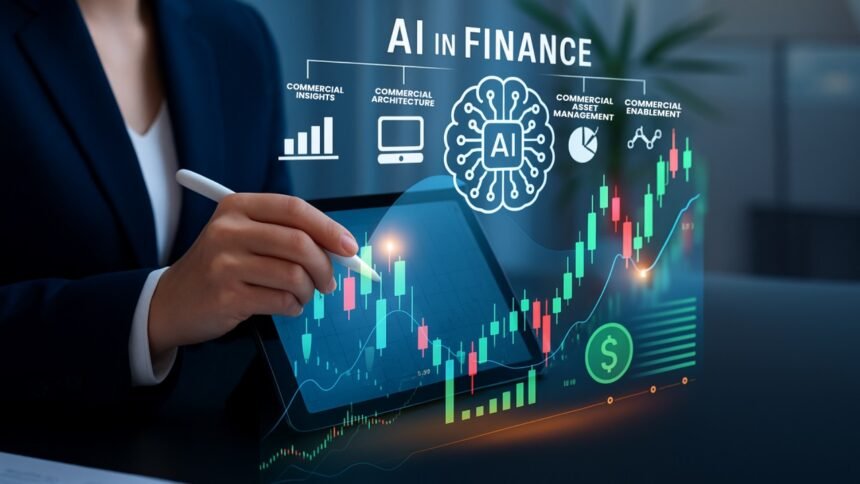

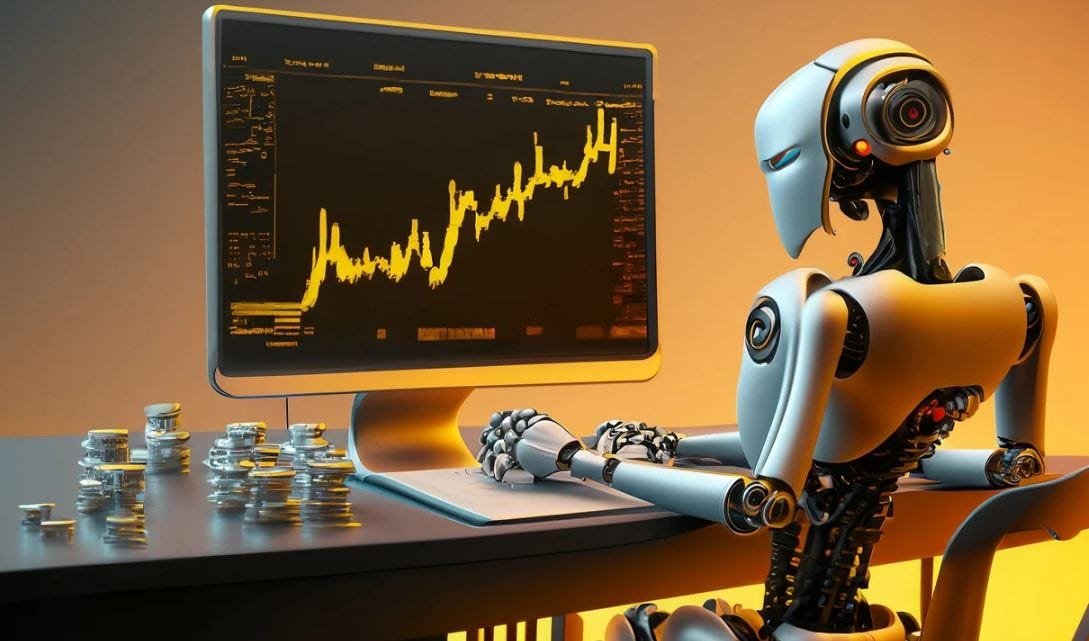


I have spent a good part of this year watching two very different companies chase the same idea. Coinbase built its name on crypto exchange trading. Kalshi built its name on regulated prediction markets. Yet both are now racing to rebuild their AI trading infrastructure from the ground up, moving artificial intelligence out of the help desk and straight into the trading floor. What struck me most while researching this shift is how quietly it happened. One year ago, AI was answering support tickets. The next year, it was executing trades, writing investment recommendations, and moving real client capital.
That jump is the story of this article. I want to walk through what AI trading infrastructure actually looks like today, why Coinbase and Kalshi are betting so heavily on it, and why regulators are starting to ask harder questions about who is really in control when an algorithm places a trade.
What AI Trading Infrastructure Actually Means
When people hear the phrase AI trading infrastructure, many still picture a simple chatbot that answers questions about account balances. That picture is outdated. Modern AI trading infrastructure covers the full stack that a brokerage runs on, from account access and order routing to portfolio recommendations and even autonomous execution. It includes the software that decides which trade to place, the systems that verify compliance in real time, and the agents that can act on a user’s behalf without a human clicking confirm.
In practical terms, AI trading infrastructure now touches almost every part of the trading lifecycle. It touches onboarding, where AI screens new accounts. It touches research, where AI models scan news and data to generate trade ideas. It touches execution, where AI agents place and manage orders. And it touches oversight, where AI is supposed to flag unusual activity before it becomes a real problem.
Coinbase Is Rebuilding Its Trading Floor Around AI
Coinbase gives us the clearest example of how far this shift has gone. The company rolled out Coinbase Advisor, an AI-powered investment advisory tool that is registered with the SEC and gives users direct recommendations on strategies such as tax loss harvesting and multi-asset event trading. That registration matters. It means Coinbase is not treating this as an experimental feature tucked away in a menu. It is presenting AI-generated advice as a real financial service with real regulatory accountability attached to it.
Alongside Coinbase Advisor, the company launched Coinbase for Agents, a system that lets outside AI agents, including ChatGPT and Claude, connect directly to a user’s account and carry out crypto transactions on their behalf. Instead of a person logging in and manually placing an order, an AI agent can now interpret an instruction and complete the transaction itself. This is a meaningful change to AI trading infrastructure because it removes a human click from the middle of the process.
Coinbase has also opened its platform to AI agents that can purchase data and run more advanced trading strategies autonomously. It has built payment rails so that both humans and machines can move money through the exchange. Reports suggest the company already runs a large number of AI agents internally to handle operational work, and leadership has talked openly about shifting a majority of its AI workloads to lower-cost, open-source models over the next year or two.
All of these points lead to one conclusion. Coinbase is not adding AI as a feature. It is treating AI trading infrastructure as the foundation of what it wants to become, a single platform that blends banking, brokerage, and crypto wallet functions into one system.
Kalshi and the Rise of AI-Driven Prediction Markets
Kalshi tells a different but related story. As a CFTC-regulated exchange for event contracts, Kalshi built its reputation on letting people trade on the outcome of real-world events, from elections to economic data to sports results. What is changing now is the infrastructure behind those trades. Kalshi has been developing a professional-grade trading terminal aimed at high-volume traders, a product that insiders have compared to the kind of data-heavy platform that Wall Street traders rely on for equities and derivatives.
This is a strong signal about where AI trading infrastructure is heading across the prediction market space. As more capital and more automated trading strategies flow into these markets, platforms need infrastructure that can process massive amounts of data, price contracts accurately, and support automated or semi-automated trading at speed. Kalshi’s push into a richer data terminal, alongside its rapid growth in daily trading volume, shows that prediction markets are no longer a niche side bet. They are becoming another front where AI trading infrastructure will decide who wins market share.
From Customer Support Chatbots to Core Execution Systems
I think the most important part of this shift is the path it took. AI in finance started in the lowest risk place possible, customer support. A chatbot answering a question about a delayed deposit carries very little downside if it gets something wrong. Today, that same underlying technology sits much closer to the center of the business. AI trading infrastructure now includes systems that generate trade recommendations, screen for risk, and in some cases execute orders directly.
This progression did not happen by accident. Once a company proves that AI can handle simple, low-stakes interactions reliably, it becomes tempting to extend that trust to higher-stakes tasks. The problem is that customer support and trade execution are not in the same category of risk. A wrong answer about an account balance is embarrassing. A wrong trade executed with real capital is a financial loss that cannot always be undone. That is the core tension sitting underneath the current wave of AI trading infrastructure investment.
Why Regulators Are Circling AI Trading Infrastructure
Regulators have not been quiet about this shift, and for good reason. Coinbase Advisor operates as an SEC-registered investment adviser specifically because the SEC wants a legal entity accountable for the advice an AI system generates. That registration is a strong hint about how seriously regulators are treating AI trading infrastructure. If a model gives bad advice or executes a flawed trade, someone has to answer for it.
Kalshi faces a different but equally serious set of regulatory pressures. It has been defending lawsuits in multiple states over whether its event contracts count as sports betting rather than regulated derivatives trading, and it has already had to place restrictions on political candidates trading on its own platform after concerns about insider activity. These fights are not directly about AI, but they show how closely regulators are watching every part of these platforms, including the infrastructure that decides how contracts are priced and traded.
The broader concern from regulators centers on a few recurring questions. Who is responsible when an AI trading infrastructure system makes an error? How much transparency should firms provide about how their models reach a trading decision? And what happens when AI agents from multiple companies interact with each other inside the same market, executing trades without any single human overseeing the full chain of events? None of these questions has a settled answer yet, which is exactly why regulatory scrutiny of AI trading infrastructure is intensifying rather than fading.
Can We Trust Algorithms With Real Capital
This is the question I keep coming back to. Trusting an algorithm to answer a support ticket is one thing. Trusting it to manage a retirement account or execute a trade with borrowed money is another. Modern AI trading infrastructure has clearly gotten more capable, but capability and reliability are not the same thing.
There are real reasons to be cautious. AI models can misread context, especially during fast-moving or unusual market conditions that do not resemble the data they were trained on. Autonomous agents that act on real accounts introduce new failure points, from technical bugs to security gaps that a human might have caught. And when a company builds recurring revenue on higher AI adoption, there is a natural incentive to encourage more automated trading, even if it is not always in the best interest of the individual investor.
At the same time, there are honest reasons for optimism. AI trading infrastructure can process far more information than a person ever could, spot patterns across markets in real time, and remove some of the emotional decision-making that leads investors astray in volatile moments.
SEC registration and CFTC oversight, even if imperfect, at least create a paper trail and a legal responsibility that did not exist a few years ago. The honest answer is that trust in AI trading infrastructure should be earned gradually, through a track record of transparency and accountability, not assumed simply because the technology sounds advanced.
What This Means for Everyday Investors
If you use Coinbase, Kalshi, or any platform leaning into AI trading infrastructure, it is worth understanding what is actually happening behind the interface. Ask whether a recommendation came from a registered investment adviser or an experimental tool. Check whether you are giving an AI agent full trading authority or only limited permissions. And pay attention to how a platform describes its own risk controls, since the details matter far more than the marketing language around AI trading infrastructure.
I also think it is fair to treat this moment with a mix of curiosity and patience. The technology is moving quickly, but track records take time to build. A platform that has only run its AI trading infrastructure through a calm market has not really been tested yet. The real proof will come during a period of stress, when volatility is high and automated systems face decisions that do not follow a clean pattern.
The Road Ahead for AI Trading Infrastructure
Coinbase and Kalshi are not the only companies pushing in this direction, but they are two of the clearest examples of how fast AI trading infrastructure is moving from a support function to a core part of the trading floor. Over the next year or two, I expect more brokerages to follow a similar path, combining AI-driven advice, agent-based execution, and heavier regulatory registration all at once.
The companies that get this right will likely be the ones that treat AI trading infrastructure as a responsibility rather than just a growth lever, building in transparency and human oversight even as they automate more of the process. The companies that treat it purely as a competitive race risk running into the exact regulatory and trust problems that are already surfacing today.
I covered this topic for Paradox Finance because it sits at a genuinely important intersection of finance and artificial intelligence, one that will affect how millions of people invest their money in the coming years. AI trading infrastructure is not a passing trend. It is becoming the backbone of how modern brokerages operate, and understanding it now will help investors make better decisions as the technology keeps evolving.
Note on this article: figures such as trading volumes, valuations, and regulatory case counts are based on recent public reporting and can change quickly as this space evolves. Readers should verify current numbers directly with Coinbase, Kalshi, the SEC, and the CFTC before making investment decisions.