



Article Highlights
- The Bank of England is reviewing whether current rules can properly manage agentic AI in finance across payments, trading, and cybersecurity.
- Deputy Governor Sarah Breeden admits existing frameworks were not built for AI agents that act without constant human instruction.
- A 2026 Cambridge survey found that more than half of finance firms are already using agentic AI in some form.
- Regulators are weighing new tools, such as market-wide kill switches and enhanced recovery plans between banks.
- The shift marks a change in tone from the Bank’s earlier position that existing rules were already sufficient.
I have spent a good amount of time following how regulators talk about new technology, and honestly, it is rare to see a central bank change its position this openly. That is exactly what happened when the Bank of England admitted that its current rulebook may not be enough to handle agentic AI in finance. For years, the message from the Bank was fairly steady.
Existing rules were said to be sufficient to manage AI-related risks, no matter how the technology evolved. That message has now shifted, and the reason is simple. Agentic AI in finance is no longer a future concept. It is already running in trading desks, payment systems, and back-office operations across the industry.
What Prompted This Review
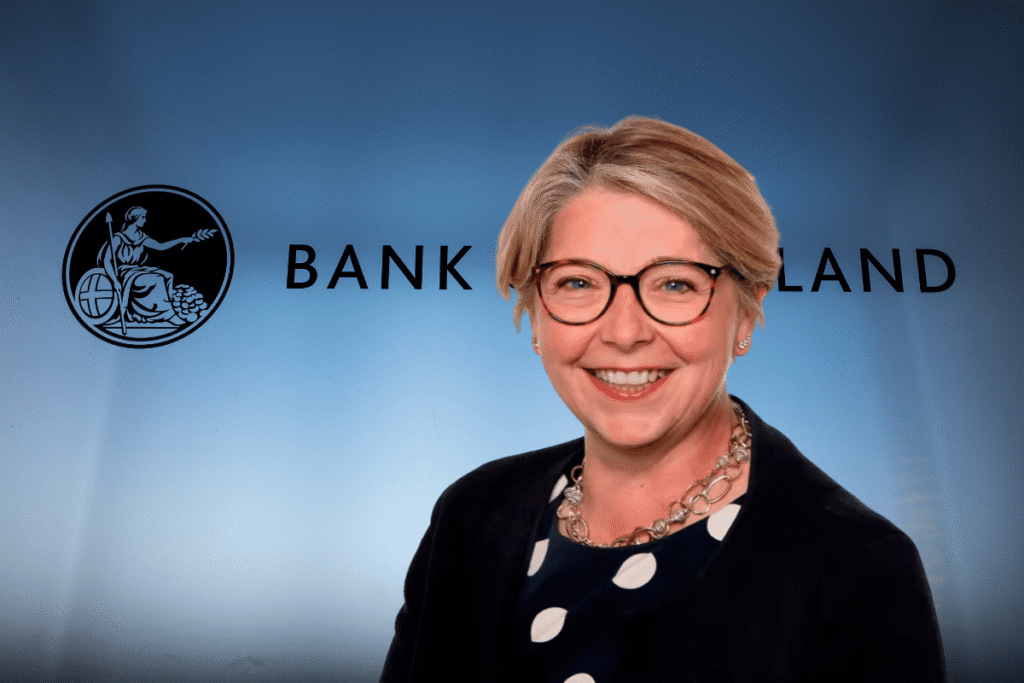
The review was announced by Deputy Governor Sarah Breeden while speaking at the European Central Bank Forum in Sintra, Portugal. Her comments were direct and left little room for interpretation. She explained that current regulatory frameworks were designed with human decision makers in mind, people who read a rule, think through a situation, and then act. Agentic AI in finance does not work that way. These systems can chain together several actions on their own, moving from data analysis to decision making to execution without a human checking every step along the way.
Breeden was clear that expecting a human to review every single action taken by an AI agent is not realistic anymore. That statement alone signals how much the pace of adoption has outrun the pace of regulation. It is one thing to say new technology needs watching. It is another thing entirely for a major central bank to say its own rulebook may be structurally behind the technology it oversees.
How Widely Is Agentic AI Already Used
One number stood out to me while reading through the details of this story. A 2026 report from the Cambridge Centre for Alternative Finance found that eighty-one percent of surveyed financial firms are using Artificial Intelligence at some level, and fifty-two percent are already actively using agentic AI. That is more than half the industry running systems that can set goals and take actions with limited human involvement.
Most of this current use is still focused on lower-risk internal work. Firms are applying agentic AI in finance to process automation, data visualization, software engineering support, and knowledge management. Trading-related use is still mostly limited to lower-risk operational tasks rather than full autonomous decision-making on live markets. That said, the direction of travel is obvious. As firms grow more comfortable with the technology, its role in higher-stakes areas like trading and payments is likely to expand.
Why Trading Risk Is a Central Concern
The part of this story that deserves the most attention is trading. Breeden warned that if multiple AI agents respond in similar ways to the same market signals, their combined behavior could amplify volatility during periods of stress. This is sometimes described as herding behavior among trading agents. Unlike older automated trading tools, which follow fixed rules set by humans, agentic AI in finance can pursue broader objectives and adjust its own approach. If several agents drift toward the same reaction at the same time, the effect on markets could be far larger and faster than anything traditional automated trading has produced.
This is why the Bank of England is exploring the idea of market-wide circuit breakers, sometimes called kill switches, that could pause AI-driven trading activity if a fault or unusual pattern emerges. Nothing here has been confirmed as policy yet. Breeden described these as options under consideration rather than final decisions. Still, the fact that a kill switch is even being discussed publicly tells you how seriously this risk is being treated.
Cyber Resilience Is Another Major Focus
Cybersecurity came up repeatedly in Breeden’s remarks, and for good reason. She described cyber resilience as one of the Bank’s closest financial stability concerns tied to agentic AI in finance.
According to her comments, AI capability in this space has gone through what she called a step change, meaning the tools available to both attackers and defenders have improved sharply in a short period.
The upside is that AI tools can also strengthen cyber defenses when used properly by security teams. The concern is that supervisors now need to look at risk across the entire financial system rather than just within individual firms. A cyber incident tied to agentic AI in finance would not necessarily stay contained to one bank. Shared digital infrastructure means a single failure could ripple across several institutions at once, which is exactly the kind of scenario the Bank wants to plan for before it happens rather than after.
What Recovery Planning Might Look Like
One of the more practical ideas raised is something called enhanced recovery. This would allow one bank to take over another bank’s basic functions during an outage or a serious disruption. Other options being discussed include arrangements that let critical services keep running even if a firm’s core systems are compromised, along with the question of whether major firms should maintain separate failover systems.
The IMF has also flagged AI-related cyber risk as a financial stability issue, warning that attacks can scale quickly and spread across sectors that share infrastructure. Breeden echoed a similar concern, suggesting that authorities should stress test the impact of simultaneous disruption across several firms rather than only planning for isolated outages. This is a meaningful shift in how recovery planning is approached, moving away from single-firm thinking toward system-wide preparation.
Global Regulators Are Watching the Same Trend
The Bank of England is not acting alone here. The Financial Stability Board released a consultation in June that set out twelve proposed practices for responsible AI adoption by financial institutions. These practices cover governance across the organization, risk management through the full AI lifecycle, and third-party or ICT-related risks tied to AI systems. The FSB has been clear that these practices are not meant to become a binding global standard, but they do show that international regulators are thinking along the same lines as the Bank of England.
This kind of coordinated attention matters because agentic AI in finance does not respect borders. A firm operating across multiple countries needs consistent expectations, not a patchwork of rules that vary by region. Whether that consistency actually happens remains to be seen, but the early signs suggest regulators are at least talking to each other about it.
What This Means for Financial Firms
If you work in financial services, or if you cover this industry the way we do at Paradox Finance, the message from this review is fairly practical. Firms deploying agentic AI in finance should expect closer scrutiny going forward. That includes stronger governance structures, clearer accountability when an AI agent makes a decision that affects customers or markets, and better logging of what these systems actually do step by step.
None of the ideas mentioned by Breeden are locked in as final rules yet. The kill switch concept, the enhanced recovery plans, and the stronger governance expectations are all still under review. But the direction is clear enough that firms should not wait for final rules before starting to prepare. Building in human oversight at key decision points, testing systems under stress scenarios, and documenting how agentic AI in finance is actually being used within the business are all reasonable steps to take now rather than later.
My Personal Opinion About Agentic AI in Finance

What stands out most to me about this story is the honesty in Breeden’s tone. Regulators do not often admit that their existing frameworks are falling behind. The fact that the Bank of England is willing to say this openly shows how quickly agentic AI in finance has moved from an experimental idea to a real operational presence across payments, trading, and cybersecurity. The rules that come out of this review will likely shape how the entire industry approaches autonomous systems for years to come, and it is worth paying close attention to how this develops over the coming months.