

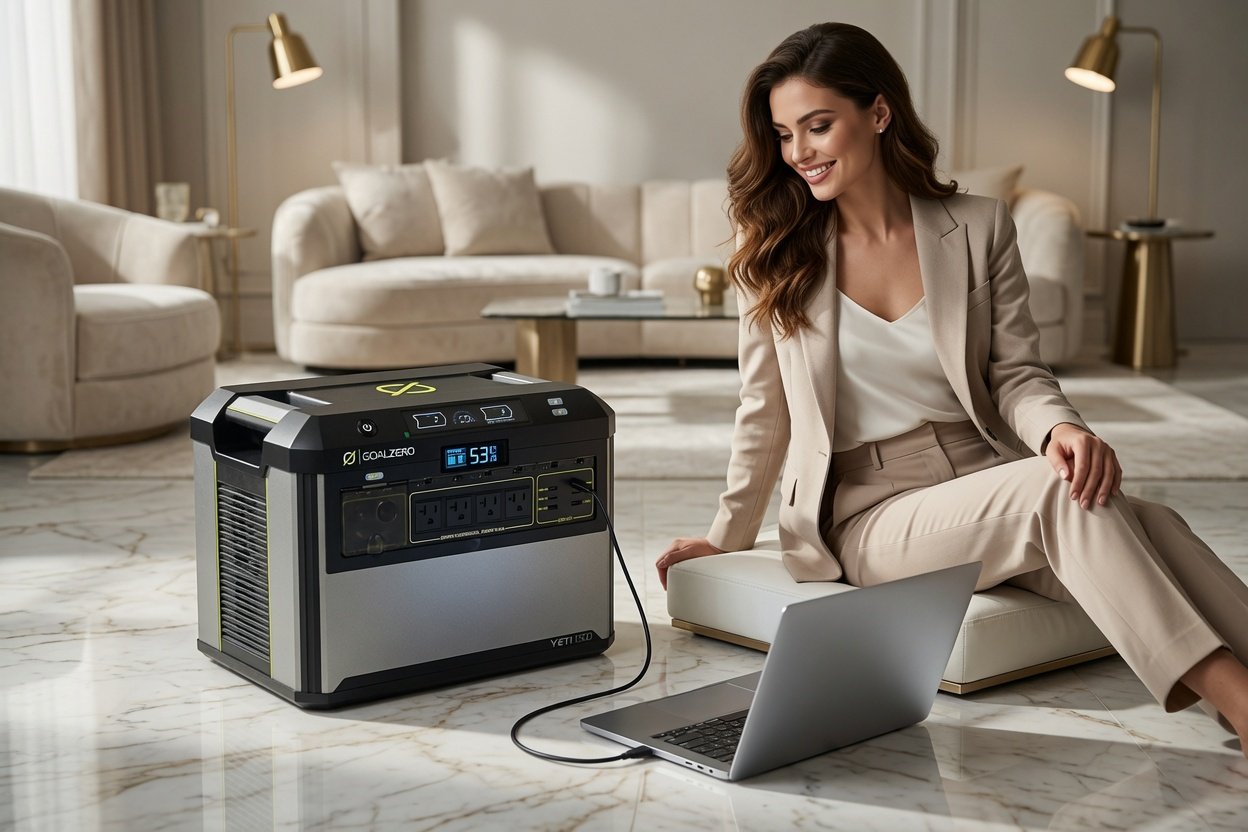


Article Highlights
- The Goal Zero Yeti 1500 kept my home office running through a full eight-hour workday without a single hiccup.
- Its uninterruptible power supply feature switched over in about fifteen milliseconds, so my computer never even blinked during an outage.
- Charging speed surprised me the most, since it went from ten percent to nearly full in just over an hour on a wall outlet.
- The build quality feels rugged enough for outdoor use, but the unit still fits neatly under my desk.
- As far as portable power stations go, this one strikes a rare balance between raw capacity and everyday usability.
My First Impression Of The Goal Zero Yeti 1500
I did not expect a portable power station to change how I think about working from home, but that is exactly what happened once I started using the Goal Zero Yeti 1500. I live in an area where storms roll through often enough that losing power for a few hours is more of a routine event than a rare emergency. Before I brought this portable power station into my setup, a blackout meant closing my laptop and waiting it out. Now it barely interrupts my day.
The first thing I noticed when I unboxed it was how solid it felt. It has an aluminum body with rubber bumpers on the corners, and it carries an IPX4 splash-resistant rating. That is not something I expected from a device that mostly lives on the floor next to my desk, but it gave me confidence that it could survive being tossed in a truck bed or left out during light rain if I ever needed to take it camping or to a job site.
Goal Zero Yeti 1500 Size And Top Features
| Description | Features / Specs |
|---|---|
| Dimensions: | 15.7 inches by 11.4 inches by 12.02 inches |
| Weight: | 23.92KG |
| Capacity: | 1,505 Wh |
| Output: | 2,000 W continuous/3,600 W surge |
| Outlets: | 4 AC 20-amp, 2 USB-A, 4 USB-C, HPP, car outlet, and 2 proprietary ports |
| Charging: | AC, car, solar |
Why I Decided To Test A Portable Power Station For My Workday
My work depends on a stable internet connection, a laptop, a monitor, and a small desk lamp. None of that is especially power hungry, but even a short outage used to throw off my whole schedule. I looked into a few options before landing on the Goal Zero Yeti 1500, and what pushed me toward it was the way it is built specifically to act as a seamless backup rather than just a large battery you plug things into after the fact.
Most portable power stations ask you to notice the outage first and then scramble to connect your gear. This one sits between the wall and my equipment at all times, acting like a silent intermediary. When the power drops, it takes over instantly. I only really trust that claim once I tested it myself, and it held up every time.
Real Performance During A Full Workday
I ran a simple test to see if the Goal Zero Yeti 1500 could genuinely support a full workday. I plugged in my laptop, a monitor, a small router, a desk lamp, and a phone charger, then simulated an outage in the middle of the morning. The unit kicked in without dropping my video call, and I kept working normally for the rest of the day.
By evening, the battery still had a comfortable amount of charge left, which told me this portable power station has more headroom than I needed for a single day of light office work. If your setup includes heavier equipment like a small printer or a space heater, you will burn through capacity faster, but for typical remote work tasks, this unit has plenty of reserve.
The battery capacity sits around 1,505 watt hours, and Goal Zero rates it for up to 2,000 running watts with a surge capacity of 3,600 watts. In practical terms, that means it can handle brief power spikes from things like a coffee maker or a small kitchen appliance without shutting off, which is more flexibility than I initially expected from a unit this size.
Charging Speed That Actually Matters
One detail that stood out to me is how quickly this portable power station recharges. Plugged into a standard wall outlet, it went from ten percent to about ninety-seven percent in roughly an hour and twenty minutes. For a battery of this size, that is fast enough that I never felt like I had to plan my day around waiting for it to top off.
I also appreciated that Goal Zero rates the Yeti 1500 for solar charging input up to 900 watts, which is a meaningful amount if you already have solar panels or are considering adding them later. I did not have a large enough panel setup on hand to test that side of things fully, so I want to flag that as something worth confirming with your own solar equipment rather than taking my word for it.
How It Compares To Other Portable Power Stations
I have looked at a handful of other portable power stations over the past year, and most fall into one of two camps. Either they are compact and convenient but too small to run a home office for long, or they are large enough for whole home backup but too heavy and expensive to make sense for someone who wants reliable desk power.
The Goal Zero Yeti 1500 lands closer to the middle. It weighs around 40 to 46 pounds, depending on the exact configuration, which is heavy enough that you will not want to carry it far, but light enough to move between rooms or load into a car without much trouble. When I compare it against some of the best portable power stations I have tried or researched, this one earns its place by being genuinely dependable rather than just impressively specced on paper.
If you are shopping around, it helps to think about what you actually need power for. Someone who only wants to keep a phone and a laptop charged during short outages might be better served by a smaller and cheaper portable power station. But if you want a unit that can support a full home office setup and still have power left over, the Yeti 1500 justifies its size and price.
Everyday Usability I Did Not Expect To Care About
I did not think I would care much about the display and controls on a power station, but the Goal Zero Yeti 1500 changed my mind. The screen clearly shows remaining battery percentage, input and output wattage, and estimated runtime, which made it easy to glance over and know exactly how much buffer I had left during longer outages.
The outlets are laid out sensibly, too. There are standard AC outlets, USB A and USB C ports, and a 12-volt output, which covered everything I needed without requiring extra adapters. I never had to unplug one device to make room for another, which sounds like a small thing until you are actually relying on a portable power station to get through a workday.
Where It Could Improve
No portable power station is perfect, and I want to be honest about a few tradeoffs. The unit is not small, so if your workspace is tight, you will need to plan where it sits. It is also not silent under heavy load, since a small fan kicks in to manage heat, though I found it far quieter than a traditional generator.
Pricing is another factor worth mentioning. Portable power stations in this capacity range are an investment, and exact pricing can shift depending on retailer promotions and bundle options, so I would recommend checking current listings directly before making a decision rather than relying on older price references.
Personal Opinion On The Goal Zero Yeti 1500
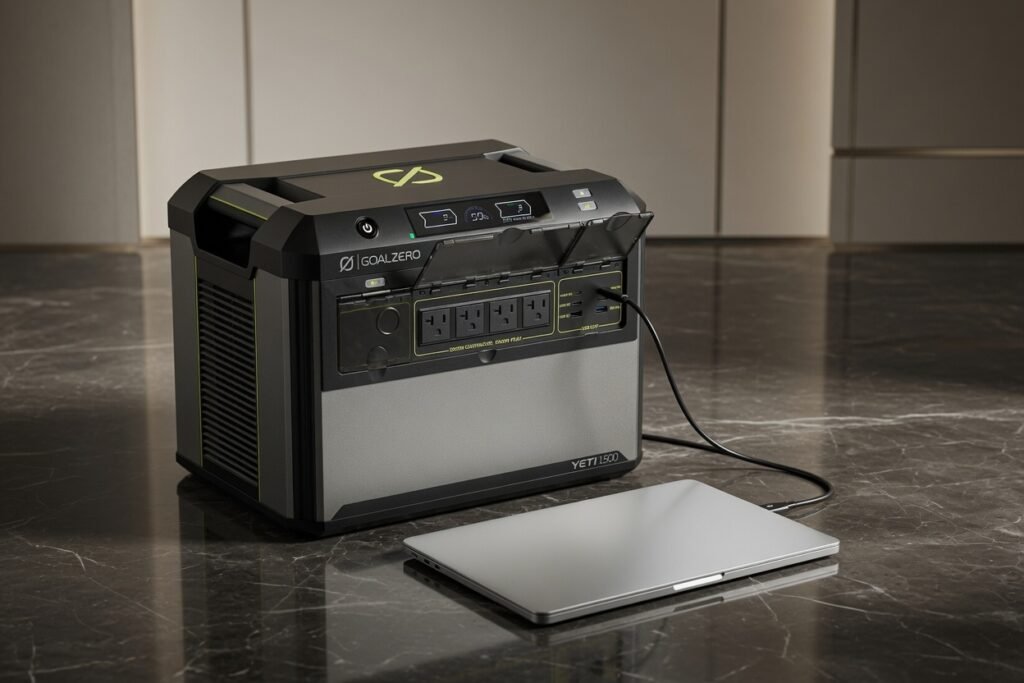
After weeks of using it as my daily backup, the Goal Zero Yeti 1500 earned a permanent spot under my desk. It handled everything I threw at it during real workdays, recovered quickly between charges, and gave me one less thing to worry about when storms roll through. For anyone comparing portable power stations for home office use, this one deserves serious consideration, and it is the kind of practical gear I would happily recommend to readers of Paradox Spotlight who want dependable backup power without overcomplicating their setup.
If your goal is uninterrupted work during outages rather than just emergency lighting, a portable power station like this one changes how you experience a blackout. Instead of scrambling, you barely notice it happened.