


The Tesla Flying Roadster is real as a demonstrated concept, but it is not a practical flying car you can buy and use on public roads today. Tesla showed a Roadster prototype making brief, controlled airborne moves using SpaceX-developed cold gas thrusters, while the flight-capable version remains invite-only and is not approved for public road use.
Why Everyone Is Talking About Tesla Flying Roadster
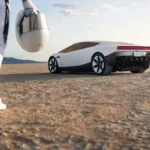
The Tesla Flying Roadster has captured global attention because it turns a decade-old Elon Musk promise into a visible demonstration. At a SpaceX test site in McGregor, Texas, the second-generation Roadster launched off a ramp, hovered briefly, flipped in the air, and landed using compressed air thrusters.
The spectacle matters because it came from Tesla and SpaceX, two companies led by Elon Musk, rather than from a small aviation startup. When Musk said that flying cars are real, the claim was not simply about science fiction. It referred to a car that can leave the ground for short bursts using rocket-inspired propulsion.
For most people, the excitement is emotional. A car that can jump, rotate, and land softly feels like the future arriving in a familiar shape. But the important question is not whether the Tesla Flying Roadster can fly at all. It can, briefly. The real question is whether it can fly safely, legally, affordably, and repeatedly in everyday conditions.
What Is the Tesla Flying Roadster?
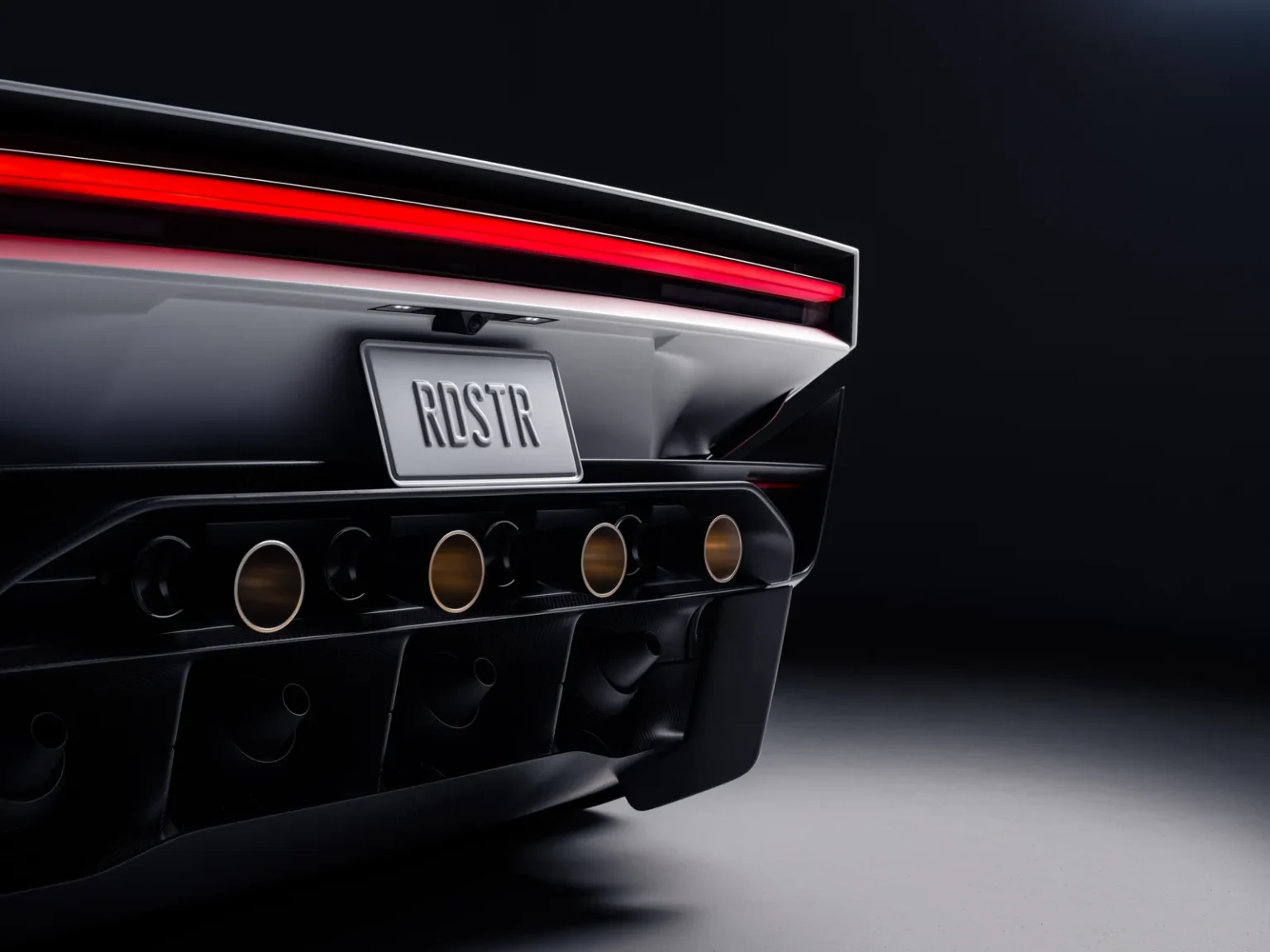
The Tesla Flying Roadster is the flight-capable version of Tesla’s redesigned Roadster, developed with input from SpaceX. It uses a multi-mode suction system to press the car toward the road and a set of cold gas thrusters to lift, stabilize, and rotate the vehicle during short aerial maneuvers.
This is not a helicopter, a passenger drone, or a conventional aircraft. Tesla says the car carries about 600 liters of compressed air, roughly 250 kilograms of air, feeding ten thruster nozzles. That system can create powerful bursts of thrust, but it is designed for short demonstrations and controlled stunts rather than sustained travel.
The demonstration showed the Roadster accelerating off a curved ramp, becoming airborne, performing a midair flip, and landing with assistance from thrusters. That is an extraordinary engineering achievement, but it is very different from flying over traffic or traveling between cities.
Elon Musk Flying Car Claim Explained
The phrase Elon Musk Flying Car has circulated for years, but the latest Roadster gives it a more concrete meaning. Musk first suggested a SpaceX option package for the Roadster in 2018, describing small rocket thrusters that could improve acceleration, braking, cornering, and possibly allow flight.
In 2026, Tesla finally demonstrated that idea publicly. Musk said the vehicle could fly like a rocket, perform rolling flights, and carry out aerobatic maneuvers. However, he also acknowledged that success is not guaranteed, a notable admission from someone known for ambitious predictions.
So, is the Elon Musk Flying Tesla real? Yes, in the limited sense that a prototype has flown briefly. No, in the broader sense that it is not yet a certified, publicly available flying vehicle for ordinary consumers.
Flying Roadster Features
The Flying Roadster Features depend heavily on which version you mean. Tesla has positioned the Roadster as three distinct configurations rather than one universal product.
- Performance: A two-seat, road-ready electric sports car with the suction-based downforce system but no thrusters.
- Thrust: A limited, race-focused version with rear-mounted thrusters intended for extreme acceleration rather than public flight.
- Rocket: A single-seat, invite-only version with perimeter-mounted cold gas thrusters and a full flight system.
The Rocket version is the one people mean when they say Tesla Flying Roadster car. Tesla claims it can accelerate from zero to 60 mph in under one second, with some reports citing a claimed 0.81 seconds during the demonstration. It is also reported to target a top speed above 230 mph.
The most important feature, however, is the one Tesla itself emphasizes: the Rocket version is not approved for public road use. That single disclaimer separates a stunning technical demo from a usable consumer flying car.
Flying Roadster Price and Availability
Tesla has not announced a final Flying Roadster Price for the completed vehicle. What it has announced are reservation requirements, which are not the same as the purchase price.
| Version | Reservation requirement | Availability |
|---|---|---|
| Performance | $50,000 total reservation payment, including $5,000 upfront and $45,000 within ten days | Open for reservation |
| Thrust | $250,000 reservation commitment | Limited availability |
| Rocket | No public price or online reservation | Invite only |
Production is not expected to begin until 2028. Given the Roadster’s long history of delays, buyers should treat that timeline as a target rather than a guarantee.
Is This Truly Reality?
Yes, the Tesla Flying Roadster is real technology, but it is not yet real transportation. The distinction matters.
The vehicle has demonstrably used thrusters to leave the ground, rotate, and land. That proves Tesla and SpaceX can integrate compressed air propulsion into a car-shaped platform. It also validates part of Musk’s long-standing vision for an Elon Musk Flying Car.
But the flight is short, controlled, and dependent on stored compressed air. Experts point out that cold gas thrusters can provide precise control only for seconds before the gas supply is exhausted, making sustained flight impractical with the current approach.
There are also major regulatory barriers. Tesla says the Rocket package is not approved for public roads, and Musk has acknowledged that legality may vary by jurisdiction. A flying car would need to satisfy automotive safety rules, aviation rules, air traffic management, insurance requirements, pilot or operator training standards, and local airspace restrictions.
What It Means for Everyday Drivers
For everyday drivers, the Tesla Flying Roadster should be viewed as a halo project rather than a near-term solution to traffic. It will not let commuters rise above congestion, and it will not replace airplanes, helicopters, or emerging electric air taxis.
Its more realistic contribution may be technological. The suction system could improve high-speed stability and cornering in conventional electric performance cars. Thruster-assisted braking, acceleration, and traction control could eventually influence future Tesla vehicles, even if full flight never becomes street legal.
For now, anyone considering a reservation should be cautious. The Performance version may eventually be a remarkable road car, but the flying capability belongs to a separate, restricted, and still unpriced version.
What Next?
The Tesla Flying Roadster is neither a hoax nor a finished flying car. It is a genuine, highly advanced demonstration of short-duration flight using SpaceX-inspired cold-gas thrusters, combined with Tesla’s electric-vehicle engineering.
The reality is more nuanced than the headlines suggest. Tesla has made a car that can briefly fly. It has not yet made a flying car that ordinary people can legally drive, afford, insure, or use as daily transportation.
Until the Rocket version receives approval, becomes publicly available, and proves reliable outside controlled demonstrations, the Tesla Flying Roadster remains an extraordinary preview of what may be possible rather than a practical product you can use today.