


5 Key Highlights
- The best nebulizer machines for babies are quiet, fast, and easy to clean, which makes treatment time less stressful for both parent and child.
- A portable nebulizer machine is a smart investment for families who travel or need medication delivery on the go.
- Mesh nebulizers are generally preferred over jet nebulizers for babies because they run silently and convert medication more efficiently.
- An asthma nebulizer machine designed for pediatric use typically comes with child-sized masks and shorter treatment times.
- Always consult your pediatrician before choosing a nebulizer device, especially for newborns or infants under six months.
Introduction
When my youngest was about eight months old, she developed a chest infection that made every breath sound like a struggle. Our pediatrician recommended a nebulizer, and I had no idea where to start. I spent days reading, comparing, and finally testing different machines before finding one that actually worked without sending her into a crying fit every session. That experience is exactly why I put together this guide.
Finding the best nebulizer machine for your baby is not just about picking the most affordable option. It involves understanding how the machine works, how quiet it is, how quickly it delivers medication, and whether it will hold up session after session. Whether your child has been diagnosed with asthma, bronchitis, RSV, or recurring respiratory infections, investing in the right nebulizer machine can genuinely make daily life easier.
This article walks you through seven of the best nebulizer machines available right now, along with practical guidance on what to look for before you buy.
What Is a Nebulizer Machine and Why Do Babies Need One
A nebulizer machine is a medical device that converts liquid medication into a fine mist that the patient inhales directly into the lungs. For babies and toddlers who cannot use traditional inhalers, a nebulizer machine is often the only practical way to deliver respiratory medication effectively.
Conditions like asthma, croup, bronchiolitis, and wheezing frequently require inhaled treatments. An asthma nebulizer machine allows the medication to bypass the upper airways and reach deep into the lung tissue where it is needed most. For infants, this is especially important because their airways are so small and any inflammation can quickly become serious.
The best nebulizer machines for pediatric use are designed to be gentle, fast, and easy to use with a face mask rather than a mouthpiece.
What to Look For in the Best Nebulizer Machine for Babies
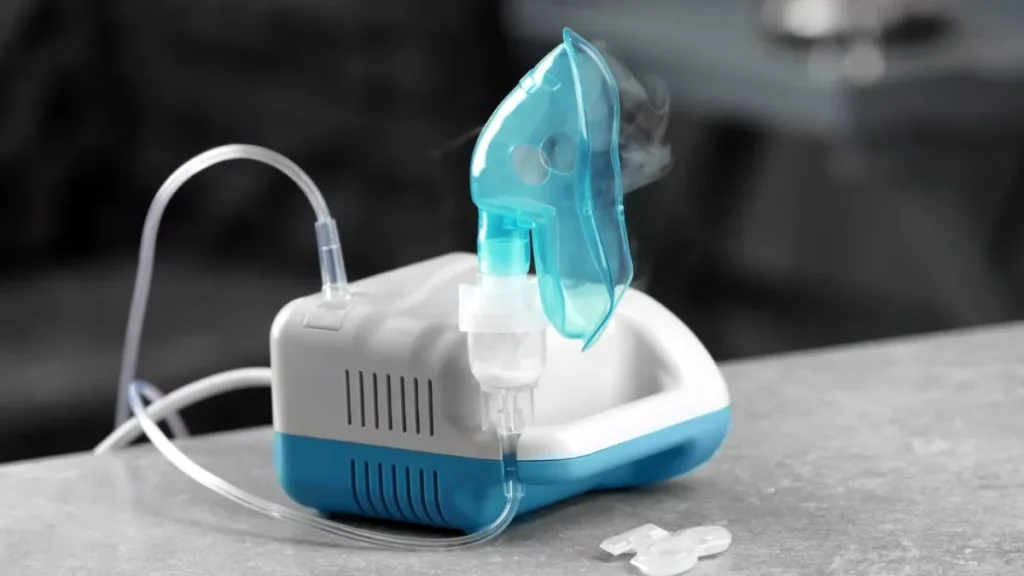
Before I get into my top picks, here are the features that matter most when you are choosing a nebulizer machine for an infant or toddler.
Noise Level: Babies startle easily. A machine that sounds like a lawnmower will make every treatment a battle. The best nebulizer machines for babies run quietly, ideally under 45 decibels.
Treatment Time: Shorter is better. Babies have short attention spans and low tolerance for sitting still. Look for a nebulizer machine that delivers a full dose in five minutes or less.
Particle Size: Finer particles reach deeper into the lungs. For pediatric respiratory conditions, a particle size between 1 and 5 microns is generally considered ideal.
Mask Fit: A well-fitting pediatric mask is non-negotiable. Poor mask fit means wasted medication and frustrated babies.
Ease of Cleaning: A nebulizer machine that is hard to clean becomes a breeding ground for bacteria. Choose one with minimal parts that can be disassembled and washed easily.
Portability: A portable nebulizer machine gives you the flexibility to use it at home, at the grandparents’ house, or while traveling. For families on the move, this is a real quality-of-life feature.
Top 7 Nebulizer Machines for Babies Every Parent Should Consider
1. Omron MicroAir NE-U100
The Omron MicroAir is consistently mentioned as one of the best nebulizer machines for pediatric use, and in my experience, the praise is well deserved. It uses vibrating mesh technology, which means it operates almost silently. My daughter barely noticed it was on after the first couple of sessions.
This portable nebulizer machine is compact enough to slip into a diaper bag and runs on batteries, making it ideal for travel or unexpected trips to family. Treatment times are typically around five to seven minutes, depending on the medication. The mesh technology also produces very fine particles, which are important when medicating infant lungs.
The main downside is the price, as it sits at the higher end of the market. But if you plan to use your nebulizer machine regularly, the investment is absolutely worth it.
Best for: Frequent use, travel, noise-sensitive babies.
2. PARI TREK S Portable Compressor Nebulizer
The PARI TREK S is a jet nebulizer, not a mesh model, but it earns its place on this list because of how effectively it delivers medication. PARI is a trusted name in respiratory therapy, and pediatric pulmonologists often recommend their machines.
This best nebulizer machine pairs with PARI’s LC Sprint nebulizer cup, which is specifically designed to deliver medication efficiently even when the child is not cooperating perfectly. It runs on AC power or a car adapter, making it a flexible portable nebulizer machine for families who drive often.
Jet nebulizers are louder than mesh models, so if your baby is very noise-sensitive, this may require a distraction strategy during treatments. That said, the effectiveness of medication delivery often outweighs that inconvenience.
Best for: Medically managed respiratory conditions, parents who prefer clinician-recommended equipment.
3. Philips Respironics InnoSpire Essence
The Philips Respironics InnoSpire Essence is a reliable, widely available best nebulizer machine that balances performance and affordability. It uses a compressor system and comes with a pediatric mask, making it a solid out-of-the-box option for parents new to home nebulization.
One thing I appreciate about this machine is how straightforward it is to set up and clean. The medication cup has a wide opening, and all the parts are dishwasher safe. For parents who are already stretched thin, easy cleaning is not a small thing.
Treatment times run around five to ten minutes, depending on the fill volume. It is not the quietest nebulizer machine on this list, but the consistent medication delivery and durability make it a dependable choice for everyday use.
Best for: First-time buyers, budget-conscious families, everyday respiratory care.
4. Drive Medical Traveler Portable Nebulizer System
If you are looking for a portable nebulizer machine that does not break the bank, the Drive Medical Traveler is worth a close look. It is lightweight, compact, and comes with both AC and DC power options, so you can use it at home or plug it into your car during long trips.
This nebulizer machine includes adult and pediatric masks, and the medication cup holds up well through repeated cleaning cycles. The noise level is moderate, and treatment times are comparable to other jet-style machines.
What makes this one of the best nebulizer machines for budget-focused parents is that it performs reliably without the premium price tag. It may not have all the bells and whistles of higher-end models, but for occasional or short-term use, it gets the job done.
Best for: Travel-friendly use, budget-conscious families, short-term respiratory treatment.
5. Innospire Deluxe by Philips Respironics
The InnoSpire Deluxe is a step up from the standard InnoSpire Essence, and the difference is noticeable. This best nebulizer machine produces a consistent aerosol output session after session, which is important if your child requires an asthma nebulizer machine for daily or near-daily treatments.
It is designed for home use and is not as portable as some other options on this list, but its durability makes it an excellent long-term investment. Parents who have children with chronic asthma or recurrent bronchitis often find that having a robust home nebulizer machine reduces unnecessary emergency room visits.
The machine comes with a pediatric mask and a six-month warranty on the nebulizer cup. Replacement parts are widely available, which is a practical consideration for long-term ownership.
Best for: Children with chronic respiratory conditions, daily asthma treatment, and long-term home use.
6. TruNeb Portable Mesh Nebulizer
The TruNeb has gained a strong following among parents who want the benefits of mesh technology without spending as much as the Omron MicroAir. It is a USB-rechargeable portable nebulizer machine, which means you can charge it the same way you charge your phone.
This best nebulizer machine is truly handheld and quiet, making it easy to use during nap time or in a car seat. Treatment times are around seven to ten minutes, which is slightly longer than some premium mesh models but still manageable for most toddlers.
The medication cup is easy to fill and clean, and the device is small enough to hold in one hand while the other hand is occupied soothing a restless baby. For parents who are frequently on the move, the TruNeb’s portability is a major selling point.
Best for: Travel, nap-time treatments, USB-rechargeable convenience.
7. Beurer IH 50 Nebulizer
The Beurer IH 50 is a mesh nebulizer that delivers a fine aerosol mist quickly and quietly. It is one of the best nebulizer machines for parents who prioritize both speed and silence. Treatment times can be as short as four minutes, and the operation noise is almost undetectable.
This machine comes with a complete pediatric kit, including a child mask and nasal attachment, which gives you flexibility depending on what your baby tolerates best. It runs on batteries or AC power, giving it some portable nebulizer machine functionality.
Beurer is a well-established brand in Europe and is gaining recognition in other markets for its quality respiratory devices. If you are looking for the best nebulizer machine that combines performance with a thoughtful pediatric design, the IH 50 is a strong contender.
Best for: Noise-sensitive infants, fast treatment times, comprehensive pediatric accessories.
How to Use a Nebulizer Machine Safely with a Baby
Using a nebulizer machine with an infant requires patience and a bit of strategy. Here are a few tips based on personal experience and guidance from pediatric care resources.
Always wash your hands before handling the nebulizer machine or any of its parts. Fill the medication cup with the exact prescribed dose. Do not guess or estimate.
Use the pediatric mask and hold it gently but firmly over your baby’s nose and mouth. Some babies will resist at first, but distraction with a toy, a song, or a short video often helps.
Keep your baby upright or slightly reclined during treatment. This position helps the medication reach deeper into the airways. Never leave your baby unattended during a nebulizer session.
After each use, clean the nebulizer machine according to the manufacturer’s instructions. Most cups and masks can be rinsed with warm water and air-dried after each session, with a deeper clean every few days.
Mesh Nebulizer vs Jet Nebulizer: Which Is Better for Babies
This is one of the most common questions parents ask when shopping for the best nebulizer machine. Both types work, but they have meaningful differences.
A jet nebulizer machine uses compressed air to convert liquid medication into an aerosol. These machines are typically more affordable and widely available. They are also louder, which can be challenging with infants. However, many pediatric pulmonologists use and recommend jet nebulizers because they are reliable and effective as an asthma nebulizer machine.
A mesh nebulizer uses a vibrating mesh plate to create aerosol particles. These machines are quieter, more portable, and often produce finer particles. They are generally easier to use on the go and tend to have shorter treatment times. The tradeoff is a higher upfront cost and a mesh component that requires careful cleaning to avoid clogging.
For most parents, a mesh nebulizer machine is the preferred choice for a baby or toddler. But if budget is a concern, a good-quality jet nebulizer machine will still deliver effective treatment.
Wellness Expert’s Opinion
At Paradox Wellness, we believe that managing your child’s respiratory health should feel manageable, not overwhelming. The best nebulizer machine for your baby is the one that fits your child’s medical needs, your lifestyle, and your budget. Whether you choose a quiet mesh model or a reliable jet-based asthma nebulizer machine, the most important step is getting started and staying consistent with your child’s treatment plan.
My personal recommendation for most families is to start with a mid-range mesh nebulizer machine like the TruNeb or Beurer IH 50 if budget allows, or the Philips InnoSpire Essence if you want something proven and affordable. If your child has a diagnosed chronic condition, talk to your pediatrician about whether a clinical-grade best nebulizer machine like the PARI TREK S is more appropriate.
Whatever you choose, remember that consistency and proper technique matter more than the brand name. A well-used basic nebulizer machine will always outperform an expensive one used incorrectly.
Frequently Asked Questions
At what age can a baby use a nebulizer machine?
Nebulizers can be used with newborns when prescribed by a doctor. Pediatric masks are designed to fit very young infants, and a nebulizer machine is often the safest way to deliver inhaled medication to babies who cannot use inhalers.
How often should I clean the nebulizer machine?
Rinse the medication cup and mask with warm water after every use. Perform a deeper clean with a mild detergent every few days, and sterilize weekly if your baby uses the machine regularly.
Can I use a portable nebulizer machine during travel?
Yes. A portable nebulizer machine that runs on batteries or USB power is ideal for travel. Always carry extra medication and a backup power source when traveling with a nebulizer-dependent child.
Is a mesh nebulizer machine better than a jet one for babies? Mesh nebulizers are quieter and more portable, which makes them more practical for infants. However, jet nebulizers are effective and more affordable. Both are valid options when you choose the best nebulizer machine based on your child’s specific needs.
Does insurance cover a nebulizer machine?
Many health insurance plans cover a nebulizer machine when prescribed by a doctor for a diagnosed condition like asthma or bronchitis. Contact your insurance provider and ask about durable medical equipment coverage.
This article is intended for informational purposes only and does not constitute medical advice. Always consult a licensed pediatrician or pulmonologist before starting any respiratory treatment for your child.