


Article Highlights
- Retractable awnings are among the most versatile patio shades available, offering adjustable coverage with a clean, built-in look.
- Shade sails are a stylish and affordable patio sun shade option that works beautifully in modern and minimalist outdoor spaces.
- Pergola covers combine structure and function, turning any patio into a shaded, semi-permanent living area.
- Outdoor patio curtains add privacy and softness to any patio shade setup while being easy to install and replace.
- Freestanding patio umbrellas remain a popular and flexible sun shade for patio areas of all sizes.
Introduction
I never truly appreciated how much a good patio shade could change the way I use my outdoor space until one summer afternoon when I found myself retreating indoors because the sun had turned my patio into an oven. After that experience, I started researching different types of patio shades and eventually tested several of them myself. What I found surprised me. The right patio shade does not just block the sun. It transforms your entire backyard into a comfortable, stylish extension of your home.
Whether you are dealing with harsh afternoon sun, occasional rain, or want more privacy, there is a patio shade option built for your needs. The market has grown significantly over the years, and today you can find patio shades in every style, size, and material imaginable. Some are permanent installations, while others are seasonal and removable. Some cost very little while others are a real investment. What matters most is finding the one that fits your lifestyle and your home.
In this guide, I am sharing the top five patio shades I have come across, personally used, or seen transform outdoor spaces from uncomfortable to genuinely enjoyable. I will cover what makes each option great, where it works best, and what you should keep in mind before buying.
1. Retractable Awnings
If I had to recommend just one type of patio shade to a homeowner with a traditional home and a decent budget, it would be a retractable awning. I installed one on my back porch two summers ago, and it honestly changed how I use that space entirely.
Retractable awnings attach to your home’s exterior wall and extend outward over the patio area. The best models are motorized, meaning you can extend or retract the shade with the push of a button. Manual crank versions are also widely available at lower price points. What I love most about this type of patio shade is that it gives you complete control. On a sunny day, you extend it fully. On a cloudy day or when you want more natural light, you pull it back in minutes.
The fabric quality matters enormously here. I learned this the hard way after my first budget awning faded after a single season. Acrylic canvas fabrics, particularly the Sunbrella brand, hold their color for years and resist mildew. They also allow some airflow while still blocking a significant percentage of UV rays, which is exactly what you want from a patio sun shade.
Retractable awnings come in widths ranging from around 8 feet to over 20 feet, which makes them suitable for large decks and smaller patios alike. The projection, which is how far the awning extends outward from the wall, typically ranges from 8 to 14 feet. That is enough to shade a dining table, several lounge chairs, and still leave room to move around comfortably.
One important thing to consider is that retractable awnings should be retracted during heavy winds or storms. Most quality models come with a wind sensor that does this automatically, which is a feature worth paying extra for.
Cost-wise, expect to spend anywhere from $500 to $3,000 or more, depending on size, motorization, and brand. Professional installation is recommended and typically adds to that cost. Still, as a long-term patio shade investment, few options match the combination of style, function, and durability that a good retractable awning provides.
2. Shade Sails: Modern, Affordable, and Stylish
The first time I saw a shade sail installed over a patio, I thought it looked like something out of a design magazine. These triangular or rectangular fabric panels stretch between anchor points and hover overhead like elegant geometric sculptures. They are, without question, one of the most visually striking forms of patio shade available today.
Shade sails work by tensioning a piece of UV-resistant fabric between three or more fixed points. Those points can be posts set in the ground, existing structures like a fence or wall, or a combination of both. The tension keeps the sail taut and flat, giving it that distinctive floating appearance. Because they are not attached to your home, they offer much more flexibility in placement. You can shade a corner of your yard, a pool area, a play space for kids, or a traditional patio equally well.
The fabric used in shade sails is typically made from high-density polyethylene, which sounds technical but essentially means it is a durable, breathable mesh that blocks a high percentage of UV rays while still allowing air to pass through. This is a key difference from solid covers. Because the material breathes, the area underneath a shade sail stays noticeably cooler than it would under a solid roof or cover, making it one of the better patio sun shades for hot climates.
I helped a friend install a two-sail system over her backyard last spring. She chose a deep terracotta and a warm cream combination, and the result was stunning. The installation took about a half day, required some concrete for the post bases, and the total cost was under $400. For the amount of style and coverage you get, shade sails are genuinely excellent value as a sun shade for patio spaces.
The main thing to know is that shade sails do require proper tensioning to look their best and shed rain effectively. A poorly tensioned sail will sag and collect water. The angle matters too. A slight slope in the installation helps rainwater run off rather than pool. If you are planning to leave yours up through rainy seasons, pay attention to drainage when you set it up.
3. Pergola Covers: Structure and Shade Combined
A pergola on its own is a beautiful outdoor structure, but an uncovered pergola offers very little in the way of actual patio shade. Adding a cover changes everything. A covered pergola becomes a fully functional outdoor room that you can use comfortably from morning through late afternoon, even in the middle of summer.
Pergola covers come in several forms. Polycarbonate roof panels are a popular option. These solid or tinted panels sit on top of the pergola frame and shed rain completely while still allowing diffused light through. They turn your pergola into a true patio shade structure that works in almost any weather condition. I visited a neighbor’s home last year, where she had installed clear polycarbonate panels over her pergola, and the effect was beautiful. The space felt like an outdoor greenhouse, bright and airy, but completely shaded from direct sun.
Fabric pergola covers are another excellent choice. These can be fixed panels stretched across the frame, or they can be retractable slats that open and close like blinds. The retractable slat systems, sometimes called louvered pergola roofs, are particularly impressive. They allow you to dial in exactly how much light and ventilation you want at any given moment, making them one of the most customizable patio shade options on the market.
Shade cloth stretched across the top of a pergola is the most budget-friendly version of this approach. It will not shed rain, but it dramatically reduces direct sunlight and creates a cool, comfortable atmosphere underneath. Many people attach it to the top of their pergola with zip ties or grommets and swap it out seasonally.
What sets pergola covers apart from other patio shades is the sense of permanence and structure they provide. The space feels defined. It feels intentional. Guests instinctively gather there because it feels like a real room rather than just an open patch of yard. If you already have a pergola, adding a cover is one of the best upgrades you can make to your outdoor space.
4. Outdoor Patio Curtains
I will be honest. When someone first suggested outdoor curtains as a patio shade solution, I was skeptical. Curtains outdoors? It sounded like a recipe for constant laundry. But after seeing them done well, I completely changed my mind. Outdoor patio curtains are genuinely one of the most underrated patio shades available, particularly when you need both sun protection and privacy at the same time.
Outdoor curtains are made from UV-resistant and weather-resistant fabrics, typically polyester or acrylic blends, that can handle rain, sun, and wind without quickly deteriorating. They are hung from horizontal curtain rods or wire cables mounted to the edges of a pergola, patio cover, or freestanding frame. When drawn closed on the sunny side of your patio, they create a soft, diffused light effect that feels surprisingly pleasant. The harsh glare disappears, the temperature drops noticeably, and the space takes on a cozy, enclosed feel.
What makes this type of patio shade especially appealing is the design variety available. You can find outdoor curtains in sheer white for a breezy, Mediterranean feel, in navy or charcoal for a bold modern statement, or in natural tones like linen and sand that blend seamlessly with garden settings. Switching them out is simple and inexpensive, so you can update the look of your patio just by changing the curtains, which is not something you can do with a permanent patio shade structure.
The practical benefits go beyond just blocking the sun. Curtains block wind on breezy evenings, reduce noise from neighbors or street traffic, and create a genuine sense of enclosure that makes outdoor dining and entertaining feel more intimate. When I set up a curtained area around a small patio at a family gathering last summer, it became the most popular corner of the yard by far. People stayed in that spot all evening because it felt comfortable and sheltered.
For installation, the main requirement is some horizontal support to hang the rod or cable from. Many people use their pergola beams. Others install ceiling hooks or wall-mounted brackets. Some freestanding systems also include curtain rod supports built in. This patio shade solution works beautifully on Paradox Spotlight-style outdoor setups where aesthetics and function need to come together seamlessly.
5. Freestanding Patio Umbrellas: The Flexible Classic
No list of patio shades would be complete without the patio umbrella, and for good reason. It has been a backyard staple for decades, and the modern versions are far more impressive than the flimsy beach umbrella you might be picturing. A quality freestanding patio umbrella is a genuinely capable sun shade for patio areas of all sizes and configurations.
The appeal of a patio umbrella is flexibility. You can move it wherever the sun is, position it over your dining table for lunch, and then shift it to shade the lounge chairs in the afternoon. When the season ends, you can close it, cover it, and store it without any major effort. For renters, for people who move frequently, or for anyone who is not ready to commit to a permanent patio shade installation, an umbrella is the obvious starting point.
Modern patio umbrellas come in two main configurations. Center pole umbrellas are the traditional style, with a single pole running through the center of a base and the canopy opening overhead. These are the most affordable and widely available options. Cantilever umbrellas, also called offset umbrellas, have the pole positioned to the side and the canopy hanging out over the space from an arm. This design eliminates the central pole, giving you unobstructed space underneath, which is particularly useful when shading a seating area or hot tub.
Canopy materials matter just as much as with any other patio shade. Solution-dyed acrylic fabrics offer the best UV protection and color retention. Polyester is less expensive but fades faster. For the frame, aluminum is the standard choice because it is lightweight, rust-resistant, and strong enough to handle moderate wind. Avoid painted steel frames unless you live in a dry climate, as they are prone to rust at the joints over time.
Size is something people underestimate when buying a patio umbrella. A 9-foot umbrella sounds large, but actually shades a relatively small area once you account for the tilt and sun angle. For a standard 4-person dining table, a 10 to 11-foot umbrella is a better fit. For larger lounge setups, a 13-foot cantilever umbrella provides genuinely useful patio shade coverage.
For cost, entry-level patio umbrellas start around $50 to $100, mid-range quality models run $150 to $400, and premium cantilever systems from brands like Treasure Garden or Tucci can reach $800 to $1,500 or more. The investment in a better-made umbrella almost always pays off in longevity and performance.
How to Choose the Right Patio Shade for Your Space
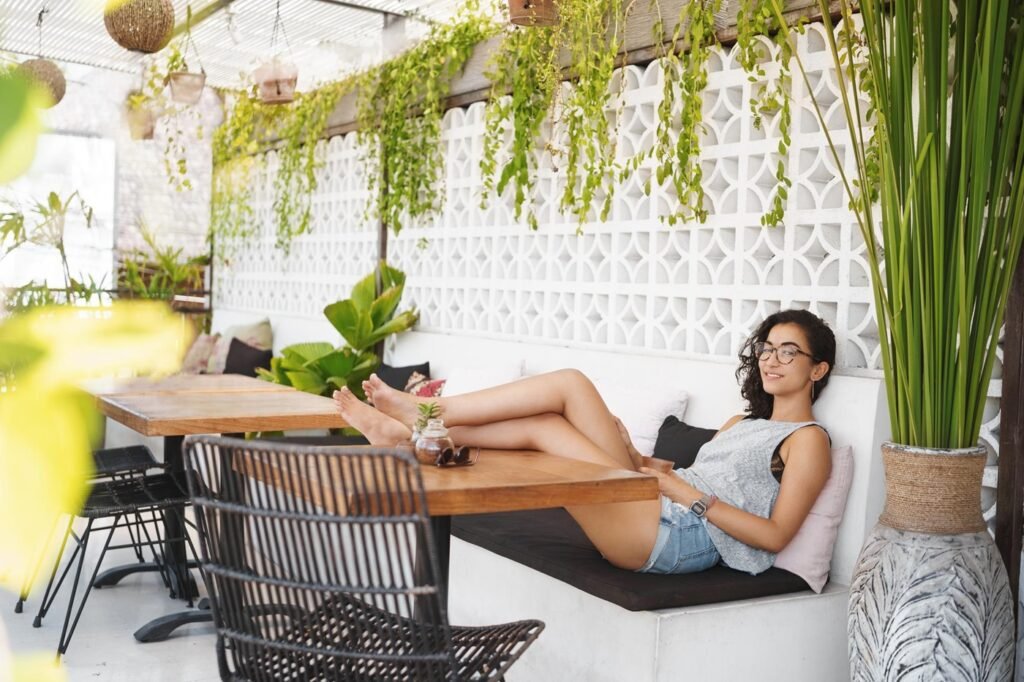
After spending time with all five of these patio shade options, I have come to believe that the right choice depends on four main factors: your budget, your commitment level, your climate, and your style.
If you want permanent, high-performance coverage and have the budget, a retractable awning or covered pergola will serve you best. If you want flexibility and ease of use, a quality patio umbrella or a set of outdoor curtains gives you the most options without locking you in. If you care most about style and want something that makes your outdoor space genuinely striking, shade sails are hard to beat for the price.
Climate plays a significant role, too. In very windy areas, shade sails and patio umbrellas need to be secured carefully or removed during storms. In rainy climates, a solid cover like polycarbonate pergola panels or a retractable awning is a better long-term patio shade investment than a mesh sail or curtains alone.
Whatever direction you go, investing in a good patio shade is one of the most effective ways to get more out of your outdoor space. It extends the hours you can comfortably be outside, reduces heat entering your home through nearby windows, and makes your yard a more enjoyable place to spend time. Once you have experienced a genuinely well-shaded patio, going without one feels like a genuine loss.
Paradox Expert’s Opinion
The five patio shades covered here represent the best options available across different budgets, styles, and installation requirements. Retractable awnings offer the ultimate in adjustable, built-in coverage. Shade sails bring modern style at an accessible price. Pergola covers create true outdoor rooms. Outdoor curtains add privacy and warmth. Patio umbrellas offer unbeatable flexibility.
The best patio shade is ultimately the one you will actually use, maintain, and enjoy. Start by thinking about how you use your outdoor space, what time of day the sun hits hardest, and what aesthetic you want to create. From there, the right choice tends to become clear fairly quickly.
Your patio deserves to be a space you love being in, not one you avoid because it is too hot or too exposed. A good patio shade makes all the difference.