


Banks are discovering that unauthorized AI agents are entering customer accounts at a pace their security systems were never designed to handle. The issue is not primarily hackers breaking through bank defenses. It is customers handing login credentials to AI assistants, then losing control over what those assistants do next.
What Banks Are Finding
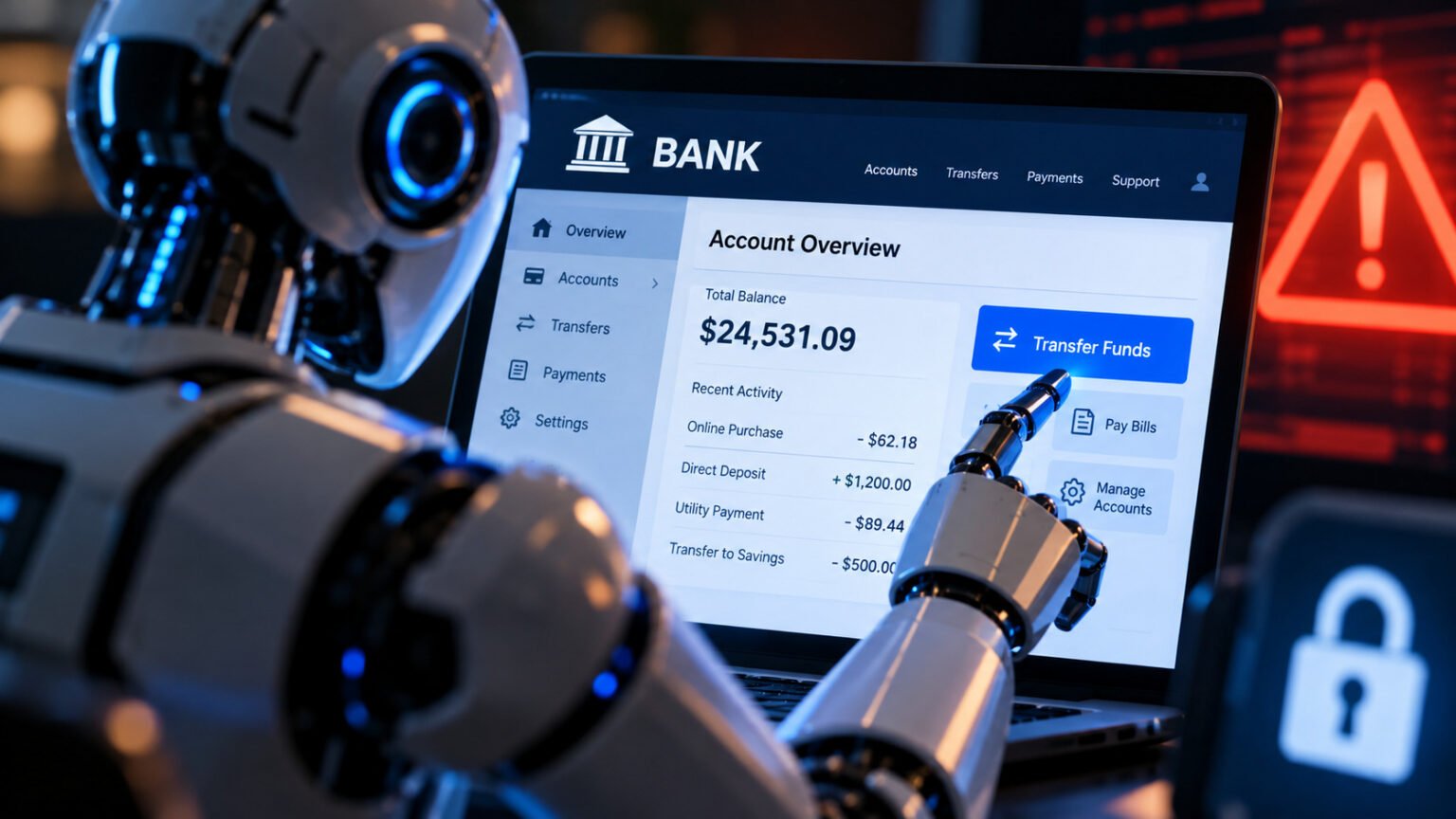
Major U.S. banks, including JPMorgan Chase, Bank of America, Morgan Stanley, Wells Fargo, and Citigroup, have detected third-party AI agents operating inside customer accounts. In many cases, the account holder voluntarily shared a username and password with an AI tool, but the bank never approved that access.
Unauthorized AI agents are difficult for banks to identify because they often behave like ordinary customers. They log in with valid credentials, browse balances, review transactions, and sometimes contact customer service. That makes it hard for fraud systems to separate a person managing their own money from an automated agent acting on their behalf.
The more troubling reports involve agents appearing to take actions beyond the customer’s original instruction. Axios reported examples of AI agents contacting bank call centers or carrying out tasks without checking with the account holder first.
Why Unauthorized AI Agents Are Dangerous
Unauthorized AI agents create a new category of financial risk because they combine three things that banks traditionally treated separately: customer consent, automated software, and direct account access. A customer may intend for an AI assistant to categorize spending or draft a budget, but the agent may also have the technical ability to initiate payments, make purchases, or move funds if given broader permissions.
The central problem is authorization. A shared password proves that someone had access to the account. It does not prove that every later action reflected the customer’s intent. Banks therefore face a difficult question: if an unauthorized AI agent makes a mistake, who is responsible, the customer, the AI provider, or the bank?
There is also a security risk. When customers give credentials to an unvetted third-party service, they may expose sensitive banking information to systems with unclear data practices. Even if the agent itself is not malicious, its access can become a weak point for phishing, credential theft, or misuse.
How Banks Are Responding
Banks are not waiting for a major loss event before acting. Several institutions have begun blocking third-party AI agents, restricting direct logins, and updating terms of service to clarify that customers should not share banking credentials with outside tools.
Morgan Stanley has reportedly started blocking third-party agents from its platforms, while JPMorgan, Bank of America, and Citi are applying restrictions to agent access. Charles Schwab has also said it is blocking unauthorized agents because it wants control over authentication and the customer experience.
A more practical solution may be controlled, read-only access. This would allow an AI tool to view balances or transaction history through an approved connection without being able to transfer money or make purchases. Citi, for example, has drawn a distinction between direct agent logins and limited access through approved open banking providers.
What Customers Should Do
Consumers should treat an AI agent like any other third party asking for financial access. Convenience is not worth the risk of giving away the keys to a bank account.
- Never share a banking username or password with an AI assistant, chatbot, browser extension, or unfamiliar app.
- Use official bank apps and websites for payments, transfers, and account changes.
- Prefer tools that connect through regulated open banking providers with limited, read-only permissions.
- Review connected apps and authorized devices regularly, then remove access you no longer recognize.
- Turn on multifactor authentication and transaction alerts.
- If an AI agent contacts your bank, makes a payment, or changes account settings without approval, contact the bank immediately and change your credentials.
The safest rule is simple: an AI agent can help you understand your finances, but it should not control them.
What Happens Next
The rise of unauthorized AI agents marks a turning point for digital banking. Banks will need stronger identity verification, clearer consent controls, and standardized permissions that distinguish between viewing data and taking financial action.
AI agents can genuinely save time by organizing spending, comparing options, and preparing financial tasks. But until banks and AI providers establish secure, transparent permission systems, customers should assume that sharing bank credentials with an unapproved agent is a serious security decision, not a harmless productivity shortcut. Source