


Article Highlights
- Choosing the right chicken coop plans starts with knowing your flock size and available yard space before picking any design.
- DIY chicken coop plans save money and allow full customization to match your property layout and style preferences.
- Free chicken coop plans from trusted sources are widely available and work well for beginner and experienced builders alike.
- Every solid set of chicken coop building plans should include proper ventilation, predator-proof latches, and raised flooring.
- Whether you keep 4 hens or 40, the right coop chicken coop design makes daily care, egg collection, and cleaning far easier.
Why the Right Chicken Coop Plans Change Everything
When I first decided to raise chickens, I spent weeks looking at designs online before I realized something important: not all chicken coop plans are created equal. Some looked beautiful in photos, but ignored basic things like ventilation or easy cleaning access. Others were built for a climate completely different from mine. I wasted more time than I care to admit before I finally sat down and matched a plan to my actual needs.
If you are in that same spot right now, this guide is going to save you real time and effort. Whether you have a quarter-acre backyard or a sprawling homestead, there is a set of chicken coop plans out there that fits your flock size, your budget, and your building skill level. The key is knowing what each design offers and where each one falls short. That is exactly what I will walk you through here.
What to Know Before You Choose Chicken Coop Plans
Before you commit to any chicken coop building plans, there are a few things worth settling first.
Flock size is the starting point. The general rule of thumb in the homesteading world is 4 square feet of interior space per bird inside the coop, plus around 10 square feet per bird in the attached run. If you plan to expand your flock later, and most people do, build bigger than you think you need right now.
Location on your property matters more than most beginner guides mention. Your coop needs good drainage underneath it, some natural shade during afternoon hours, and ideally a spot visible from your house so you can keep an eye on the flock without walking out every time. Local zoning laws also vary. Some areas require setbacks from property lines or neighbor structures, so a quick check before you start building saves a lot of headaches later.
Your skill level as a builder should match the complexity of the chicken coop plans you choose. Some designs call for advanced carpentry skills and specialized tools. Others are genuinely beginner-friendly and can be built in a weekend with basic supplies from any hardware store.
Once you understand flock size, location, and skill level from sections 7 through 9, you’re ready to explore the plans themselves.
1. The Classic Raised A-Frame Coop
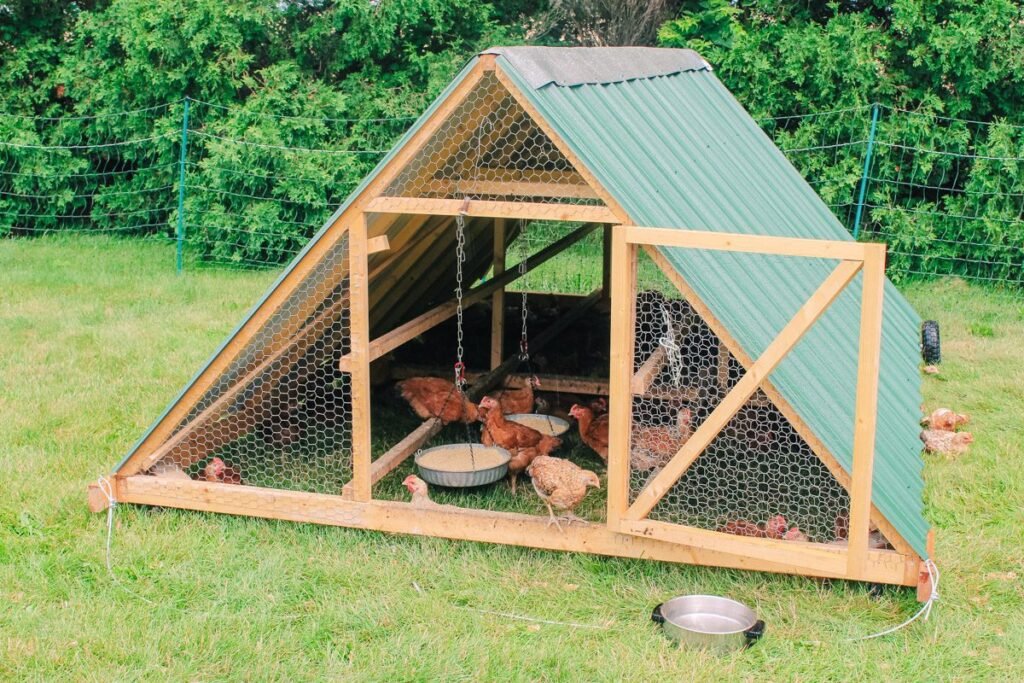
The A-frame is one of the most widely used designs in backyard chicken keeping, and for good reason. It is simple, inexpensive to build, and works well for a small flock of four to six hens. The triangular structure sheds rain naturally, requires minimal lumber, and can be built in a single weekend.
Most DIY chicken coop plans for A-frame coops include a small enclosed sleeping area at the top and an open-bottom run section below. The elevated sleeping area protects birds from moisture and ground-level predators. The one downside I have personally experienced with A-frame designs is cleaning. The low roofline makes it awkward to reach inside for thorough cleanouts. If you go this route, look for chicken coop plans that include a hinged roof panel or a removable side wall to make access easier.
This design is best suited for urban or suburban backyards where space is limited, and aesthetics matter. It is one of the most popular free chicken coop plans available online because the material list is short and affordable.
2. The Walk-In Shed Style Coop
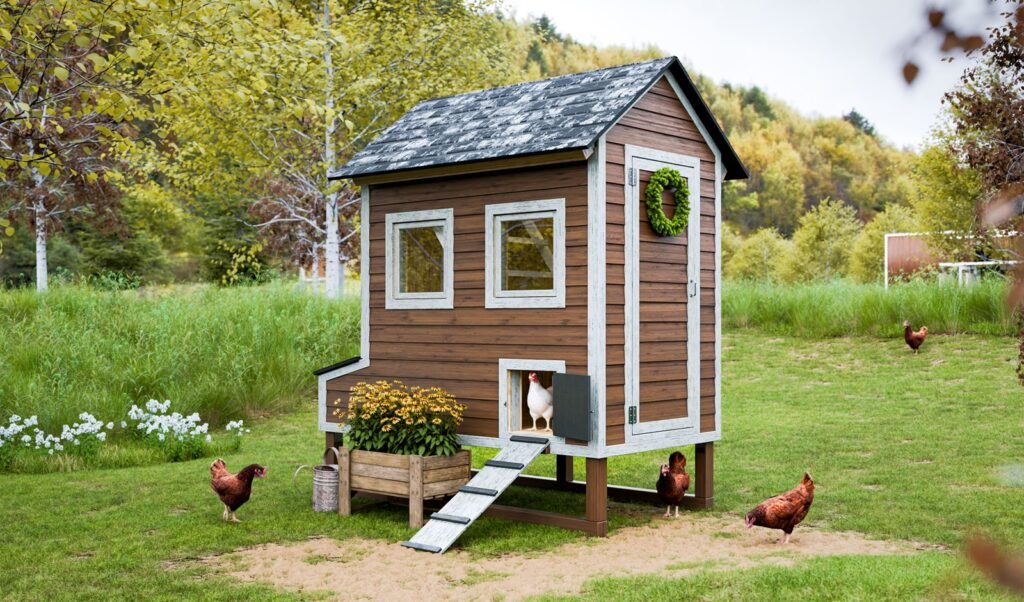
This is the design I personally recommend most for homesteaders who want a long-term setup they will not outgrow in two years. Walk-in shed-style chicken coops give you full standing height inside, which transforms the entire experience of maintaining your flock. You can clean, refill feeders, collect eggs, and check on your birds without crouching or kneeling.
When I helped a neighbor build her coop a few years ago, we used repurposed garden shed chicken coop building plans and scaled them up slightly to fit 16 birds. The extra headroom made a bigger difference than she expected. She often told me afterward that it was the single best decision she made in the entire build.
Good walk-in chicken coop plans typically include multiple windows positioned on opposing walls for cross-ventilation, a main human-sized door, a smaller chicken-sized pop door with a ramp, and enough wall space for 4 to 6 nesting boxes. This style also scales easily. You can extend the length of the structure to house more birds without changing the basic design.
3. The Chicken Tractor (Portable Coop)
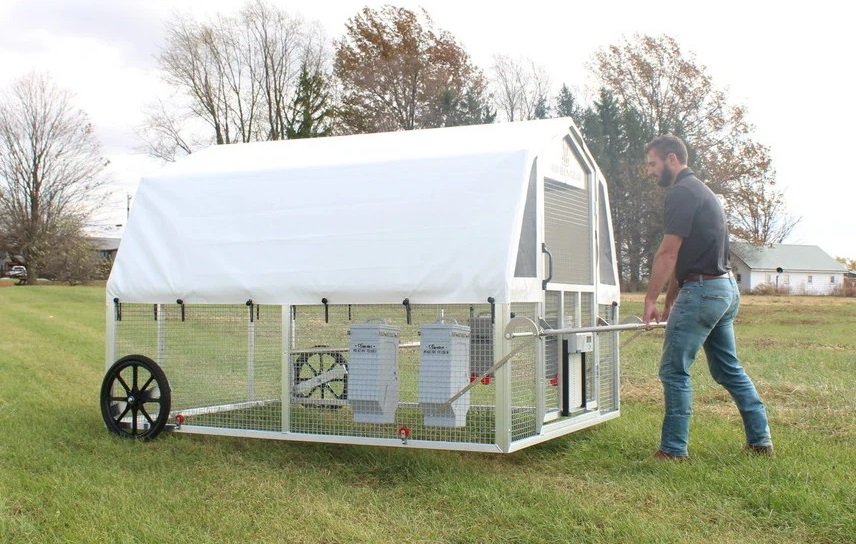
A chicken tractor is a movable coop with no permanent floor, designed to be relocated every few days across a pasture or yard. It is one of the most practical chicken coop plans for people who want to let their flock fertilize and till different sections of their land without full free-ranging.
The concept is simple. The coop and attached run sit directly on the ground. You move the whole structure every few days so the birds always have access to fresh grass and insects. Most chicken tractor designs handle small flocks of 4 to 8 birds comfortably.
Building chicken coop free plans for tractors is plentiful online. The basic build involves a lightweight wooden frame with hardware cloth sides, a covered sleeping area at one end, and either wheels or handles for easy moving. I have seen well-built tractors moved by a single person in under a minute.
The limitation is obvious: chicken tractors are not ideal for large flocks. But if you run a smaller homestead or a suburban backyard setup and want your hens doing real work in your garden, this is one of the most efficient chicken coop plans available.
4. The Garden Coop with Integrated Run
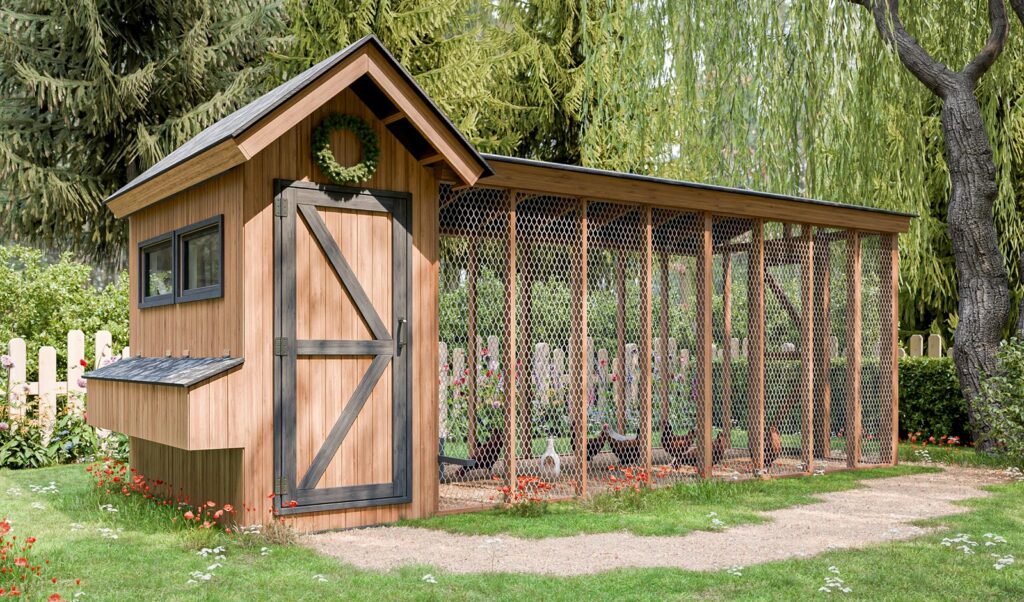
This design elevated the standard coop-and-run combination into something genuinely functional. The sleeping area is raised off the ground by 2 to 3 feet, which serves two purposes. It gives chickens more usable space underneath the structure where they can scratch, rest in shade, and stay dry during rain. It also makes the coop harder for predators to breach from below.
The Garden Coop style of chicken coop plans is designed to hold around 8 birds, though most plan sets include notes on how to extend the run or enlarge the structure. Detailed downloadable versions of these chicken coop building plans typically include materials lists, cut diagrams, and step-by-step instructions written clearly enough that beginning woodworkers can follow them without getting lost.
What makes this style stand out for me is the attention to chicken behavior. The elevated sleeping box appeals to chickens’ instincts to roost high, and the large covered run beneath means birds have protected outdoor time even during rain. If you are raising a mid-sized flock and want a design that looks polished and works reliably, this is one of the best chicken coop plans to consider.
5. The Compact Urban Coop (4×4 or 4×6 Footprint)
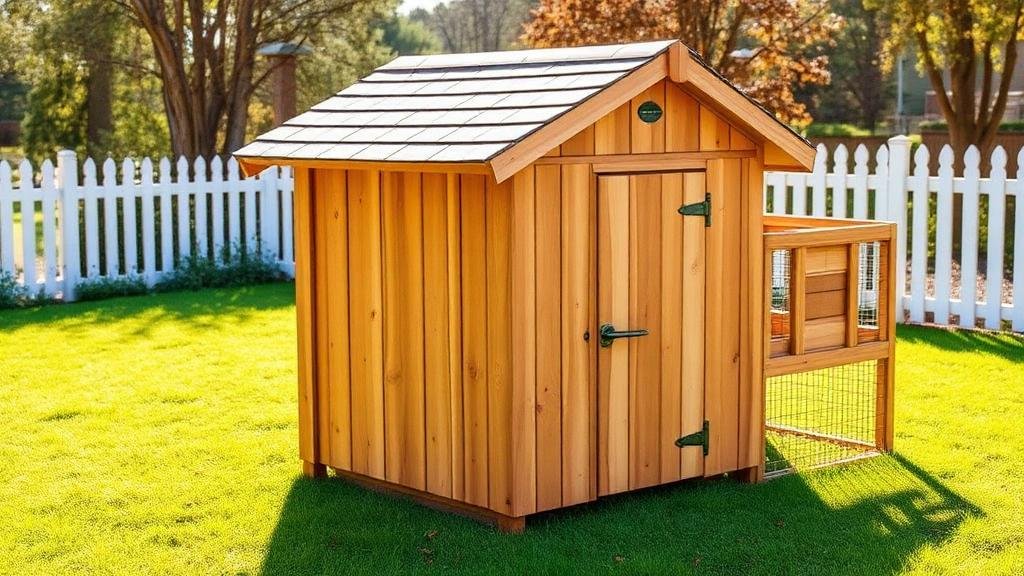
Not every homestead is sprawling acreage. Many people reading about chicken coop plans are working with modest suburban lots, HOA-restricted neighborhoods, or urban backyards. For those situations, a compact coop in the 4×4 or 4×6 footprint range is often the most practical choice.
These small DIY chicken coop plans typically accommodate 3 to 6 hens, depending on the height of the structure and how much outdoor run space is attached. Well-designed compact coops include dual access doors for easy cleaning, linoleum or vinyl flooring for simple sanitation, and enough height inside to accommodate a standard heat lamp if you need supplemental warmth during winter.
The streamlined appearance of these coops also tends to blend into suburban yards better than larger structures. Many of the best free chicken coop plans for small coops are available from homesteading communities online and can be downloaded and printed at home before you ever buy a single board.
If you live in a neighborhood with visible-from-the-street regulations, a compact elevated coop with a tasteful painted finish is often the chick and coop combination that keeps neighbors unbothered and your hens comfortable.
6. The Hoop Coop (PVC or Cattle Panel Design)
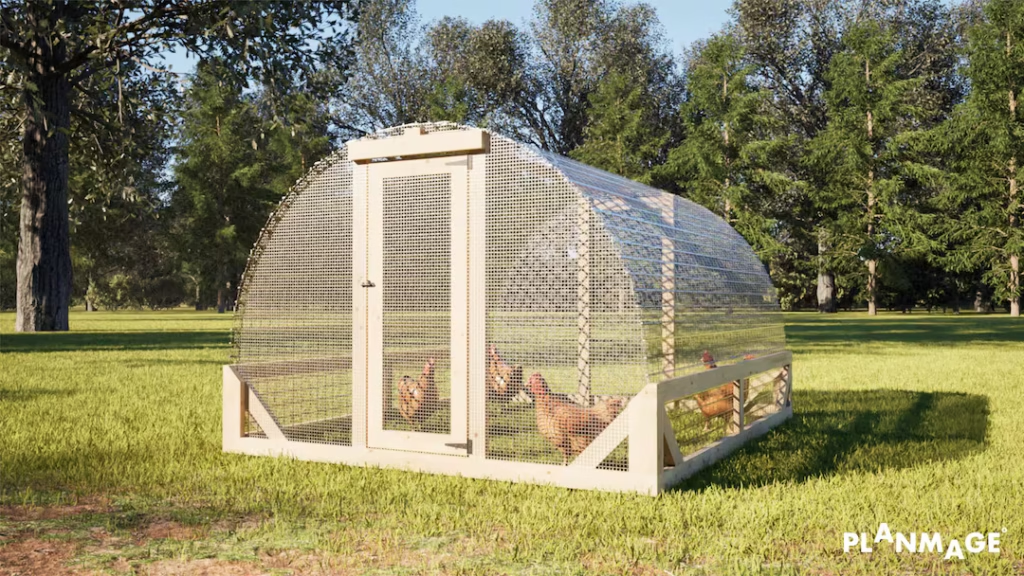
The hoop coop is one of the most budget-friendly chicken coop plans you can build, and it has real advantages for beginning homesteaders who want to start with minimal investment. The basic structure uses bent PVC pipe or curved cattle panels as the frame, with heavy-duty tarps or hardware cloth stretched over the outside.
These coops are quick to assemble, often in a single afternoon, and can be made surprisingly predator-resistant if you bury the hardware cloth edges or add an apron around the perimeter. Hoop-style chicken coops work particularly well as temporary housing while you build a more permanent structure, or as seasonal housing for meat birds.
The honest downside is longevity. PVC fittings and tarps degrade faster than solid wood construction, especially in climates with intense UV exposure or heavy snow loads. But as an entry point into raising chickens without a high upfront cost, building chicken coop free plans for hoop-style structures is hard to beat.
7. The Repurposed Shed Conversion
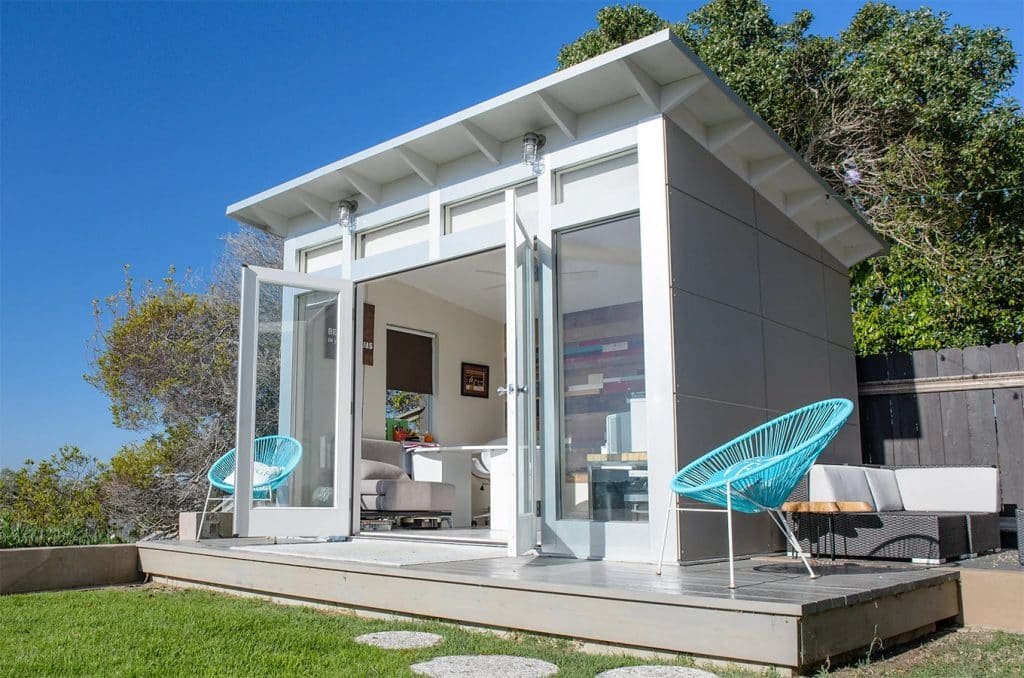
One of the most practical approaches to chicken coop building plans I have ever seen on a real homestead is the converted garden shed. If you already have a shed on your property that is no longer being used for storage, converting it into a chicken coop is faster, cheaper, and often better-built than starting from scratch.
The process involves adding ventilation windows with hardware cloth covers, cutting a chicken-sized pop door near ground level, installing roost bars at the proper height, building or mounting nesting boxes along one interior wall, and securing the structure against predator entry points.
The height of a standard shed is actually a significant advantage here. Tall walls allow for multiple rows of roosting bars, adequate ventilation near the roofline, and comfortable working conditions for the keeper.
Repurposed shed chicken coop plans are especially useful for homesteaders expanding from a small flock to a larger one, since a 10×12 shed can comfortably house 20 to 25 hens with proper planning.
8. The Barn Style Coop for Large Flocks
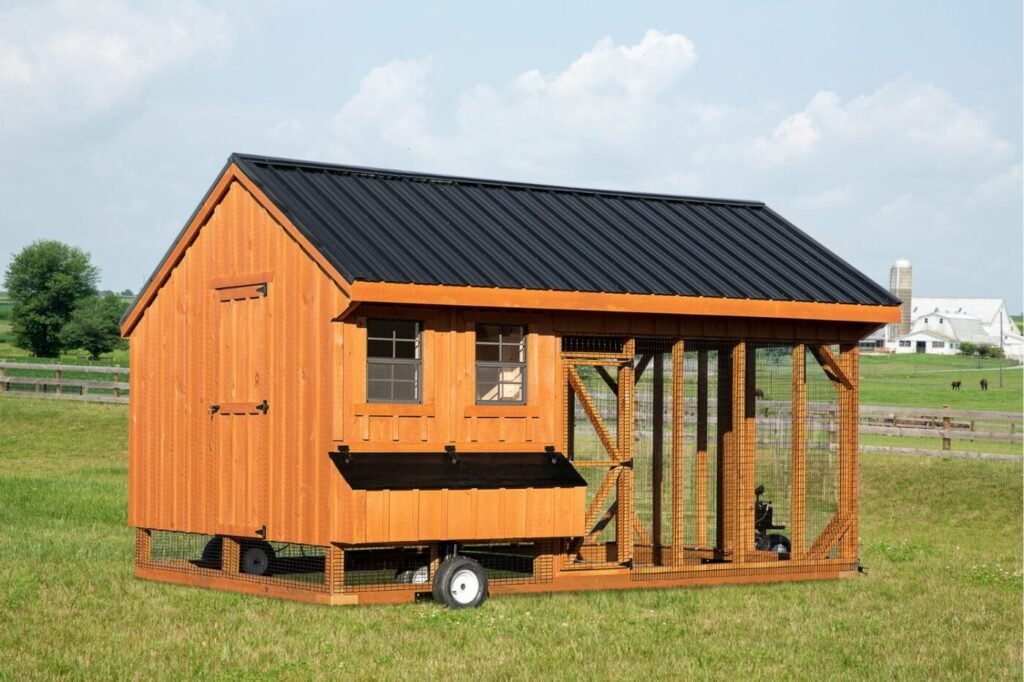
For serious homesteaders running flocks of 30 birds or more, the barn-style coop is in a different category entirely. These structures look and function like miniature barns, with steep peaked roofs, multiple windows on all four sides, large main doors, and dedicated zones for different flock activities inside.
Barn-style chicken coop building plans typically include separate areas for feeding, roosting, and egg-laying. The peaked roofline is not just aesthetic. It creates an air pocket at the top of the structure that dramatically improves ventilation and temperature regulation without requiring powered fans. In my experience, birds in well-ventilated barn coops show better feather condition and fewer respiratory issues than birds in sealed, poorly-vented structures.
These plans require more lumber, more time, and more building experience than simpler designs. But if you are building something meant to last 20 years and house a productive laying flock on a working homestead, investing in quality barn-style chicken coop plans is worth every hour of planning.
9. The Mobile Chicken Coop on Wheels
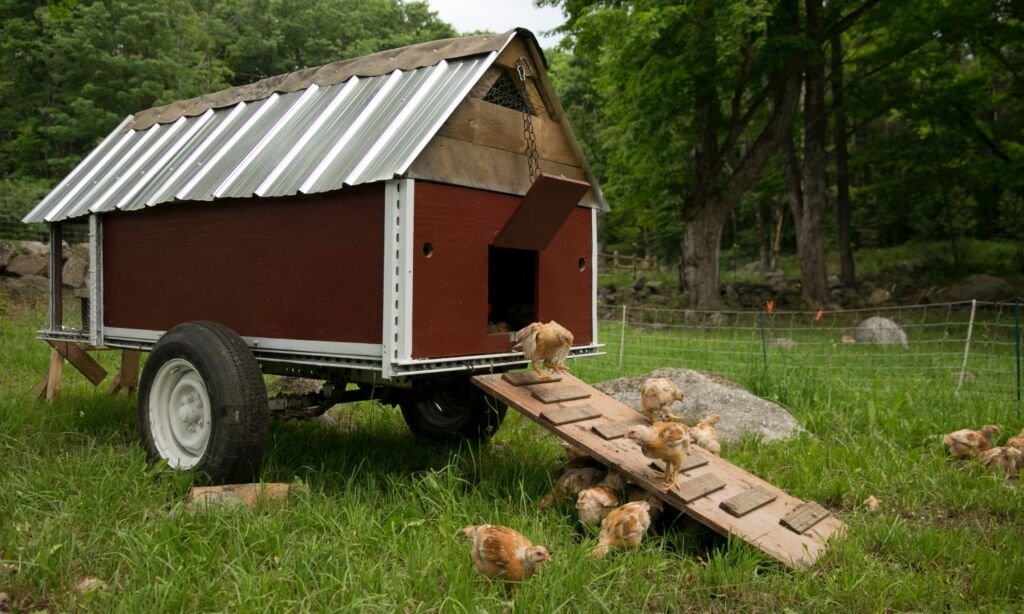
Somewhere between the chicken tractor and the permanent barn coop lives the mobile coop on wheels. These larger movable structures are built on a wheeled trailer frame or a skid foundation that can be relocated using a riding mower or small tractor.
Mobile coops on wheels suit homesteaders who want the benefits of rotational grazing for their chickens at a larger scale than a simple chicken tractor allows. A well-built mobile coop can house 15 to 20 birds and be moved to a fresh section of pasture once or twice a month. The chicken coop plans for this style require attention to weight distribution, wheel placement, and structural reinforcement to prevent racking as the unit is moved across uneven ground.
A few homesteading families I know built their own versions using flatbed trailer kits as the base, then framed up a standard shed-style coop on top. Downloadable chicken coop plans for this format are available from several homesteading plan sellers and are typically more detailed than basic free options, given the complexity involved.
10. The Multi-Purpose Coop with Attached Storage
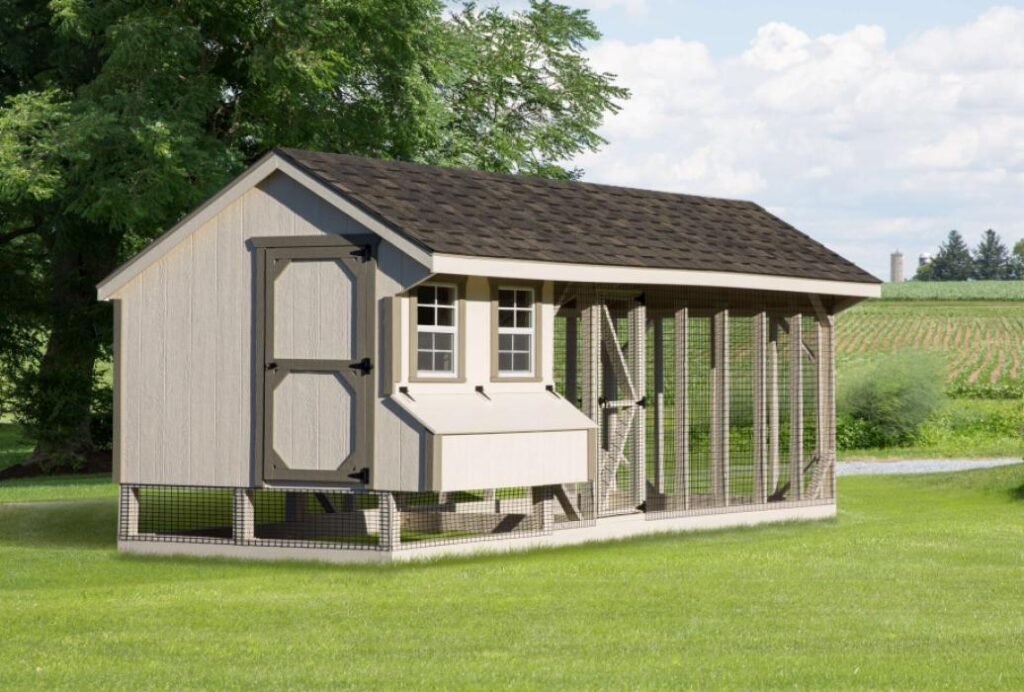
This is the design that makes the most sense on a working homestead where efficiency matters. The multi-purpose coop combines the actual chicken living area with an attached storage room or mudroom for feed, bedding, tools, and egg-handling supplies. Everything you need to manage your flock is in one location.
From a practical standpoint, this is an enormous quality-of-life upgrade over keeping your coop and your supplies in separate locations. On cold winter mornings, you are not hauling feed from a barn across the yard. You open one door, grab what you need, and get back inside quickly.
The chicken coop plans for this style are usually larger footprints, starting around 8×12 and going up to 12×16 or larger. The storage section is typically framed with a solid wall separating it from the bird area to prevent dust, dander, and ammonia from affecting stored feed.
Ventilation, lighting, and door placement all need careful thought in these more complex chicken coop building plans. Still, the result is a fully functional chicken coop system that makes managing your flock genuinely enjoyable rather than a daily chore.
Every good chicken coop plan should clearly emphasize key elements like ventilation, predator-proof latches, and nesting space to help you compare designs effectively. No matter which of these chicken coop plans appeals to you most, certain elements should appear in every solid design.
Ventilation is non-negotiable. One-fifth of the total wall space in a well-designed coop should be dedicated to ventilation. Vents should be positioned higher than where birds sleep to prevent cold drafts from hitting roosting hens while still allowing ammonia and moisture to escape. Sealed, airtight coops cause far more health problems than cold air ever will.
Nesting boxes should be included at a ratio of roughly one box per three to four hens. Standard box dimensions of 12 inches wide by 12 inches deep by 14 inches tall work well for most breeds. Larger breeds benefit from boxes sized up to 14 inches in each dimension. Boxes should be positioned lower than roosting bars to discourage hens from sleeping inside them, which leads to dirty eggs.
Roosting bars need to be at least 2 feet off the ground and provide 8 to 10 inches of linear space per bird. A standard 2×4 board laid flat makes an excellent roost because the wide surface lets hens cover their feet with their feathers during cold nights.
Predator security requires hardware cloth with a maximum half-inch mesh, not standard chicken wire, which predators can tear through. All latches should be secured with a secondary locking mechanism because raccoons are remarkably good at figuring out simple spring latches.
Drainage and elevation protect the floor of the coop from moisture, which is the primary cause of bacterial and fungal problems inside any chicken housing structure. Raising the coop 6 to 12 inches off the ground makes a visible difference in interior dryness and longevity of the materials.
To find the best chicken coop plans, check out websites, agricultural extension offices, and online homesteading communities for both free and paid options. Free chicken coop plans are genuinely useful and widely available from homesteading websites, university agricultural extension offices, and chicken-keeping communities online. These free resources typically include basic material lists and dimensions, though the level of detail varies considerably.
Paid DIY chicken coop plans tend to offer more comprehensive packages with cut diagrams, step-by-step photo instructions, multiple size variations, and sometimes video walkthroughs. For complex builds like the barn-style coop or the mobile coop on wheels, the extra investment in a detailed plan set often pays for itself in saved materials alone, since fewer mistakes happen when instructions are clear.
At Paradox Spotlight, we consistently see homesteaders benefit most from plans that were created by people who have actually built and used the structure themselves, rather than purely theoretical designs from designers who never raised a chicken. Look for plan sources that include real photos of the completed build and genuine user feedback before you commit.
Personal Experience For Choosing Chicken Coop Plans
The best set of chicken coop plans is always the one that matches your actual situation: your flock size, your property, your climate, your building skills, and your long-term goals. A beautiful, elaborate design that overwhelms your skill level or costs three times your budget will sit unbuilt and useless. A simple, well-executed compact coop that you finish and fill with healthy hens is a genuine success.
Start with your flock size and work outward from there. Think about where on your property the coop will live and how you will interact with it every single day, because daily ease of use matters more than any design feature. Then find chicken coop building plans that include all the elements covered here: ventilation, predator security, proper nesting space, adequate roost area, and manageable access for cleaning and egg collection.
Whether you use free chicken coop plans from an online resource or invest in a professional plan set, the most important step is to start. Your chickens will thank you for it, and after the first week of fresh eggs on your table, you will wonder why you waited this long.