



Article Highlights / Key Points
- Most cat owners misread feline body language, and a cat whisperer learns to interpret subtle signals like tail position, ear movement, and slow blinking before problems arise.
- Forcing affection on a cat is one of the most common mistakes owners make, and any experienced cat whisperer will tell you that respect for a cat’s boundaries builds deeper trust over time.
- A cat whisperer understands that irregular feeding schedules and poor litter box placement are leading causes of stress and behavioral issues in domestic cats.
- Ignoring the need for environmental enrichment, including climbing spaces, hiding spots, and mental stimulation, leads to anxiety and destructive behavior in cats left alone for long hours.
- Over-punishment and loud reactions to bad behavior are counterproductive, and the cat whisperer approach focuses on redirection, calm energy, and positive reinforcement instead.
Biggest Cat Owner Mistakes Exposed
I have spent years watching cats and the people who love them, and I can tell you with confidence that most cat owners are making the same handful of mistakes over and over again. Not because they do not care. They absolutely do. But cats are unlike any other pet, and what works with a dog or even what feels logical to a human often does the exact opposite of what you intend with a cat.
The idea of a cat whisperer has grown in popularity thanks to television and social media, but the real skill behind the title is not magic. It is patience, observation, and a willingness to meet cats on their terms. Whether you have followed the cat whisperer show on television, watched clips of the famous cat whisperer guy online, or want to understand your own cat better, the lessons here come from real experience with real cats.
Let me walk you through the biggest mistakes I have seen cat owners make and what to do instead.
Mistake 1: Misreading What Your Cat Is Actually Saying
This is the root of almost every other problem. Cats communicate constantly, but they do so in a language that is mostly silent and entirely physical. A cat whisperer spends an enormous amount of time learning this language, and once you understand it, everything about your cat starts to make sense.
A slow blink from a cat is a gesture of trust and affection. If your cat looks at you and slowly closes and opens their eyes, they are telling you they feel safe with you. You can return the gesture and watch how they respond. A tail held high is a confident, happy greeting. A puffed-up tail means fear or aggression. Ears flattened back against the head mean the cat is overwhelmed or feels threatened.
Most owners either miss these signals entirely or misinterpret them. They pet a cat that is showing signs of overstimulation and then wonder why the cat suddenly scratched them. A true cat whisperer reads the body language before the moment of reaction and adjusts their behavior accordingly. The cat was never random or mean. It was communicating the entire time. We were not listening.
Mistake 2: Forcing Affection and Ignoring Boundaries
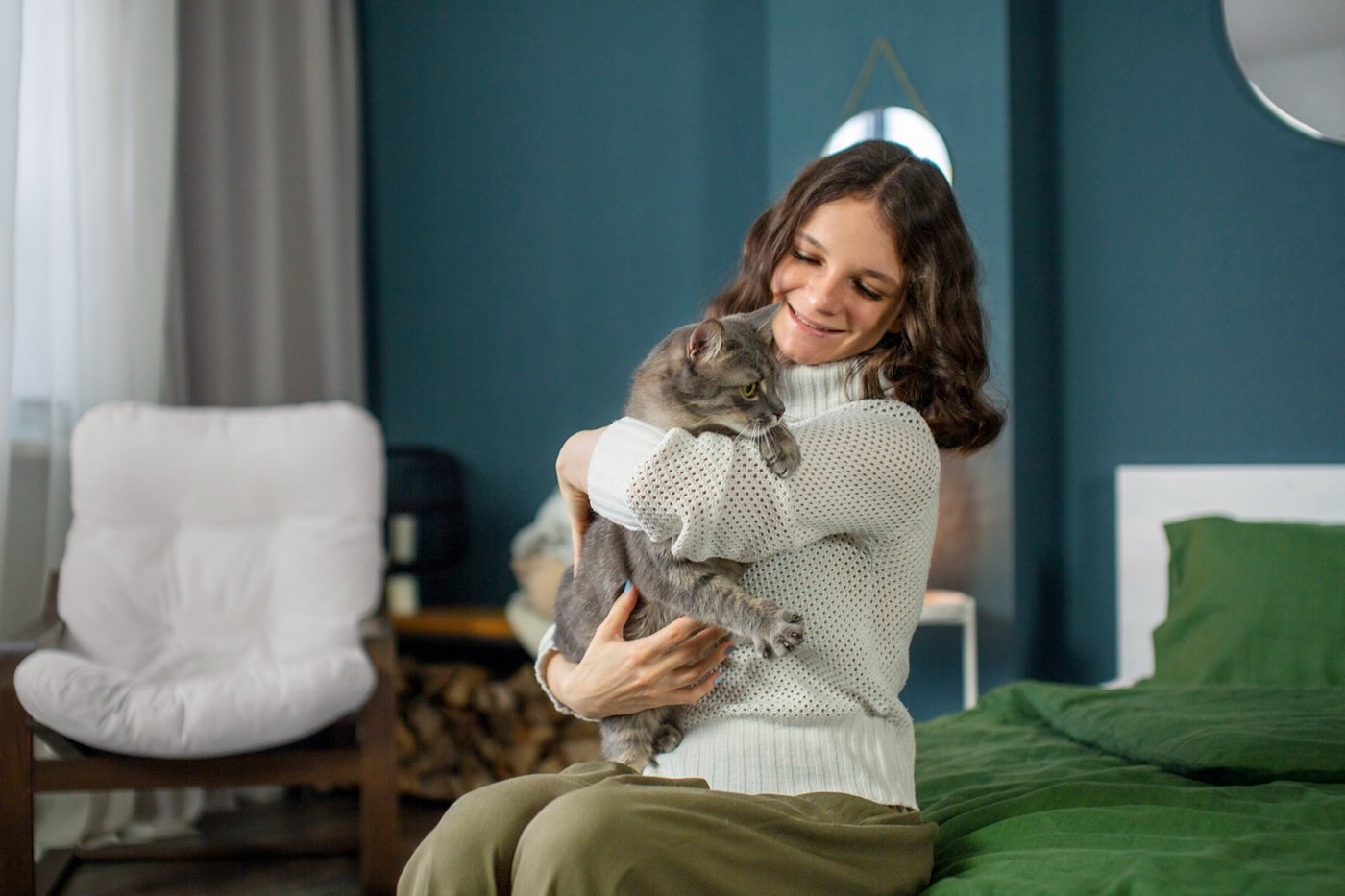
This one is deeply personal for cat owners because the instinct to hold, cuddle, and love a cat is completely natural. But cats are not stuffed animals. They are independent creatures with strong preferences about when and how they want to be touched, and forcing affection on them is one of the fastest ways to break their trust.
I have seen so many people pick up a cat that is clearly trying to move away, hold it in place, and then feel hurt when the cat squirms, hisses, or avoids them afterward. The cat whisperer approach says that the best kind of interaction is the one the cat initiates. When you stop chasing the cat and instead make yourself a calm, interesting presence in the room, the cat will eventually come to you on its own terms. And that moment means so much more than a forced cuddle.
Let your cat approach you. Let them sniff your hand before you reach to pet them. Pay attention to where they like to be touched. Most cats enjoy the base of the ears, the chin, and the cheeks. Many cats dislike being touched on their belly or at the base of their tail, even if they roll over and expose their stomach. That exposed belly is often a sign of trust, not an invitation. Respecting that boundary is exactly what the cat whisperer understands, and most owners do not.
Mistake 3: Ignoring Routine and Predictability
Cats are creatures of habit in a way that most people genuinely underestimate. Their sense of security comes from predictability. They want to eat at the same time every day. They want their litter box clean and in a consistent location. They want to know where their safe sleeping spots are. When these things shift unexpectedly, a cat’s stress levels rise significantly.
As a cat whisperer, one of the first questions I ask when someone tells me their cat has started acting out is whether anything in the home has changed recently. A new work schedule. A moved piece of furniture. A litter box was relocated to a noisier part of the house. These things might seem minor to us, but they can genuinely unsettle a cat.
Feeding schedules matter more than most owners realize. Free feeding, where food is always available in a bowl, can work for some cats but leads to overeating, obesity, and a loss of that ritual connection around meal times. A structured feeding routine gives the cat something to expect and something to look forward to. The cat whisperer show has touched on this in various episodes, demonstrating how cats with behavioral issues often stabilize when a reliable daily routine is introduced.
Mistake 4: Poor Litter Box Setup
You would be surprised how many behavioral problems trace directly back to the litter box. Inappropriate elimination, which is when a cat goes outside the box, is one of the most common complaints I hear from cat owners. In the majority of cases, the root cause is a litter box problem that is entirely fixable.
The general rule that any cat whisperer will share is one litter box per cat plus one extra. If you have two cats, you need at least three boxes. Location matters too. Boxes placed in high-traffic areas, near loud appliances like washing machines, or in spots that are difficult for the cat to access will be avoided. Privacy and quiet are important.
Cleanliness is non-negotiable. Cats are fastidious animals, and a dirty litter box is something many of them will refuse to use. Scooping daily is the minimum. Some cats require even more frequent cleaning. The type of litter matters as well. Many cats dislike strongly scented litters, even the ones marketed as fresh and pleasant for humans. Unscented, clumping litter is often the best choice.
The cat whisperer guy has spoken about this many times. The litter box is not just a functional item. It is a major part of your cat’s psychological comfort and physical health.
Mistake 5: Not Providing Enough Environmental Enrichment
This is the mistake I find hardest for people to wrap their heads around, because many owners feel that providing food, water, and shelter is enough. For a cat’s physical survival, it is. But cats need mental and physical stimulation to thrive truly, and without it, they develop anxiety, boredom-related behaviors, and sometimes serious health issues.
Cats are natural hunters. Even a cat that has never been outdoors carries that instinct. They need opportunities to stalk, chase, pounce, and explore. When those needs go unmet, you see it in destructive scratching, excessive meowing, aggression, and overgrooming.
A cat whisperer creates what is often called an enriched environment. This means vertical space, because cats feel safer when they can observe their surroundings from a height. Cat trees, wall shelves, and window perches all serve this purpose. It means hiding spots where the cat can retreat when feeling overwhelmed. It means puzzle feeders that make the cat work slightly for their food, engaging that hunting instinct healthily.
Interactive play is also essential. A wand toy that you move like a bird or a mouse triggers genuine predatory behavior in your cat, and just fifteen to twenty minutes of active play per day can make a dramatic difference in a cat’s mood and behavior. The cat whisperer approach always includes an assessment of how much stimulation the cat is currently getting and how to increase it in a way that fits the household.
Mistake 6: Punishing Bad Behavior
This might be the most important lesson any cat whisperer will share, and it goes against what most people instinctively do. When a cat does something we do not like, scratching the furniture, jumping on the counter, biting during play, the typical human response is a loud noise, a spray bottle, or some form of scolding—none of these work. In fact, they make things worse.
Cats do not connect punishment with the behavior that caused it the way humans or even dogs might. What the cat learns from being sprayed with water or yelled at is not to stop scratching the sofa. What they learn is that you are sometimes unpredictable and frightening. Over time, this erodes trust and can make your cat fearful, anxious, or defensive.
The approach that actually works is redirection and positive reinforcement. If your cat is scratching the sofa, give them a scratching post nearby and reward them when they use it. If they jump on the counter, make the counter less appealing with textures they dislike and create an equally attractive alternative. If they bite during play, immediately stop play and give the cat a toy to direct their energy toward instead.
At Paradox Spotlight, we have seen reader after reader transform their relationship with their cat simply by shifting away from punishment and toward understanding. That shift in mindset is exactly what separates an experienced cat whisperer from a frustrated cat owner.
Mistake 7: Skipping Veterinary Care
Cats are extraordinarily good at hiding discomfort and illness. This is a survival instinct rooted in their history as both predator and prey. In the wild, showing weakness invites danger. So cats mask pain and sickness until the condition has often progressed significantly.
A cat whisperer knows that a cat who seems fine may not be fine at all. Subtle changes in behavior, eating habits, water consumption, grooming patterns, and energy levels can be early signs of health problems. Regular veterinary checkups, at least once a year for younger cats and twice a year for seniors, are essential.
Dental health is particularly overlooked. Most adult cats have some degree of dental disease, which is painful and can affect overall health. Weight management matters too. An overweight cat faces higher risks of diabetes, joint problems, and heart disease, yet many owners do not realize their cat is overweight because the change happens gradually.
The best cat whisperers I have known always maintain a strong partnership with their veterinarian, because understanding a cat’s behavior and understanding their health are two parts of the same picture.
Mistake 8: Treating the Cat Like a Small Dog
This sounds obvious, but it is genuinely one of the most common underlying errors I see. Dogs are pack animals that look to their human for leadership and cues. They want to please. They thrive on social interaction. Cats are fundamentally different. They are solitary hunters by nature, and their relationship with humans developed under very different circumstances than the dog-human bond.
Expecting a cat to come when called reliably, to stop what it is doing when told, or to seek constant companionship the way a dog might is setting both you and your cat up for frustration. That does not mean cats cannot learn. They absolutely can. But they learn on their own timeline, and they respond to entirely different motivators.
A cat whisperer respects the cat’s nature rather than trying to override it. Cats can learn their names, they can learn simple cues like sit or come, and many cats enjoy training sessions because the mental engagement is enriching. But the approach has to be positive, brief, and on the cat’s terms. The TV show ” Cat Whisperer ” content available online shows clearly how much more cats respond to patience and calm guidance than to force or repetition.
What Becoming a Cat Whisperer Really Means
You do not have to be a professional to develop a deep, intuitive understanding of your cat. Anyone who commits to observation, patience, and respect can develop the kind of connection that the cat whisperer represents.
Start by watching your cat more closely than you ever have before. Notice how they hold their tail in different situations. Watch their ears. See what they do before they hide or before they approach you. Keep a mental note of what calms them and what unsettles them.
Stop trying to force the relationship to look a certain way and let it grow naturally. Some cats are deeply affectionate and will follow you from room to room. Others prefer quiet companionship from across the room. Both are valid cat personalities. Your job as a cat whisperer in your own home is to meet your specific cat where they are, not where you wish they were.
When you do that consistently, something remarkable happens. The cat begins to trust you more deeply. They seek you out more. They show you affection in ways that are meaningful to them, such as slow blinks, head bumps, sitting nearby, and bringing you their toy. And that authentic connection, built on understanding rather than expectation, is more rewarding than anything a forced cuddle could ever produce.
Being a cat whisperer is not about controlling cats. It is about communicating with them in a way they understand. And once you start doing that, you realize your cat has been trying to communicate with you all along.