
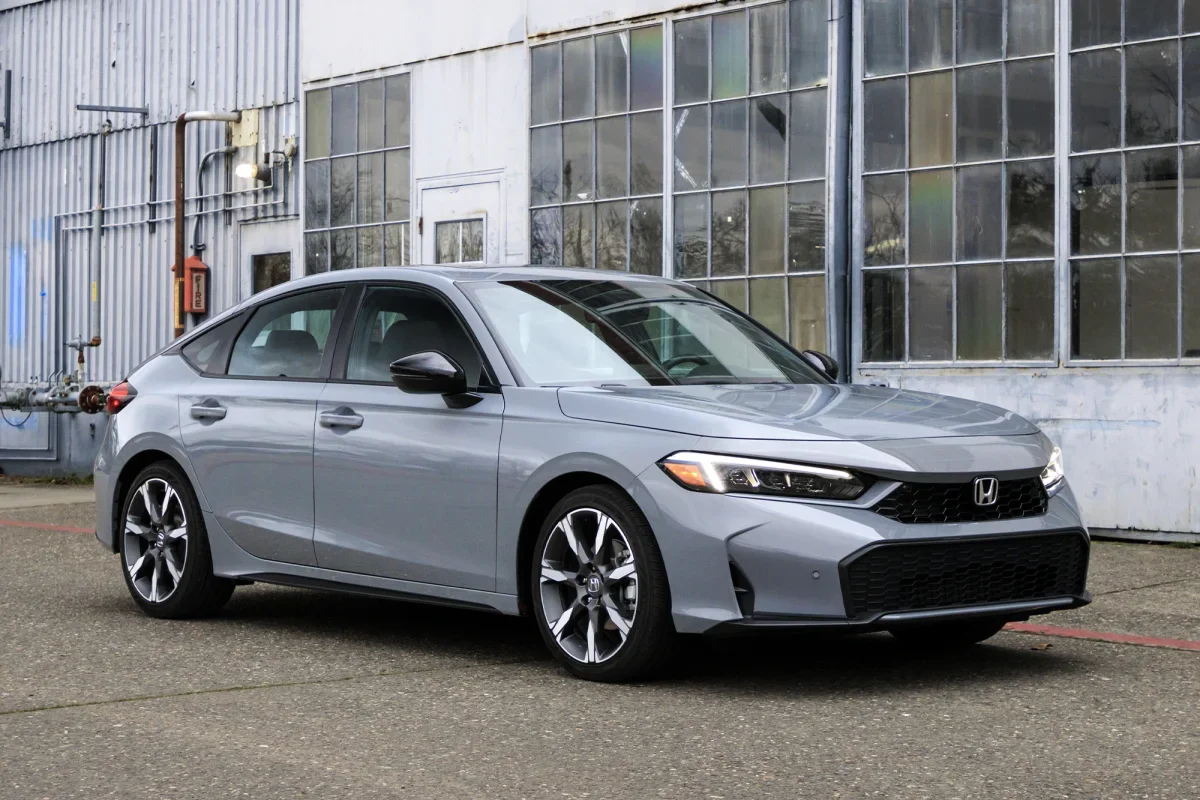


There is something quietly extraordinary happening inside the Honda Civic 2026, and most buyers are completely unaware of it. They walk into a dealership, glance at the sticker price, maybe tap the infotainment screen a couple of times, and drive off thinking they have purchased a sensible commuter car. What they have actually purchased is one of the most technically sophisticated compact cars ever built, a machine brimming with engineering decisions so clever and so understated that they practically beg to go unnoticed. We cover vehicles from raw fuel burners to cutting-edge electric machines, and we can say with confidence that the Honda Civic 2026 Hybrid deserves a far deeper look than it usually gets. So let us pull back the curtain on the hidden features that make this car genuinely special.
The Atkinson Cycle Engine That Thinks Like a Sprinter
Most people hear “hybrid” and immediately picture sluggishness, a car that exists purely to save fuel and sacrifice joy in the process. The Honda Civic 2026 obliterates that assumption the moment you press the accelerator. Under the hood sits a 2.0-liter Atkinson-cycle four-cylinder engine, and what makes it remarkable is not just what it does but how it does it.
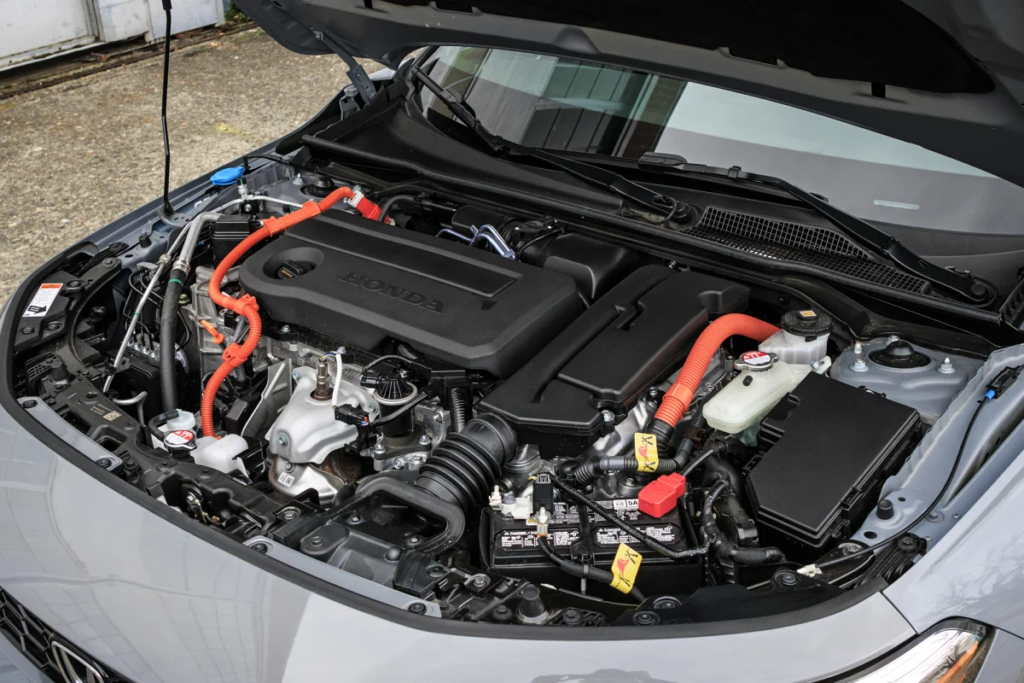
The Atkinson-cycle design is different from a conventional engine because it deliberately delays the closing of the intake valve, allowing a portion of the air-fuel mixture to escape back before combustion. This sounds counterproductive, but it produces a dramatic improvement in thermal efficiency. The engine extracts more energy from every drop of fuel by expanding the combustion gases further before the exhaust stroke begins. In isolation, this engine would feel somewhat muted at low speeds. But Honda does not leave it in isolation.
Paired with two electric motors, the system generates a combined output of 200 horsepower and a genuinely surprising 232 lb-ft of torque. That torque figure is the hidden weapon. Electric motors deliver their peak torque instantly, from zero revs, which means the moment you ask the car to move, it responds with a confidence and immediacy that catches first-time drivers completely off guard. The sprint from 0 to 100 km/h happens in a timeframe that commands respect from cars costing significantly more. This is not a compromise machine. It is a performance machine wearing efficiency as its daily outfit.
Fuel Economy Numbers That Seem Fictional Until You Live With Them
The EPA-estimated fuel economy of 50 MPG in the city and 49 MPG combined is the kind of figure that makes experienced automotive journalists pause and read it twice. City driving, with its constant stopping and starting, is traditionally where internal combustion engines suffer most. It is where conventional cars are at their least efficient, burning fuel to idle and losing energy to heat through braking.
The Honda Civic 2026 turns this logic on its head. Every time you brake, every time you lift off the throttle, the electric motors switch into generator mode, harvesting kinetic energy that would otherwise vanish as heat through the brake pads. This regenerative braking system feeds energy back into the battery pack, which is then deployed during acceleration. In city traffic, the car is essentially recycling its own momentum. The result is an efficiency curve that improves the more you stop, which is precisely why that city MPG figure is slightly higher than the highway number.
On a mixed drive of roughly 5.0 L per 100 km, this Civic competes with vehicles twice its price in terms of running costs. For anyone comparing options in the segment, it is also worth noting that it sits comfortably among the Top 5 hybrid cars in 2026 when efficiency alone is the metric. That is not marketing language. That is a measurable, testable, real-world result that owners report consistently.
Drive Modes That Rewire the Car Around Your Mood
One of the most underappreciated features of the 2026 Civic Hybrid is its suite of drive modes, and specifically the way Sport mode fundamentally changes the character of the vehicle. Most drivers set their car and forget it. They never explore the modes menu, never notice the difference, and consequently never experience what the engineers actually intended when they built flexibility into the drivetrain.
Switch to Sport mode, and the entire personality shifts. The throttle response sharpens. The electric motors lean into acceleration more aggressively. Regenerative braking increases, giving you that paddle-shifter sensation of engine braking through corners. The transmission logic changes, holding lower gear ratios longer to keep the powertrain in its most responsive range. The 232 lb-ft of torque that was always there now arrives with more urgency, more attitude, more edge.
The Pricing Structure That Rewards the Informed Buyer
Here is something the sales brochure does not tell you loudly enough. The hybrid powertrain in the 2026 Civic is not available across every trim level. It sits in the upper-tier configurations, which means buyers who do their research unlock a genuinely different car from the one most people drive off the lot.
In the United States, the Sport Hybrid starts at a recommended retail price of around $29,295, while the Sport Touring Hybrid steps up to approximately $32,295. Both trims are available in Sedan and Hatchback body styles, giving buyers a meaningful choice between the elegant profile of the sedan and the practical versatility of the five-door hatchback. These prices position the Civic Hybrid in an interesting space, well below the luxury compact bracket but equipped with technology that rivals far more expensive machines.
Canadian buyers looking at the Sport Hybrid eCVT in Hatchback or Sedan form are starting around CAD $36,000, a competitive figure in a market where the cost of living and fuel prices make efficiency a genuine financial priority rather than an environmental afterthought. Across the Atlantic, UK buyers receive the Advance and Elegance e:HEV trims, priced between £34,325 and £39,295. Notably, the UK market receives only the Hatchback body style, and the powertrain is branded under Honda’s e:HEV nomenclature, signaling its position as a sophisticated electrified system rather than a basic fuel-saving addition.
Regional Engineering Differences Most Buyers Never Discover
North American models produce 200 horsepower from the combined hybrid system, tuned to deliver both the efficiency figures and the performance character that appeals to American and Canadian driving habits. UK and European models are tuned differently, outputting 181 horsepower, a calibration made to satisfy local emissions standards and the specific testing protocols used in those markets. The fuel efficiency figures also change accordingly. While North American models post 50 MPG city and 47 MPG highway under EPA testing, UK models are rated between 56.5 and 60.1 MPG under the WLTP testing methodology, which uses different parameters and driving cycles.
None of this makes one market’s car better than another’s. What it reveals is that Honda engineers worked with the specific conditions, regulations, and expectations of each region rather than shipping a single universal product and hoping it fits. The result is a car that feels native wherever it is sold, which is a form of hidden quality that most buyers never consciously notice but always subconsciously appreciate.
The Cabin Refinement That Belongs in a Different Segment
Beyond the powertrain, the 2026 Civic Hybrid carries a level of interior refinement that consistently surprises people who approach it with compact-car expectations. The suspension tuning, described by those who have driven it as a touring setup, absorbs road imperfections with a composure that belongs in a luxury category. The cabin noise levels at highway speeds are remarkably low, partly because the hybrid system allows the combustion engine to shut down entirely during light-load cruising.
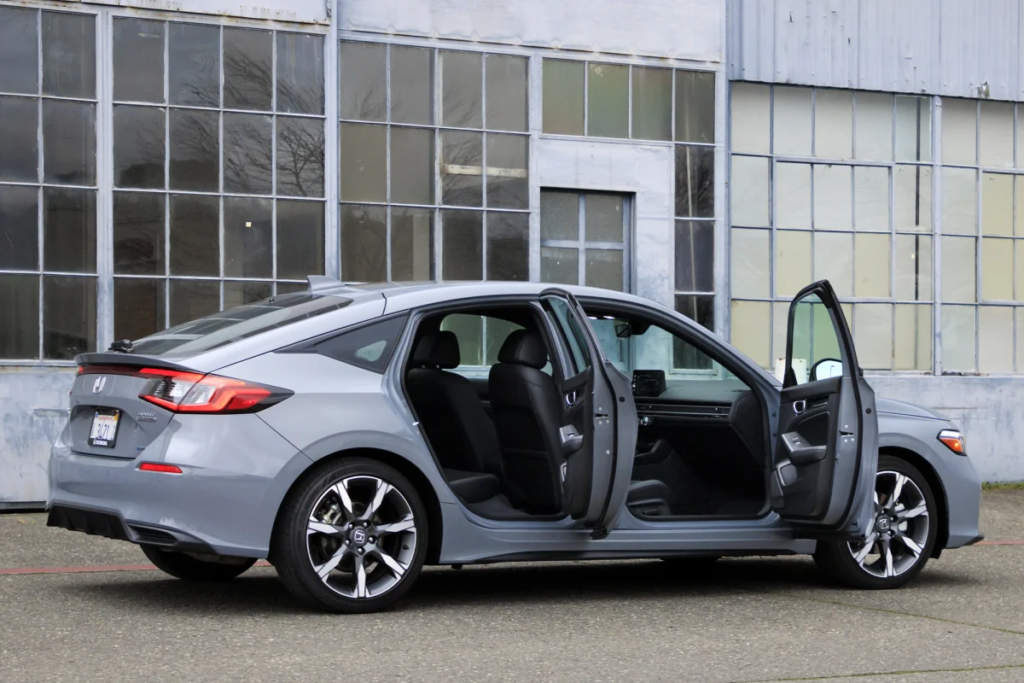
The exterior design supports this premium impression with body-colored front garnish treatment, black-painted rear badging, and alloy wheels available up to 18 inches in diameter. These are not arbitrary styling choices. They create a visual coherence that reads as deliberate and polished rather than assembled from a parts catalogue. Inside, the quality of materials and the layout of controls reflect Honda’s understanding that buyers in this segment are increasingly comparing compact cars not against other compact cars but against the memory of what a luxury car felt like to sit in. The 2026 Civic Hybrid competes on that ground more confidently than its price tag suggests it should.
Why Its Place Among the Best
When automotive analysts compile their assessments of the top 5 hybrid cars in 2026, the Civic Hybrid appears consistently and for reasons that go beyond its fuel economy numbers. The combination of 200 horsepower, 232 lb-ft of torque, genuine drive mode flexibility, a quiet and well-built cabin, and pricing that starts below $30,000 in the United States creates a value proposition that is remarkably difficult to argue against.
The hidden features are ultimately not about secret buttons or obscure menu items. They are about engineering depth. They are about the fact that this car rewards knowledge. The buyer who understands the Atkinson cycle engine, who explores Sport mode, who chooses the right trim for their needs, and who pays attention to regional specifications gets a genuinely different experience from the buyer who treats it as an appliance.