



Article Highlights / Key Points
- The right travel tools save time, reduce stress, and make any long journey far more comfortable and enjoyable.
- A well-organized travel tool bag with essentials like a power bank, multi-tool, and packing cubes keeps you prepared for the unexpected.
- Noise-cancelling headphones and a quality neck pillow are not luxuries on a long journey; they are sanity savers.
- A compact travel tool box with basic repair and hygiene items can solve small emergencies that would otherwise ruin your trip.
- Smart travelers choose travel tools that are lightweight, dual-purpose, and built for the demands of real-world travel.
Introductions
I have been on enough long-haul flights, overnight trains, and cross-country road trips to know one thing with complete confidence. What you carry matters just as much as where you are going. Over the years, I have tested, tossed, and kept dozens of items in my travel tool bag, and the ones that stay are the ones that genuinely earn their place.
This article is not a list of gimmicks or overpriced gadgets. These are real travel tools that I personally rely on every time I step out for a long journey. Whether you are a weekend traveler or someone who lives out of a suitcase, these picks will change how you travel.
Why the Right Travel Tools Change Everything
Most people pack clothes and forget that the journey itself needs preparation. A long journey is exhausting by nature. Delays happen. Bags get messy. Phones die. Your back aches. Your ears hurt from cabin noise. Without the right travel tools, small inconveniences pile up into a genuinely miserable experience.
When I first started traveling seriously, I used to pack light but suffer from being heavy. Then I slowly built what I now call my travel tool bag, a curated set of travel tools that handle real problems without adding unnecessary weight. Once I got this right, my trips became dramatically more manageable and even enjoyable.
Let me walk you through the seven travel tools I never leave home without.
1. A High-Capacity Power Bank
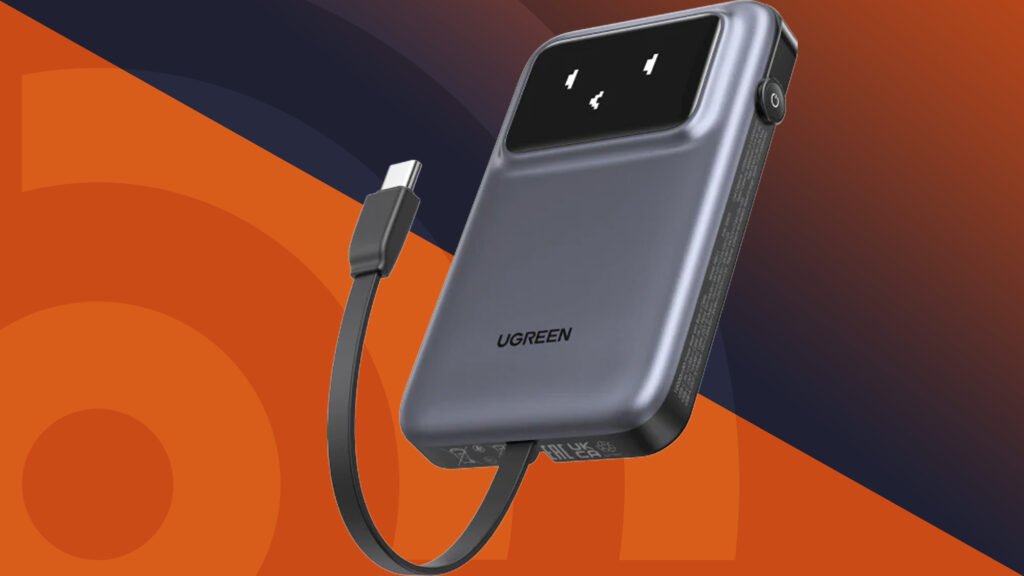
The single most important travel tool I carry is a reliable, high-capacity power bank. On a long journey, your phone is your map, your boarding pass, your camera, your entertainment, and your connection to the world. Letting it die is not an option.
I use a 20,000 mAh power bank that can charge my phone three to four times and still power my wireless earbuds twice over. Look for one with USB-C fast charging and at least two output ports so you can charge multiple devices at once.
This is one of those travel tools that pays for itself the very first time your flight gets delayed, and you have four hours to kill in an airport with no outlets nearby.
What to look for: 20,000 mAh capacity, fast charging support, compact design, and airline-approved battery rating.
2. A Quality Multi-Tool or Pocket Tool
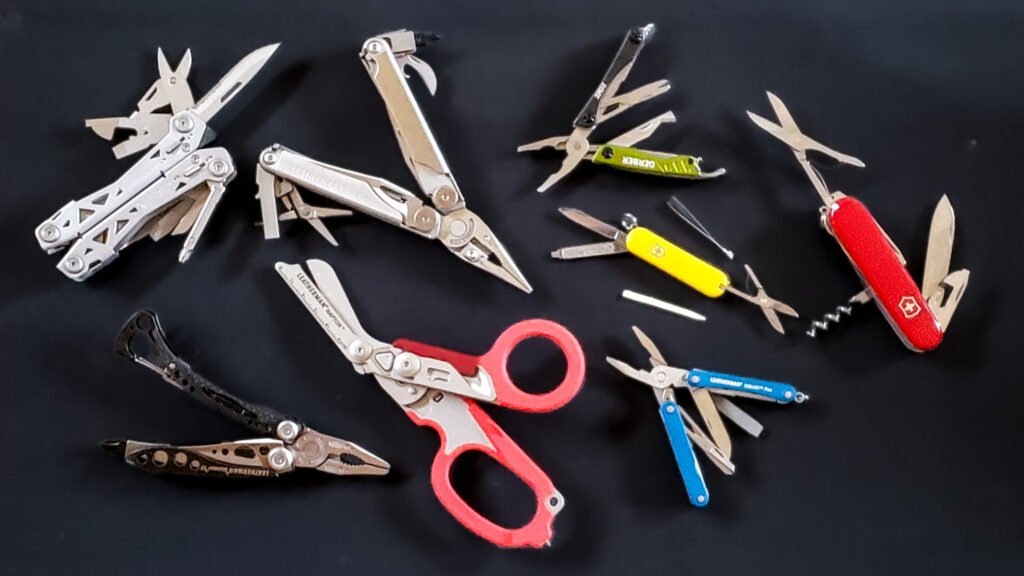
A compact multi-tool is one of the most underrated travel tools in any serious traveler’s kit. Mine has a small blade, a flat head and Phillips screwdriver, a bottle opener, scissors, and a file. It fits in my travel tool bag without taking up any real space, and it has saved me more times than I can count.
On a camping trip in the mountains, I used mine to tighten a loose tent pole connector. On a road trip, I used the flathead to fix a wobbly car mirror. In a rented apartment, I used the screwdriver to fix a loose door handle. A well-built multi-tool belongs in every travel toolbox because it replaces a dozen single-purpose items with one smart piece of gear.
Just remember to pack it in your checked luggage if you are flying. TSA does not allow bladed tools in carry-on bags.
What to look for: Stainless steel construction, 10 to 15 functions, folding design, under 5 inches when closed.
3. Noise-Canceling Headphones
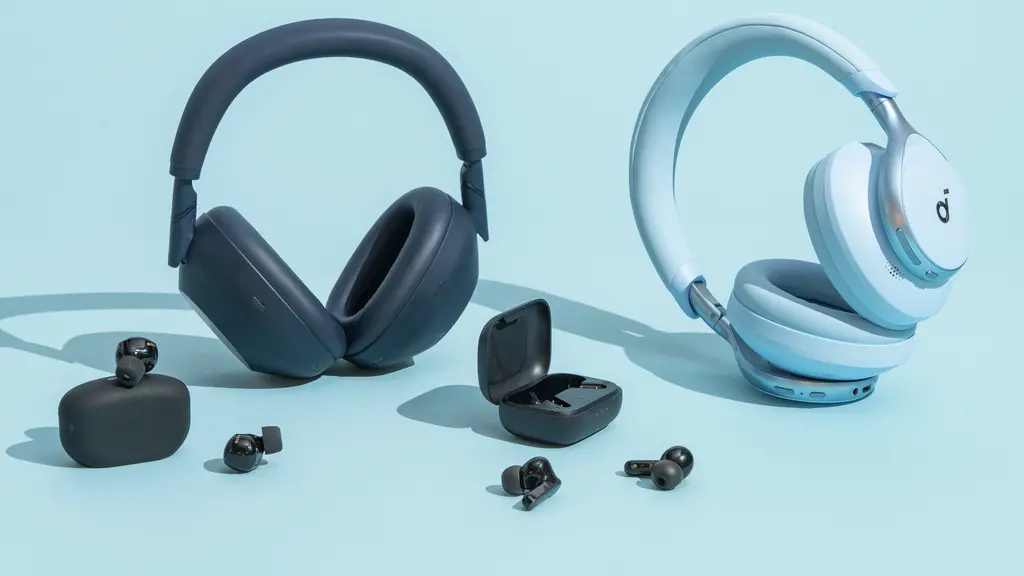
If you have never used noise-cancelling headphones on a long journey, you are genuinely missing out. The difference between sitting in a loud cabin for eight hours versus sitting with the world muted around you is the difference between arriving tired and arriving destroyed.
I switched to noise-canceling headphones a few years ago, and I will never go back. They block out engine noise, crying babies, loud conversations, and general airport chaos. Paired with a good playlist or a downloaded podcast, they turn a brutal overnight flight into something almost peaceful.
Among travel tools, headphones are unique because they protect your mental energy, not just your physical comfort. I consider them as essential as my passport.
What to look for: Active noise cancellation, 20-plus hours of battery life, foldable design, and comfortable over-ear cushions.
4. Packing Cubes
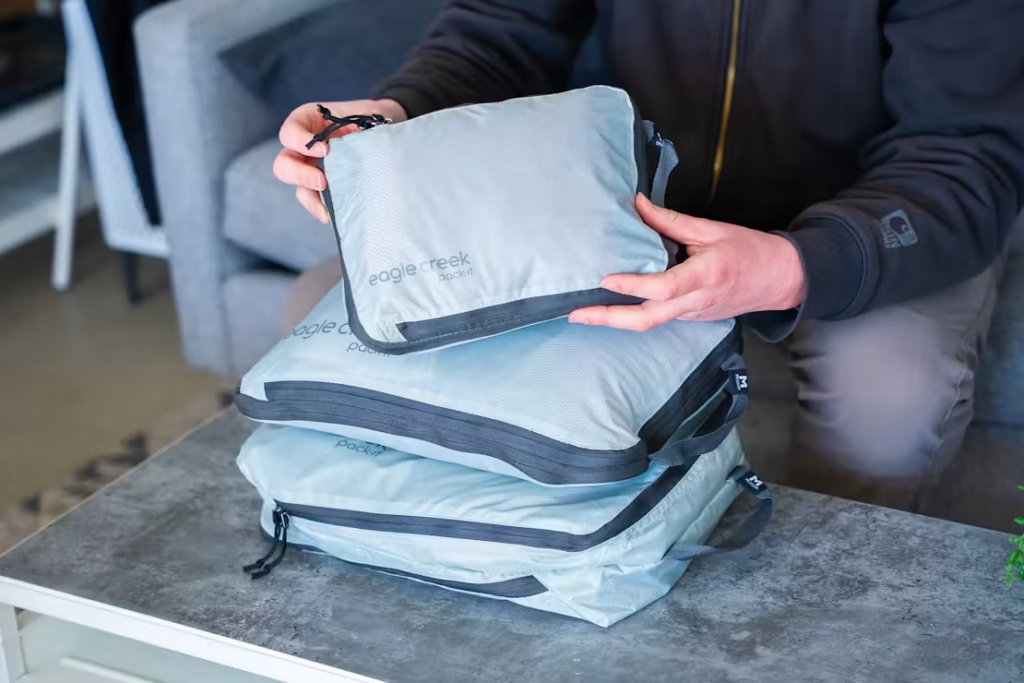
Packing cubes transformed the way I use my travel tool bag and my main luggage. Before I discovered them, finding anything in my bag meant pulling everything out and putting it all back. Now I have one cube for tops, one for bottoms, one for undergarments, and one small cube for travel tools and cables.
Packing cubes compress your clothes, keep everything categorized, and make repacking at hotels a matter of seconds rather than minutes. They are especially valuable on a long journey where you are moving between multiple destinations and living out of your bag.
Think of them as the organizational backbone of your travel tool bag. Once you use them, your old way of packing will feel like chaos.
What to look for: Lightweight mesh fabric, double zipper design, multiple size sets, and a compression option for bulkier items.
5. A Compact First Aid and Personal Care Kit
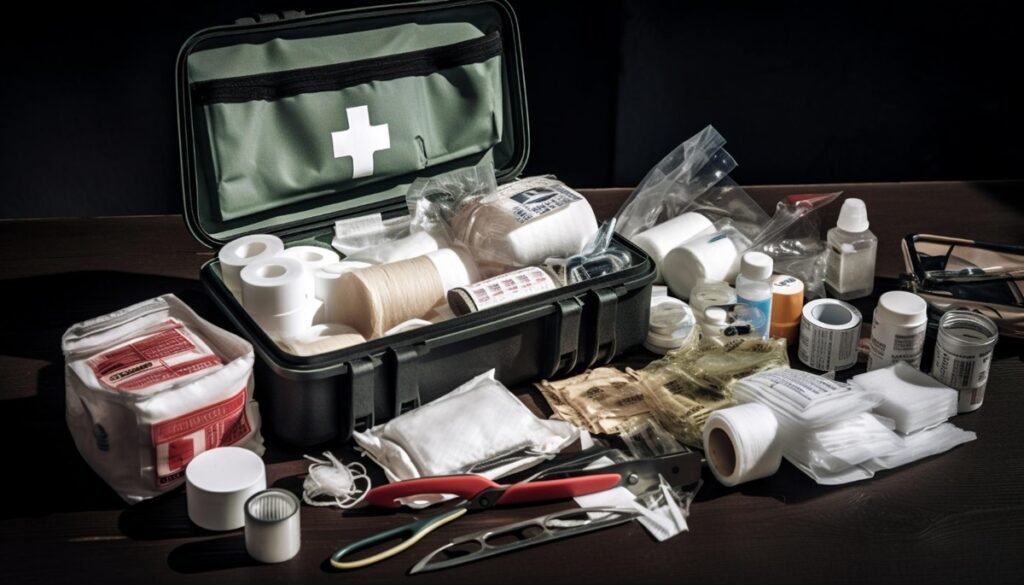
Every smart travel toolbox should include a compact first aid and personal care kit. I am not talking about a full medical bag. I mean a small, flat pouch with the basics that handle 90 percent of travel health situations.
Mine includes adhesive bandages in two sizes, pain reliever tablets, antihistamine, antidiarrheal medication, antiseptic wipes, a small roll of medical tape, blister pads, and a travel-sized hand sanitizer. I also keep a few hydration sachets in there because nothing drains you on a long journey quite like dehydration.
These travel tools weigh almost nothing, but they can rescue your trip. I have used the blister pads after a walking tour in Rome, the antihistamine after an unexpected reaction to food in Thailand, and the pain reliever on every long-haul flight I have ever taken.
What to look for: Pre-assembled travel kits from reputable brands, or build your own in a zippered flat pouch. Keep it under 200 grams.
6. A Travel Neck Pillow with Proper Support

Not all neck pillows are created equal, and this is one of those travel tools where quality genuinely matters. I spent years using those cheap U-shaped foam pillows that let your head flop sideways the moment you fall asleep. Then I tried a memory foam pillow with a chin support design, and my relationship with long-haul travel completely changed.
A proper neck pillow supports the natural curve of your cervical spine and keeps your head from dropping forward, which is the main cause of neck pain after sleeping on a plane or train. On a long journey of eight hours or more, neck discomfort can linger for days if you sleep in a bad position.
This is one of the travel tools I recommend to every person who complains about arriving at their destination with neck stiffness. The upgrade from a basic pillow to a proper supportive one costs very little and delivers enormous comfort.
What to look for: Memory foam or microbeads, chin support panel, machine washable cover, compact carry case, or compressible design.
7. A Universal Travel Adapter with USB Ports
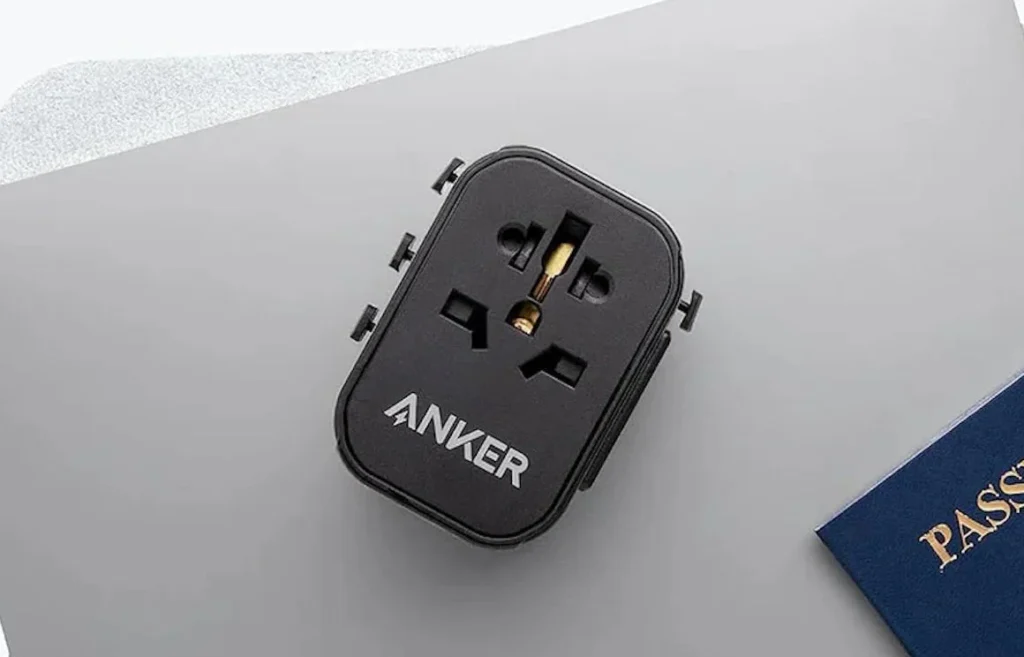
The last of my essential travel tools is a universal travel adapter, and this one is completely non-negotiable if you travel internationally. Different countries use different plug standards. Without an adapter, your devices cannot charge. It is that simple.
I use an adapter that covers over 150 countries and includes four USB-A ports and two USB-C ports in addition to the universal AC outlet. That means I can charge my phone, power bank, headphones, and laptop simultaneously from a single wall socket.
At Paradox Smart Tools, the emphasis is always on gear that does more with less, and a good universal adapter is the perfect example of that philosophy. One compact device eliminates the need to carry multiple country-specific adapters and frees up outlet space wherever you stay.
What to look for: Wide country compatibility, built-in surge protection, USB-C and USB-A ports, compact folding plug design.
How to Organize Your Travel Tool Bag and Travel Tool Box
Now that you know which travel tools to carry, the next step is organizing them well. I keep my travel tool bag divided into two sections. The first section holds daily access items: headphones, a power bank, a neck pillow, and an adapter. The second section holds my travel tool box, which is a small zippered pouch containing the multi-tool, first aid kit, and backup cables.
Packing cubes go into my main luggage, organized by clothing type. This system means I can find any travel tool within ten seconds without unpacking anything.
The goal is accessibility. If a travel tool takes too long to find, you will stop using it. Keep your most used items at the top or in an outer pocket where they are always within reach.
Travel Expert’s Opinion
A long journey does not have to be exhausting, disorganized, or uncomfortable. The right travel tools make an enormous difference in how you feel during and after your trip. The seven items I have covered here are the result of years of real-world travel experience, not sponsored recommendations or theory.
Start with whichever travel tools address your biggest pain points first. If your phone always dies, get the power bank. If you cannot sleep on flights, start with the neck pillow and the headphones. Build your travel tool bag gradually, and you will arrive at a kit that is perfectly suited to your travel style.
Pack with intention, travel with confidence, and let your travel tools do what they are designed to do.