


Article Highlights / Key Points
1. BYD Flash electric car charging delivers up to 1,500 kW of power, adding approximately 400 km of range in just 5 minutes, making it the fastest publicly accessible EV charging technology planned for North America.
2. Canada will become the first country in North America to receive BYD Flash electric car charging infrastructure, following BYD’s posting of a Toronto-based Flash Charging Business Development Manager role.
3. The system is specifically engineered to perform in extreme cold, charging from 10 percent to 70 percent battery capacity in 5 minutes even at temperatures as low as -20 degrees Celsius, making it a strong fit for Canadian winters.
4. BYD has already built over 5,700 Flash Charging stations in China in roughly one year, demonstrating that the company has the rollout experience needed to execute a serious infrastructure expansion.
5. Unlike most charging expansions that follow vehicle launches, BYD is building its charging network before selling a single car in Canada, mirroring Tesla’s original Supercharger strategy but with three times the power output.
BYD Flash Electric Car Charging in Canada
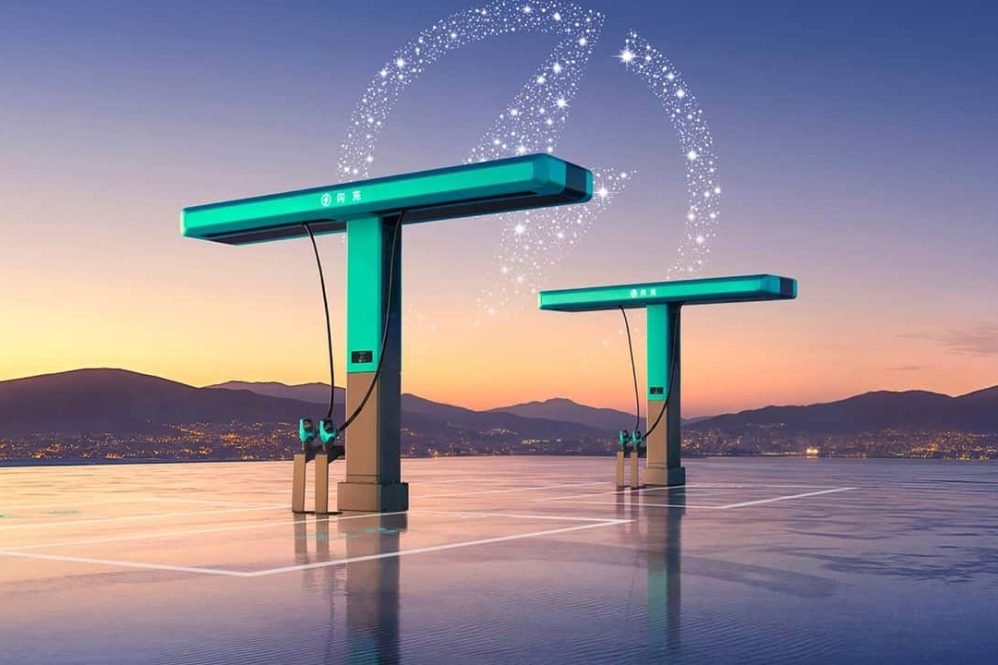
I have been following the EV charging space for a while, and I will be honest with you. Most announcements about faster charging are either too far away to matter right now, or they come with so many asterisks that the real-world impact barely moves the needle. This one is different. BYD Flash electric car charging is coming to Canada, and when I looked at the details, I realized this is not just another press release. This is a genuine shift in what Canadian EV drivers can expect from public charging infrastructure.
The plan became public through a job posting in Toronto, where BYD listed an opening for a Flash Charging Business Development Manager. The role is focused on building out BYD Flash electric car charging stations across Canada, including everything from grid partnerships to construction oversight. That is not the language of a company thinking about a distant future. That is a company actively hiring to build something right now.
What BYD Flash Electric Car Charging Actually Does
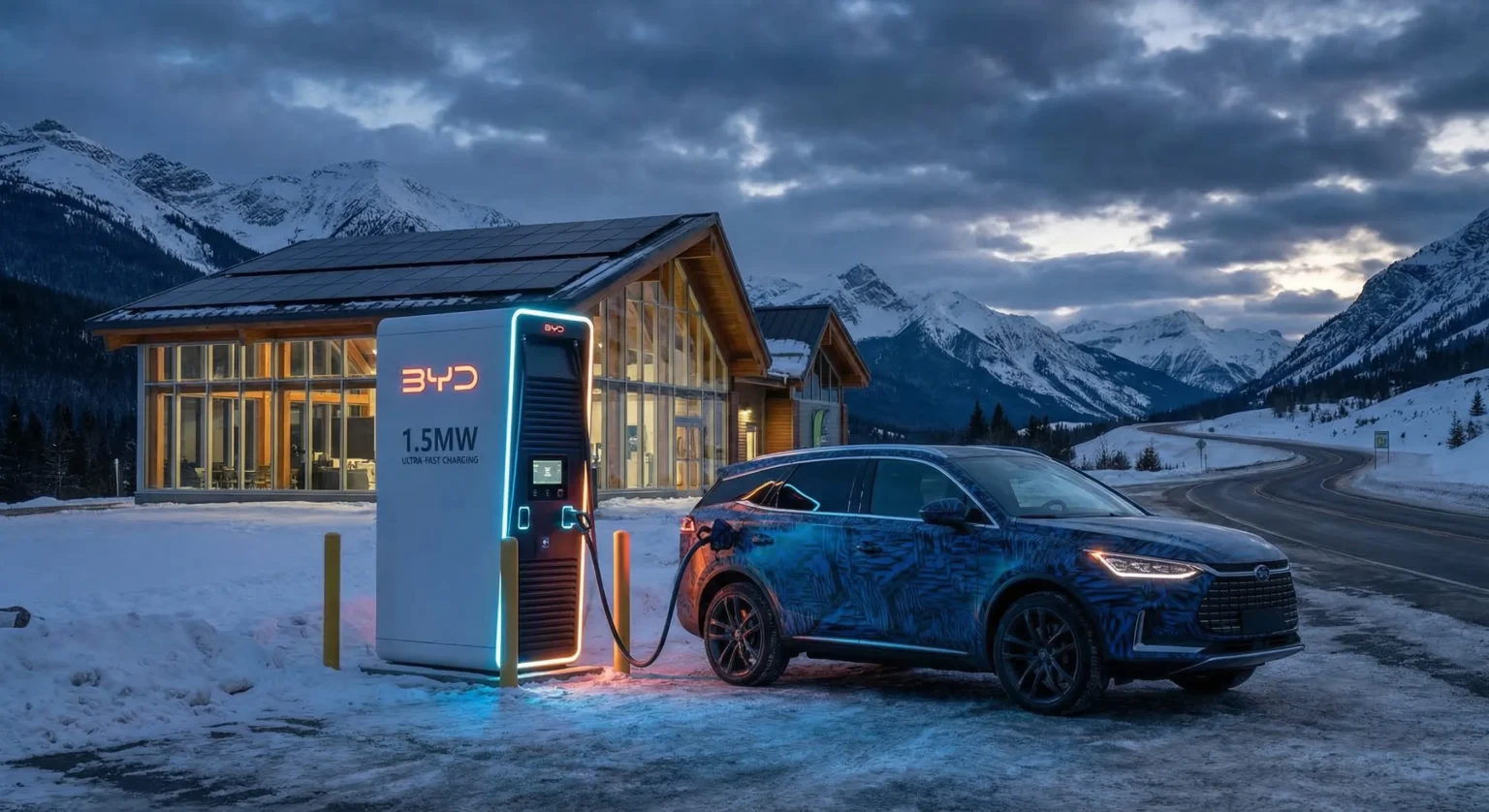
To understand why this matters, you need to know what the technology is capable of. BYD Flash electric car charging operates at up to 1,500 kilowatts of power. For context, the most powerful chargers currently available in North America top out at around 350 to 500 kilowatts. BYD is offering more than three times that output.
The practical result is that a compatible vehicle can go from near empty to a meaningful charge in the same time it takes to grab a coffee and use the restroom. BYD claims approximately 400 km of added range in roughly 5 minutes. That is not a future target. It is what the technology delivers today in China, where BYD has already opened more than 5,700 Flash Charging stations in about a year.
BYD Flash electric car charging is built on the company’s 1,000-volt Super e-Platform and pairs with its second-generation Blade battery. The stations are also designed with integrated battery storage, which means they can draw power gradually from the grid and then deliver it quickly to vehicles. That matters for Canada, where grid infrastructure varies significantly depending on location.
The Winter Factor That Makes This Especially Relevant for Canada
Anyone who has spent a Canadian winter with an electric vehicle knows the problem. Cold temperatures slow down charging. They reduce range. They can turn a confident EV owner into someone anxiously watching a charging percentage bar in a parking lot at minus twenty. This is one of the biggest real concerns that keeps people from switching to electric in Canada, and it has been an honest limitation of the technology.
BYD Flash electric car charging was designed with this in mind. BYD claims the system can charge the second-generation Blade battery from 10 percent to 70 percent in approximately 5 minutes, even at temperatures as low as minus 20 degrees Celsius. If that holds up in the real world, it is a meaningful answer to one of the most consistent objections people raise about electric vehicles in northern climates.
That cold-weather performance is not accidental. It is part of why BYD chose Canada as its first North American market for Flash Charging. The Canadian climate is actually a good proving ground for the technology. If BYD Flash electric car charging works here in January, it will work essentially anywhere.
Why Canada and Not the United States
The natural question when you see this news is why Canada is first and not the United States. The answer is trade policy. The US has maintained heavy tariffs on Chinese-made vehicles and related technology. BYD cannot currently sell its cars in the American market in any practical sense, which means building a charging network there has no near-term business logic.
Canada moved differently. In early 2026, Canada reduced its tariff on Chinese electric vehicles from 100 percent to 6.1 percent under a quota arrangement. That opened the door. BYD has since confirmed plans for 20 Canadian dealerships, with Toronto as the starting point. The charging infrastructure is now following the same path.
This means that for the foreseeable future, BYD Flash electric car charging will be a Canadian experience. American EV drivers looking across the border will be watching something they cannot access yet. It is an unusual position for North America, where the US has traditionally led on EV adoption.
BYD Is Building the Network Before Selling the Cars
One detail that stood out to me when I read through the job posting is that BYD is hiring for charging infrastructure now, before it has sold a single vehicle in Canada. That is a deliberate strategic choice, and it echoes exactly what Tesla did over a decade ago when it built out the Supercharger network ahead of mass market adoption.
The logic is straightforward. Charging anxiety is real. People thinking about buying an EV want to know that fast, reliable charging exists before they commit. By the time BYD vehicles arrive at Canadian dealerships, the BYD Flash electric car charging network should already be visible and functional. The charger becomes part of the sales pitch.
At Paradox Automotive, we have seen firsthand how much charging infrastructure shapes buyer decisions. A fast charger nearby changes the conversation completely. When customers know they can add hundreds of kilometres of range in the time it takes to stretch their legs, hesitation tends to disappear. BYD understands this, which is why the hiring came before the cars.
How BYD Flash Electric Car Charging Compares to What Exists Today
To put the numbers in perspective, consider what Canadian EV drivers currently have access to. Tesla’s newest V4 Supercharger cabinets deliver up to 500 kilowatts for vehicles. Most other public DC fast chargers in Canada operate between 50 and 350 kilowatts. The average charging session at a busy station can easily take 20 to 40 minutes, depending on the vehicle and starting battery level.
BYD Flash electric car charging at 1,500 kilowatts is in a different category. The comparison is not just about speed. It is about how BYD is pushing what public charging infrastructure can look like. The stations are designed around vehicles with 1,000-volt architecture drawing up to 1,000 amps. That combination is what makes the 5-minute charge possible.
Of course, the full 1,500 kW benefit only applies to vehicles built to accept it. BYD’s own models on the Super e-Platform are the obvious match. But even at lower acceptance rates, the stations will still charge most EVs significantly faster than what is commonly available today. The infrastructure is future-ready in a way that many current installations are not.
What Needs to Happen Before the Stations Open
Building BYD Flash electric car charging stations in Canada is not as simple as shipping equipment and flipping a switch. The job posting itself pointed to the real work ahead. The incoming manager will need to build relationships with local partners for grid upgrades, equipment installation, and ongoing station operation. Grid connections for stations drawing this much power require serious planning and coordination with utilities.
Permitting timelines in Canada vary considerably by province and municipality. A station that might be approved and built in a matter of months in one location could take significantly longer in another. The integrated battery storage that BYD uses with its Flash Charging stations helps reduce peak grid demand, which may smooth some of the utility approval processes, but it does not eliminate the work.
BYD’s vehicles are also still working through the Canadian import quota system, with the launch timeline reportedly pointing toward 2027. That gives the charging team a window to get infrastructure in the ground before the cars arrive, but it also means there is no room for delay if BYD wants the network ready when the first vehicles reach customers.
What This Means for the Broader EV Landscape in Canada
The arrival of BYD Flash electric car charging in Canada will create real competitive pressure on every other charging network operating in the country. When drivers experience a 5-minute charge that actually works in a Canadian winter, their expectations for every other station will shift. Networks offering 50 or 100 kilowatts will feel increasingly outdated by comparison.
It also signals something important about where the EV industry is headed. The conversation about range anxiety has been shifting for a few years now, but BYD Flash electric car charging pushes it further. When charging takes the same amount of time as a short break, the comparison to a gas station fill-up becomes much less relevant. The case for electric vehicles gets stronger at every level.
For Canada specifically, this is a moment worth paying attention to. The country is receiving technology that the United States does not have access to right now, and it is coming from a manufacturer that has moved faster on charging infrastructure than almost anyone else in the world. Whether or not you plan to buy a BYD vehicle, the presence of BYD Flash electric car charging on Canadian roads will raise the standard for what EV infrastructure looks like in this country.
EV Expert’s Opinion
When I look at the full picture, what impresses me most is not just the speed of BYD Flash electric car charging. It is the timing and the intent behind the rollout. BYD is not waiting to see if the market exists. It is building the infrastructure first, in a country where cold weather has historically been the hardest argument against going electric, and it is doing so before it has delivered a single car.
That kind of commitment is what moves markets. The technology is real, the hiring is underway, and the timeline is pointing toward 2027. If BYD Flash electric car charging delivers in Canada what it has already delivered in China, Canadian EV drivers are about to have access to something genuinely new. The five-minute charge at minus twenty degrees is no longer a concept. It is a construction project.