


Article Highlights (Key Points)
- The Australian Rainforest Daintree is over 180 million years old, making it the oldest tropical Rainforest on Earth and a UNESCO World Heritage Site.
- The best time to visit is during the dry season between May and October when trails are accessible, and wildlife is easier to spot.
- You must cross the Daintree River by cable ferry to enter the Rainforest, as there is no bridge connection.
- The region is home to over 12,000 plant species, rare cassowaries, crocodiles, and countless birds found nowhere else in the world.
- Staying overnight inside the Australian Rainforest Daintree gives you access to dawn chorus walks, night safaris, and a completely different side of the forest after dark.
The First Time I Stepped Into the Daintree
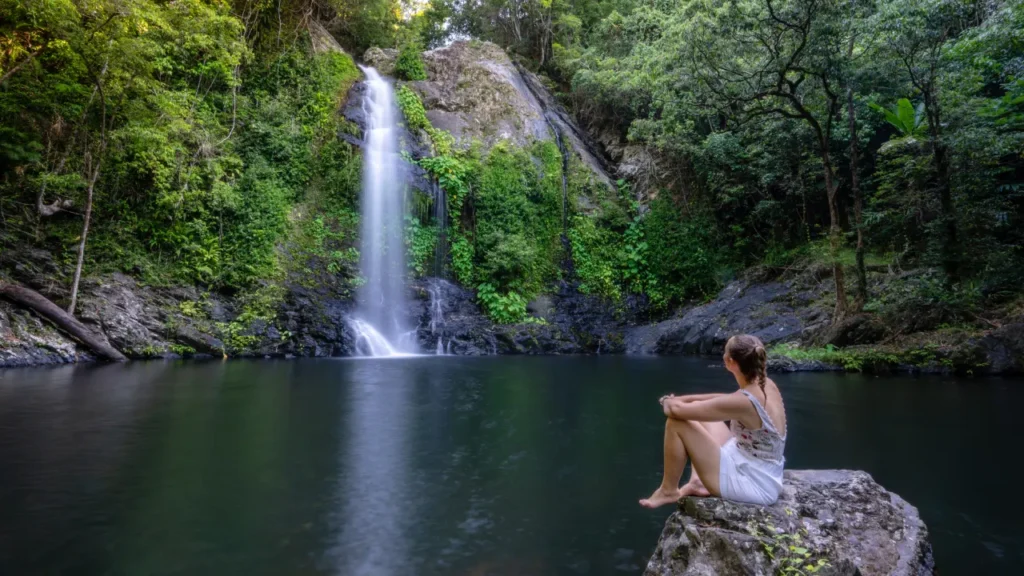
I still remember the exact moment I crossed the Daintree River by cable ferry and stepped into what felt like another world entirely. The air was thick with moisture, layered with the smell of Earth and leaves and something ancient that I could not quite name. The canopy above was so dense it filtered the afternoon light into something green and soft. Within minutes, I heard a rustling in the undergrowth and spotted a pademelon watching me from between the tree roots.
That was my first real encounter with the Australian Rainforest Daintree, and it changed how I understood what wilderness truly means.
If you are planning your first visit to this extraordinary place, this guide is based on genuine on-the-ground experience. There are no generic tips here. Everything in this article comes from time spent walking the trails, talking to locals, getting rained on, watching the stars over the rainforest canopy, and learning from guides who have dedicated their lives to this ecosystem.
What Is the Australian Rainforest Daintree?
The Australian Rainforest Daintree, located in Far North Queensland, is widely regarded as the oldest surviving tropical Rainforest on the planet. Scientists estimate it is around 180 million years old, predating the Amazon by tens of millions of years. It covers roughly 1,200 square kilometres and was inscribed as a UNESCO World Heritage Area in 1988.
What makes the Australian Rainforest Daintree genuinely extraordinary is not just its age but its biodiversity. It holds around 12,000 of Australia’s 20,000 plant species. It is home to more than 430 bird species, 12,000 insect species, and a range of animals found absolutely nowhere else on the planet. This is where the Rainforest meets the reef, as the Daintree sits adjacent to the Great Barrier Reef Marine Park, creating one of the most biodiverse regions on Earth.
For first-time visitors, understanding this context matters. You are not just going on a nature walk. You are stepping into one of the last intact pieces of Gondwanan rainforest, a living record of life on Earth that stretches back before dinosaurs walked the continent.
How to Get to the Australian Rainforest Daintree
Most visitors fly into Cairns, the main gateway city to the Australian Rainforest, the Daintree. From Cairns, it is roughly a two-hour drive north along the Captain Cook Highway, one of the most scenic coastal drives in Australia. The road hugs the edge of the sea before turning inland toward the forest.
You will pass through Port Douglas, which is a popular base for many travellers. From Port Douglas, it is around 45 minutes to the Daintree River ferry crossing. The ferry runs every ten minutes and is the only way to cross into the northern section of the Rainforest. The crossing itself takes about five minutes, but it sets the mood perfectly. As you drift across the dark water watching the forest wall on the other side, something shifts. You feel a kind of threshold being crossed.
There is no public transport that runs directly into the Australian Rainforest Daintree, so hiring a car is strongly recommended. This gives you the freedom to explore Cape Tribulation, stop at lookouts, and reach areas that tours often skip.
When to Visit: Dry Season vs Wet Season
This is one of the most important decisions you will make when planning a trip to the Australian Rainforest Daintree. The dry season runs from May to October. During these months, the heat is manageable, rainfall is minimal, and most walking tracks are fully accessible. Birdwatching is exceptional, the roads are safe, and you can explore without worrying about flash flooding or closed trails. If this is your first visit, the dry season is the right time to come.
The wet season runs from November to April. This is when the Australian Rainforest, the Daintree, transforms into something even more dramatic and primal. Waterfalls explode, the vegetation turns impossibly lush, and the atmosphere is electric. But it comes with real challenges. Some roads become impassable, midge insects can be intense, and certain tracks close entirely due to flood risk. Experienced travellers and those with a flexible itinerary can have incredible experiences in the wet season, but first-timers should plan carefully.
Regardless of when you visit, always check road conditions with the Mossman Gorge Centre or local accommodation before heading out each day. The Australian Rainforest Daintree operates on its own schedule, and the forest always has the final say.
Top Experiences Inside the Australian Rainforest Daintree
Walking the Jindalba Boardwalk
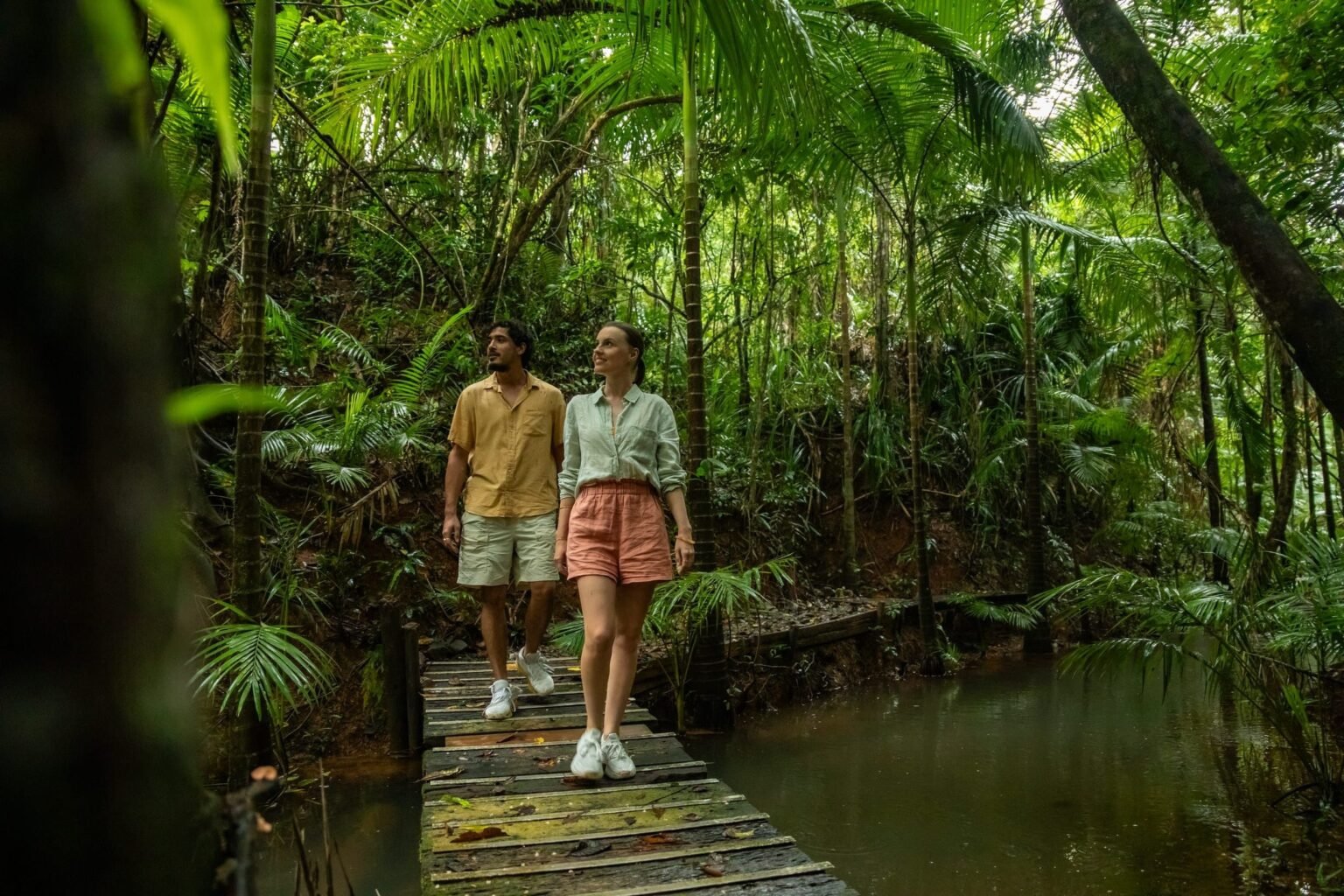
The Jindalba Boardwalk near Cape Tribulation is one of the most accessible and rewarding walks in the entire Daintree Rainforest. The elevated timber path winds through lowland rainforest, offering close-up views of strangler figs, fan palms, and towering trees draped in epiphytes. The walk takes about 45 minutes at a relaxed pace and is suitable for most fitness levels.
What I love about this walk is that it slows you down. You stop noticing the big picture and start seeing the details. The way light catches a spider web. The sound of a cicada starting and stopping. A gecko pressed flat against a tree trunk, invisible until it moves.
Mossman Gorge
Mossman Gorge sits at the southern edge of the Australian Rainforest, the Daintree, and is managed by the Eastern Kuku Yalanji people, the Traditional Custodians of this land. A shuttle bus runs from the Mossman Gorge Centre into the gorge, where you can swim in crystal-clear water surrounded by ancient boulders and closed-in forest.
The Cultural Centre here offers guided walks with Aboriginal guides that bring the forest to life in ways no standard tour can replicate. They share knowledge of bush medicine, traditional food gathering, and the spiritual significance of the landscape. This context transforms the Australian Rainforest, the Daintree, from a beautiful place into a living, storied one.
Night Walks and Nocturnal Wildlife
One experience I recommend to every first-time visitor is a guided night walk inside the Australian Rainforest Daintree. The forest after dark is an entirely different world. Tree frogs emerge in numbers, possums move through the canopy, and if you are lucky, you will see a Boyd’s forest dragon or a large brown tree snake coiled on a branch above the path.
Several ecolodges and local guides offer night walks, and the cost is usually modest. What you gain in perspective is priceless. The sounds, the smells, and the feeling of standing in a living darkness that is older than human memory is something no daylight walk can replicate.
Cape Tribulation Beach
Cape Tribulation is where two UNESCO World Heritage Areas meet at a single beach: the Australian Rainforest Daintree runs directly to the sand, and the Great Barrier Reef lies just offshore. Standing on this beach, with the forest behind you and the coral sea ahead, is one of those moments that earns the term “breathtaking.”
The beach itself is wide, largely undeveloped, and often empty early in the morning. Swimming is not always safe due to marine stingers and estuarine crocodiles, so follow posted signs and ask local advice before entering the water.
Crocodile Spotting on the Daintree River
Joining a crocodile-spotting boat tour on the Daintree River is a must. These tours run for around one to two hours and take you slowly along the mangrove-lined river where saltwater crocodiles bask on banks and hunt in the shallows. Your guide will explain crocodile biology, behaviour, and their role in the ecosystem. It is genuinely fascinating rather than frightening, particularly when a three-metre crocodile slides off a mudbank just a few metres from the boat with barely a ripple.
Where to Stay in the Australian Rainforest Daintree
Accommodation in the Australian Rainforest, Daintree, is deliberately limited. This is a protected area, and development is tightly controlled, so your options are mostly small ecolodges, treehouses, and self-contained cabins. This is a feature, not a limitation. Staying small means you sleep to the sound of frogs, wake to birdcall, and move through the forest at its own pace.
Some well-regarded options include:
Daintree Ecolodge, which sits at the edge of the forest near the river, offers treehouse-style rooms elevated into the canopy. The staff is knowledgeable, and the on-site spa uses rainforest plant extracts.
Ferntree Rainforest Lodge near Cape Tribulation offers comfortable bungalows surrounded by forest, a pool, and easy access to walking tracks. The property feels genuinely embedded in the landscape rather than imposed on it.
Heritage Lodge and Spa is another option that draws visitors who want a blend of comfort and immersion. The common areas are open to the forest on all sides, and wallabies sometimes graze on the lawn at dusk.
Booking well in advance is essential, particularly during the dry season. The Australian Rainforest, Daintree, draws visitors from around the world, and good accommodation sells out quickly.
Wildlife You Can Expect to See
The Daintree Rainforest in Australia is one of the best places in Australia to see rare wildlife in a genuinely wild setting. Here is what you can reasonably expect:
Cassowaries are the headline animal of this forest. These massive, flightless birds stand up to 1.8 metres tall and are considered a keystone species because they disperse large seeds that no other animal can process. Spotting one in the wild is an unforgettable experience. They are most often seen in the early morning along roadsides and forest edges, particularly around Cape Tribulation.
Boyd’s forest dragons are endemic to the wet tropics and often spotted sitting motionless on tree trunks or low branches. They are extraordinary-looking animals with crested heads and prehistoric faces.
Green tree pythons are sometimes spotted coiled in the vegetation near walking tracks. They are not dangerous to humans and are quite beautiful when found.
Ulysses butterflies are large, iridescent blue butterflies that flash through the forest like living jewels. They are common throughout the Australian Rainforest Daintree and never get old to see.
Estuarine crocodiles inhabit the rivers and estuaries. They are apex predators and command genuine respect. Never swim in unpatrolled waterways and always follow warning signs near waterways.
Practical Tips for First-Time Visitors
Wear long, lightweight clothing. This serves two purposes: sun protection above the canopy and insect protection inside the forest. Light cotton or technical fabrics work best in the humidity.
Bring insect repellent. Midges, locally known as sandflies, are especially active near the coast and can be relentless without protection. A repellent containing DEET or picaridin is worth having on hand.
Respect the No Take Rule. The Australian Rainforest Daintree is a protected area. Do not pick plants, disturb wildlife, or remove anything from the forest. This matters both legally and ethically.
Carry water and snacks. The number of shops and cafes inside the forest is very limited. The general store at Cape Tribulation is one of the few options north of the ferry crossing.
Download offline maps. Mobile coverage inside the Australian Rainforest Daintree is patchy at best and nonexistent in parts. Download the area to your offline maps app before you cross the ferry.
Leave earlier than you think you need to. Everything in this forest takes longer than expected, because there is always something worth stopping for.
A Note on Responsible Travel
The Australian Daintree Rainforest is under ongoing pressure from climate change, visitor impacts, and feral animals. The conservation organisations and Traditional Custodians who manage this landscape work hard to keep it intact for future generations.
Choosing eco-certified accommodation, booking locally run tours, and following all guidelines regarding wildlife and vegetation is not just courtesy. It is the responsibility that comes with visiting one of the world’s great natural wonders.
At Mid Paradox Travel Guide, we believe the best travel leaves a place better than you found it, or at the very least unchanged. The Australian Rainforest Daintree deserves exactly that kind of visitor.
Australian Rainforest Daintree Video Documentary
Personal Opinion With Thoughts
There is a particular stillness that you find in the Australian Rainforest Daintree, especially in those early morning hours when the mist sits low in the canopy. The light is pale and green, and everything is so quiet that you can hear individual drops of water falling from leaf to leaf. It is a stillness that feels earned rather than given. The forest asks something of you: attention, respect, and patience.
In return, it offers something that no other place I have visited has been able to replicate. A feeling of genuine smallness in the best possible sense. A reminder that the world was here long before us and, if we care for it properly, will be here long after.
If you are planning your first trip to the Australian Rainforest Daintree, go with curiosity and go slowly. The forest rewards both.