
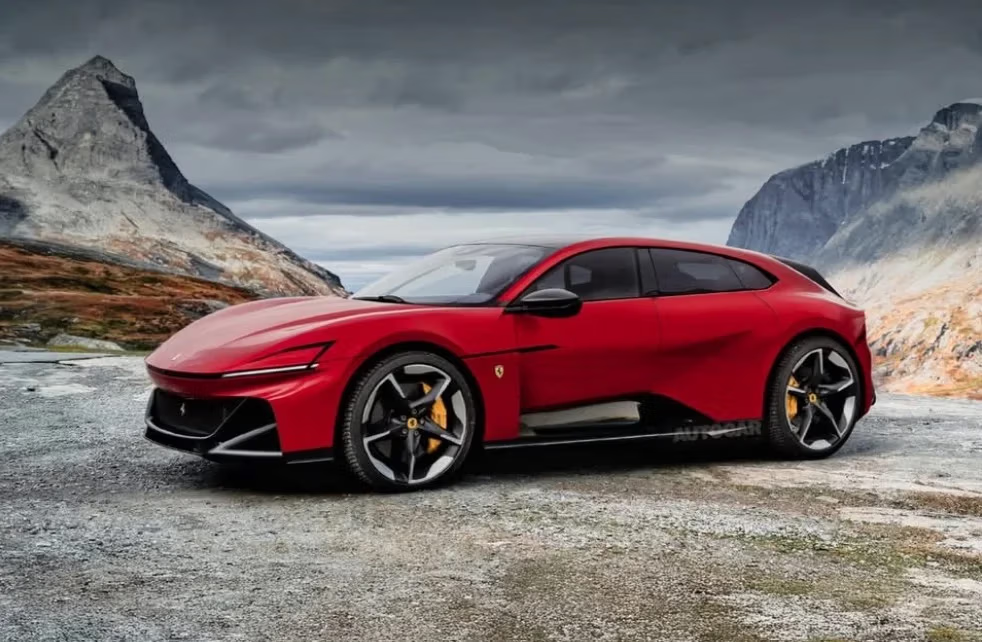


The Luce has ignited a firestorm of opinions, arguments, and outright fury from the very community that has spent decades worshipping the Prancing Horse. Some have even taken to calling it the “iPhone 18” a nickname that is equal parts mockery and prophecy, suggesting that Ferrari has traded its Italian racing soul for a Silicon Valley product launch. This isn’t just about horsepower versus kilowatts. This is about identity, heritage, and the very definition of what a Ferrari is supposed to be.
A Brand Built on Fire, Now Running on Batteries
To truly understand why the Ferrari Luce has struck such a raw nerve, you need to understand what Ferrari has always represented at its deepest level. The brand was never just a car company. It was a religion built around sound, fury, and mechanical drama. The howl of a Ferrari V12 climbing through its rev range, the sharp bark of a V8 at full throttle, the physical vibration traveling up through the steering column and into your hands these were not just noises and sensations. They were emotional experiences that connected the driver to something primal, alive, and irreplaceable.
Every great Ferrari moment in history has been accompanied by a soundtrack. Michael Schumacher’s dominance at Maranello was scored by screaming engines. The Ferrari 458, the F40, the Enzo, each of these machines communicated through noise and drama in ways that made driving them a full-body, full-soul experience. Ferrari Luce strips all of that away. In its place comes the near-silent surge of electric motors, instant torque delivered without ceremony, and a driving experience that many purists describe as clinical and sterile. For the faithful, this feels less like evolution and more like erasing a corporate decision that prioritizes market share over the spiritual covenant Ferrari has always held with its drivers.
The Purosangue Already Cracked the Foundation
The Ferrari Luce did not arrive in a vacuum. Ferrari had already been testing the patience of its traditionalist fanbase when it launched the Purosangue SUV back in 2022. For decades, Ferrari executives had publicly sworn almost as a matter of sacred corporate faith that they would never build a high-riding utility vehicle. Enzo Ferrari’s DNA, they insisted, was fundamentally incompatible with such a machine. An SUV was everything Ferrari was not: tall, heavy, practical, family-oriented.
Then the Purosangue arrived, and it sold extraordinarily well. The business case was undeniable and the profits were significant. But for the purists, it was the first visible crack in the dam, a clear signal that Ferrari was willing to compromise its identity in pursuit of new markets and broader commercial appeal. The brand had made its peace with practicality. The Ferrari Luce, arriving in the wake of that decision, feels like that crack breaking wide open and flooding everything the old guard held sacred.
Jony Ive and the Cupertino Problem
Perhaps nothing has provoked more visceral and widespread reaction than the design story behind the Luce. Rather than turning to legendary Italian automotive houses like Pininfarina creative partners synonymous with Ferrari’s most iconic and emotionally charged silhouettes the company made the extraordinary decision to hire LoveFrom, the design agency led by Sir Jony Ive, the legendary mind behind Apple’s most defining products including the iMac, the iPod, and the iPhone.
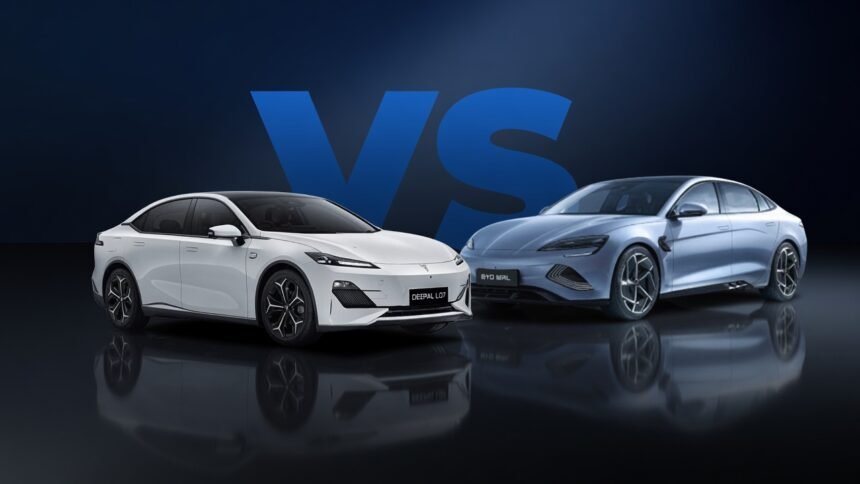
The result, critics argue, looks exactly like what you would expect when a Silicon Valley design philosophy collides with a Ferrari brief. The Ferrari Luce is smooth, sanitized, and eerily consumer-friendly in its appearance. Internet commenters have been merciless in their assessments, comparing it to a premium Chinese EV or an expensive household appliance. Where a Ferrari should provoke aggression, lust, and emotional chaos, the Luce provokes something far more unsettling to enthusiasts’ indifference.
The size and shape of the car compound the problem dramatically. The Ferrari Luce stretches five full meters in length and seats five passengers, complete with a rear bench and rear-hinged coach doors. For a brand whose legend was built entirely on low-slung, mid-engined two-seaters that felt like barely tamed racing machines, this bulbous, upright, family-friendly hatchback silhouette feels almost cosmically wrong. It looks like a product designed by committee for a demographic that has never once visited a racetrack.
Engineering Fake Passion Into a Silent Machine
Ferrari knew that silence was a dealbreaker. No engineer at Maranello needed a consumer survey to understand that a mute Ferrari would fundamentally shatter the brand’s emotional appeal. Their answer was an acoustic system that captures vibrations directly from the electric motors using sensors and amplifies them through the car’s chassis essentially engineering an artificial, synthetic soundtrack for a vehicle that would otherwise be as quiet as a refrigerator.
In concept, this represents a genuinely fascinating and technically ambitious piece of engineering. Ferrari’s commitment to solving the silence problem is real, and the effort behind the system should not be dismissed. But in practice, to the ears and hearts of a devoted purist, it is nothing short of heresy. Synthetic vibrations and manufactured engine sounds feel like a theatrical, hollow imitation of the genuine mechanical chaos that once defined every Ferrari ever made. Car enthusiasts are not easily fooled, and they are not easily consoled. Many feel that Ferrari is essentially asking them to close their eyes, accept the illusion, and pretend that piped-in noise is the same as a screaming V12 tearing through the Italian countryside. The reaction to that request has been sharp, unforgiving, and entirely predictable.
Six Hundred and Forty Thousand Dollars of Questions
Then there is the price, and it is a number that demands serious confrontation. The Ferrari Luce carries a staggering asking price of approximately €550,000, which translates to around $640,000 in the American market. At that number, the expectation is not simply performance, it is an entirely bespoke, irreplaceable, and deeply personal experience. The kind of mechanical artistry, hand-crafted engineering, and raw exclusivity that has historically justified spending half a million dollars on an Italian supercar.
What many buyers and critics feel they are getting instead is performance that can be closely matched and in some metrics, exceeded by machines costing a fraction of that figure. The Ferrari Luce sprints from 0 to 62 mph in a genuinely impressive 2.5 seconds. But the Tesla Model S Plaid and the Lucid Air Sapphire both offer comparable or superior straight-line performance for dramatically, almost embarrassingly, less money. When a mass-market electric sedan can stand toe-to-toe with a $640,000 Ferrari on a performance sheet, the conversation about value becomes deeply and unavoidably uncomfortable.
The core complaint is not really about the price itself. Ferrari has always been expensive, and nobody buying a Ferrari is shopping on a budget. The complaint is about what that price is supposed to represent. Paying supercar money for a 2.2-ton battery pack dressed in tech-influenced bodywork, with artificial sound carefully engineered into the cabin, does not feel like the spiritual and mechanical successor to the machines that made Ferrari immortal. It feels like paying a legend’s premium for a product that has quietly abandoned what made the legend worth anything in the first place.
A Five-Seater Family Car With a Prancing Horse Badge
The five-seater configuration is perhaps the subtlest but most symbolically loaded element of the entire controversy surrounding the Luce. Ferrari has never, in its entire history, built a production car with a full rear bench seat. The identity of the brand was rooted without compromise in two-seater, driver-focused machines that had absolutely zero interest in practicality, comfort for rear passengers, or the logistical demands of family life.
The Ferrari Luce is designed to accommodate families with grace and ease. Its rear-hinged coach doors make entry and exit for rear passengers elegant and effortless. It is, in every functional and practical sense, a refined daily driver entirely capable of handling the school run as smoothly as a mountain road. For traditionalists, this design decision reads as Ferrari consciously and deliberately chasing volume in markets like China, where family-friendly luxury commands enormous commercial weight, at the direct and irreversible expense of the brand’s racing purity and exclusivity.
What the Controversy Is Really About
The anger surrounding the Ferrari Luce is not irrational, and it is not simply the predictable grumbling of fans resistant to change. It is a deeper, more urgent, and more emotionally honest question about what Ferrari actually is and what it is consciously choosing to become.
Every deliberate element of the Ferrari Luce the Jony Ive design language imported from Cupertino, the artificial soundscape engineered to simulate passion, the five-seat family layout, the EV platform, the smooth and inoffensive tech-product aesthetic represents a clear and intentional choice to reach far beyond Ferrari’s traditional audience and traditional identity. These are not reluctant compromises. They are calculated decisions that signal Ferrari is willing, even eager, to fundamentally redefine itself in pursuit of relevance in an electrified and globally expanding luxury market.