


Article Highlights (Key Points)
- Smart traffic management systems help the transportation department reduce congestion and improve road safety significantly.
- Real-time data and GPS tracking allow the transportation department to monitor fleets and respond faster to issues.
- AI and predictive analytics give the transportation department the ability to plan infrastructure before problems arise.
- Digital payment and ticketing systems make public transit under the transportation department more accessible and efficient.
- Electric vehicle integration and green Technology are helping the transportation department reduce its carbon footprint.
How Can Technology Improve the Transportation Department?
When I think about how much has changed in the way cities and governments manage roads, vehicles, and public transit over the past decade, it is honestly remarkable. I grew up in a city where traffic jams were just accepted as part of daily life. Buses ran late. Roads had potholes that took months to fix. Nobody really knew when the next bus was arriving. But today, things look very different, and most of that change comes down to one thing: Technology.
The transportation department plays one of the most important roles in any city or country. It connects people to jobs, schools, hospitals, and businesses. When it works well, everyone benefits. When it fails, the entire economy and quality of life suffer. That is exactly why investing in Technology within the transportation department is not just a smart idea. It is necessary.
Smart Traffic Management Systems
One of the first places I noticed real change was at traffic signals. Old traffic lights worked on fixed timers. They did not care whether a road was empty or packed with cars. Modern smart traffic management systems have changed everything for the transportation department.
These systems use sensors, cameras, and AI-powered software to monitor traffic flow in real time. They adjust signal timing based on actual traffic conditions. During rush hour, green lights stay on longer for busy corridors. Late at night, they shorten cycles to keep traffic moving without unnecessary waiting.
Cities like Los Angeles and Singapore have already deployed adaptive traffic control systems and reported significant drops in commute times and fuel consumption. When a transportation department implements this kind of Technology, it reduces accidents, lowers emissions, and improves the overall experience for drivers and pedestrians alike.
I have personally noticed that in areas where adaptive signals are active, the frustration of sitting at a red light with zero traffic on the other side has nearly disappeared. That is a small thing, but it matters to real people every single day.
GPS and Real-Time Fleet Monitoring
Before GPS and real-time tracking, managing a fleet of government vehicles was largely guesswork. Dispatchers had no idea where trucks, buses, or maintenance vehicles actually were at any given moment. The transportation department had to rely on radio check-ins and paper logs, which were slow and often inaccurate.
Today, GPS fleet management has completely changed how the transportation department operates. Every vehicle can be tracked in real time on a digital dashboard. Managers can see which routes are being followed, where delays are happening, and which vehicles need maintenance before a breakdown occurs.
This Technology also helps with accountability. If a road crew is supposed to be at a specific location at 9 AM, a supervisor can verify that in seconds without making a single phone call. That kind of transparency improves efficiency and builds public trust in the transportation department at the same time.
Beyond tracking, these systems collect data about driving behavior. Harsh braking, speeding, and excessive idling are all recorded. That data helps the transportation department train drivers better, reduce accidents, and cut fuel costs significantly over time.
Predictive Analytics and Infrastructure Planning
One of the most impressive ways Technology helps the transportation department is through predictive analytics. This is something that used to sound like science fiction, but it is very much a practical reality now.
Predictive analytics uses historical data, sensor readings, and machine learning algorithms to forecast when roads, bridges, and tunnels are likely to need repairs. Instead of waiting for a pothole to appear or a bridge beam to crack, the transportation department can act in advance.
I think about infrastructure the same way I think about health. It is always better and cheaper to prevent a problem than to fix it after it has already caused damage. Predictive maintenance works the same way for roads and bridges. The transportation department saves money, prevents accidents, and avoids the chaos of emergency closures.
Several state-level transportation departments in the United States have already adopted sensor-based bridge monitoring programs. These sensors detect stress, vibration, and structural changes continuously. When readings reach a threshold that suggests early-stage deterioration, the system alerts engineers automatically.
That kind of proactive approach is exactly what modern infrastructure management should look like, and it is only possible because of Technology.
Electric and Autonomous Vehicles in Public Transit
Public transit is one of the most visible responsibilities of any transportation department. When buses are late, crowded, or unreliable, people stop using them and go back to personal vehicles, which increases congestion and pollution.
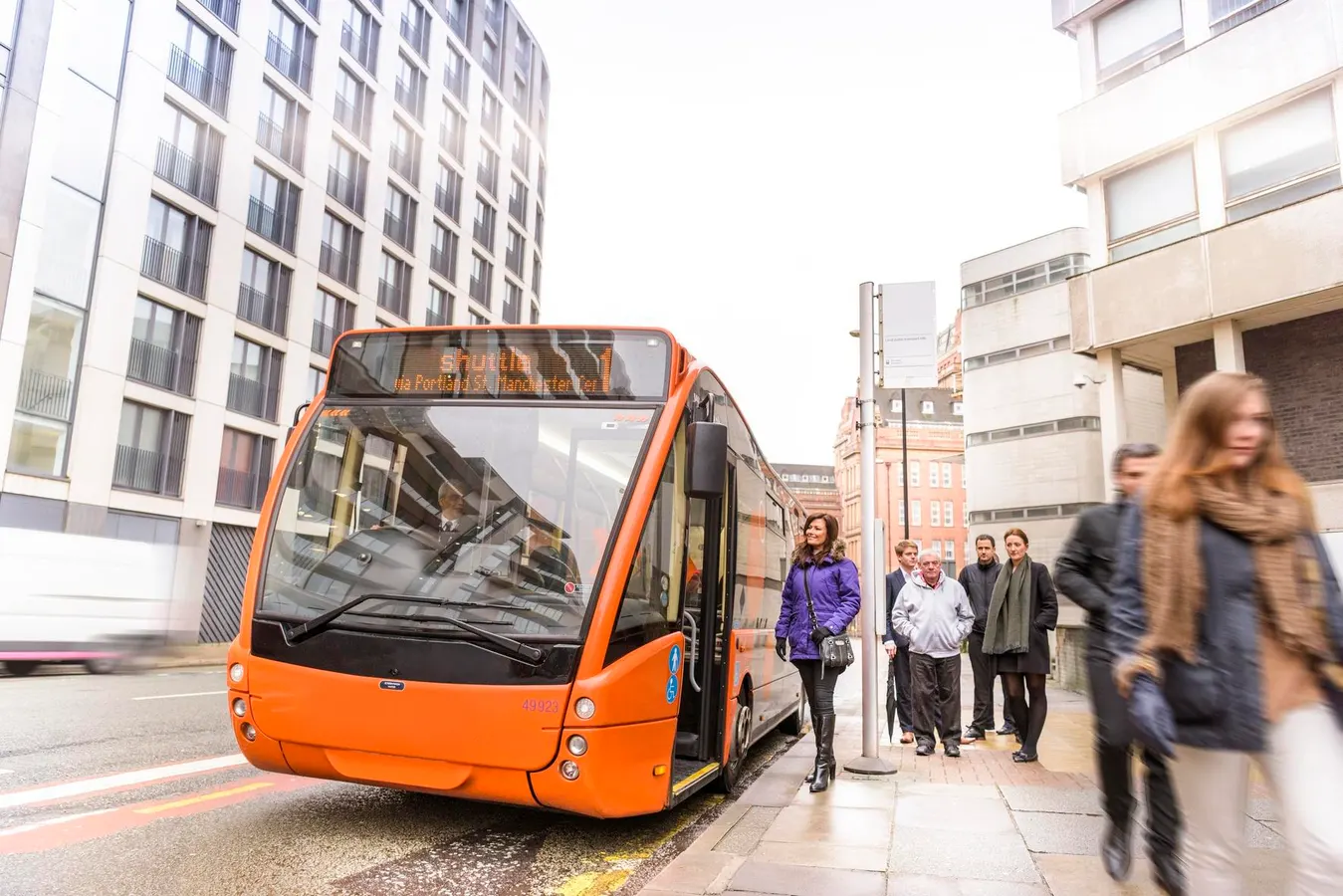
Technology is addressing this from multiple angles. First, electric buses are replacing diesel-powered ones in cities around the world. Electric buses produce zero direct emissions, require less maintenance because they have fewer moving parts, and provide a quieter, smoother ride. The transportation department benefits from lower long-term operating costs even though the upfront investment is higher.
Second, autonomous vehicle technology is beginning to appear in controlled public transit settings. Some cities are already running autonomous shuttle services on campuses, at airports, and in downtown districts. While fully autonomous public buses on busy city streets are still a few years away for most places, the groundwork is being laid right now.
The transportation department that invests in electric and autonomous vehicle infrastructure today will be far ahead of the curve when this Technology becomes mainstream.
Digital Ticketing and Contactless Payments
I remember standing in line at a bus station trying to buy a paper ticket with exact change while the bus was already at the stop. That experience is becoming a thing of the past in cities where the transportation department has embraced digital payment technology.
Contactless payment cards, mobile apps, and digital wallets now allow passengers to board buses, trains, and ferries without fumbling for cash or paper tickets. This speeds up boarding times, reduces queues, and makes public transit more accessible to everyone, including tourists and people with disabilities.
Digital ticketing also gives the transportation department access to valuable ridership data. When and where do people travel most? Which routes are underperforming? Which stations need more staff during peak hours? All of this information flows naturally from digital payment systems and helps decision-makers plan smarter.
The city of London’s Oyster card system and later its contactless payment integration are great real-world examples. These changes made riding the London Underground significantly faster and more convenient, and they gave Transport for London data that improved operations across the entire network.
Integrated Navigation and Traveler Information Systems
Technology also improves how the transportation department communicates with the public. Real-time information screens at bus stops and train stations, live route updates through apps like Google Maps and Transit, and SMS alert systems for delays and service changes have all made traveling by public transport far more predictable.
When people know when their bus is actually arriving rather than guessing based on a schedule, they make better decisions. They feel more in control. That trust is critical for the transportation department, trying to encourage more people to use public transit instead of personal vehicles.
Navigation technology has also made road travel safer. Connected vehicle systems allow cars to receive warnings about accidents, road closures, and hazardous conditions ahead. Some highway systems can now communicate directly with vehicles, and this vehicle-to-infrastructure communication is one of the most exciting developments the transportation department is exploring today.
Drones for Inspection and Delivery
Drones are another technology that the transportation department is beginning to use in meaningful ways, and inspecting bridges, overpasses, and elevated highways used to require scaffolding, lane closures, and sometimes days of work. Today, drones equipped with high-resolution cameras and infrared sensors can complete the same inspection in hours.
This not only saves money but also reduces the risk to human inspectors who would otherwise work at height in potentially dangerous conditions. The data collected by drones is often more detailed and consistent than what human inspectors can gather manually.
Beyond inspections, some transportation departments are exploring drone delivery services as part of a broader logistics network. While this is still in early stages, the potential to reduce last-mile delivery traffic in urban areas is a compelling reason for the transportation department to stay engaged with this Technology.
Cybersecurity and Data Privacy in Transportation
With all this Technology comes responsibility. The transportation department now handles enormous amounts of sensitive data, including passenger travel patterns, vehicle locations, and payment information. Protecting this data is just as important as collecting it.
Cybersecurity threats against transportation infrastructure are real. In recent years, ransomware attacks have targeted transit agencies in cities including San Francisco, Atlanta, and New York. These attacks disrupted operations and cost millions of dollars to address.
Any transportation department that embraces Technology must also invest in robust cybersecurity systems, employee training, and clear data privacy policies. Technology is a powerful tool, but only when it is properly protected and responsibly managed.
How Technology Brings It All Together
What makes Technology truly powerful for the transportation department is not any single tool in isolation. It is the way all these systems work together. Traffic management connects with navigation apps. Fleet tracking connects with maintenance scheduling. Ridership data connects with route planning. Payment systems connect with financial reporting.
When these systems are properly integrated, the transportation department becomes smarter, faster, and more responsive to the real needs of the people it serves. That is the vision that forward-thinking transportation leaders are working toward right now.
At Technology, we believe that the future of public infrastructure depends on embracing digital innovation thoughtfully and with a clear focus on serving communities better.
My Personal Opinion
Technology is not about replacing the human element in the transportation department. It is about giving the people who run these systems better tools to do their jobs and better ways to serve the public. From smart traffic signals to predictive bridge maintenance, from electric buses to contactless payments, the Technology available today is genuinely remarkable.
The transportation department that invests in these tools wisely will build infrastructure that lasts longer, costs less to maintain, moves people more efficiently, and contributes to a cleaner environment. That is not just good technology policy. That is good governance.
Whether you work in the transportation department, rely on public transit, or drive on roads every day, Technology is already shaping your experience. And the best improvements are still to come.