



Article Highlights / Key Points:
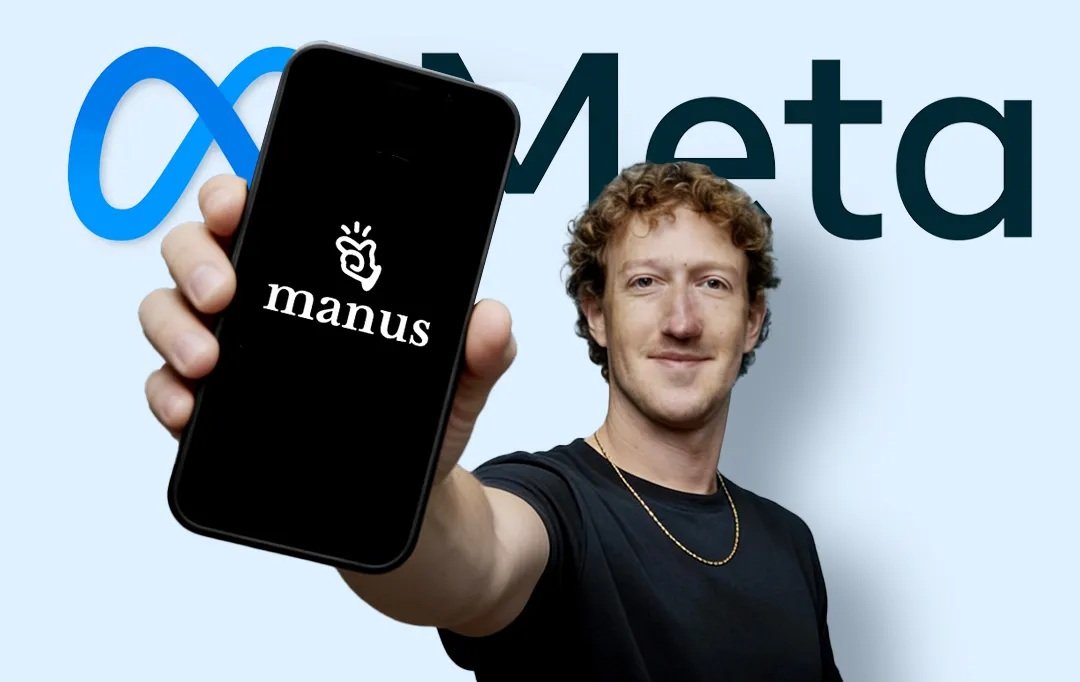
- Meta has begun cutting Manus off from its internal systems as part of complying with Beijing’s divestiture order against the Meta Manus deal.
- Manus co-founders are in early discussions to raise around $1 billion from outside investors to reclaim the startup from Meta.
- Chinese authorities have expanded travel restrictions on AI researchers and executives at private firms, requiring government approval before they travel abroad.
- Top Chinese AI companies, including Moonshot AI, StepFun, and ByteDance, will now need government approval before accepting US investment.
- Investors, including Benchmark, have already received proceeds from the acquisition, while Asian backers like Tencent and ZhenFund have said they will cooperate with the unwinding process.
Meta Manus Deal Collapses
When Meta announced its $2 billion acquisition of Manus AI back in December 2025, it looked like one of the most exciting moments in the global AI industry. A Chinese-founded startup, relocated to Singapore, had caught the attention of one of the biggest technology companies in the world. At Technology, we track stories like this closely because they shape how the industry moves. But what has unfolded since then is a very different story, and it tells us a lot about how Beijing views control over its homegrown AI companies.
The Meta Manus deal is now being actively unwound. Meta has taken the concrete step of cutting Manus off from its internal systems, stopping data sharing between the two organizations, and preventing its employees from using Manus tools on internal projects. This did not happen by choice. Beijing issued a divestiture order roughly two months ago, citing national security concerns and potential violations of technology export controls and foreign investment rules. Meta is now moving to comply.
What makes the Meta Manus deal so significant is what it represented. Manus had gone viral for its agentic AI demo and was seen as proof that Chinese AI startups could compete and win on a global stage. A $2 billion acquisition by Meta felt like a landmark exit, the kind of deal that signals a startup has truly arrived. But Beijing clearly saw it differently. Rather than celebrating the exit, Chinese regulators treated it as a security threat, a case of sensitive Technology potentially slipping out of their reach.
The founders of Manus are now reportedly in early discussions to raise approximately $1 billion from outside investors to buy the startup back from Meta. If that succeeds, the plan seems to involve creating a Chinese joint venture structure and eventually listing in Hong Kong, a market that has been attracting a surge of Chinese AI companies this year. That would effectively reverse the entire arc of the Meta Manus deal and bring Manus back into a structure that Beijing can more comfortably oversee.
This situation does not exist in isolation. Around the same time Beijing was demanding the Meta Manus deal be reversed, Chinese authorities also tightened travel restrictions on researchers and executives at private AI firms. These individuals now need government approval before traveling abroad. On top of that, reports indicate that major AI companies, including Moonshot AI, StepFun, and ByteDance, will require government sign-off before they can accept investment from US-based sources.
Together, these moves paint a clear picture: Beijing is methodically tightening its grip on the AI sector, making sure that capital flows, talent movement, and ownership structures all remain within reach of state oversight.
For investors, the situation around the Meta Manus deal carries its own set of lessons. US-based firm Benchmark has already received its proceeds from the original acquisition. Asian backers, including Tencent, HSG, and ZhenFund, have indicated they will cooperate with the unwinding process. That cooperation says a lot. When Beijing issues an order of this kind, even large institutional investors who backed the deal do not push back.
There is also a geopolitical dimension that cannot be ignored. Senator John Cornyn publicly questioned whether American capital should be flowing toward a Chinese-linked company at all, pointing to Manus’s parent company Butterfly Effect and its origins in China. That kind of scrutiny from both sides of the Pacific made the Meta Manus deal difficult to sustain from almost every angle.
What is genuinely interesting is that despite all of this pressure, Manus itself has continued building. The startup has shipped new integrations with platforms like Similarweb and Shopify, even while the corporate structure around it is being dismantled. That speaks to the quality of the team and their commitment to the product, even under extraordinary circumstances.
The Meta Manus deal ultimately became a story about something much bigger than two companies. It became a demonstration of how Beijing can and will intervene when it believes strategically important Technology is moving beyond its control. For any company or investor looking at cross-border AI acquisitions involving Chinese-founded startups, the message from this episode is hard to ignore. The rules of the game changed, and the Meta Manus deal may well be remembered as the moment that became undeniably clear.