


Article Highlights
- Teach You a Lesson is a high-energy Korean action drama that tackles school bullying and the collapse of teacher authority through a fictional government bureau.
- The series stars Kim Mu-yeol and Lee Sung-min, who previously worked together in the critically praised Juvenile Justice.
- It holds an 89% Tomatometer score on Rotten Tomatoes with overwhelmingly positive audience reactions since its Netflix debut on June 5, 2026.
- Each episode follows a standalone school case while building a larger conspiracy arc, keeping the pacing sharp and the drama compelling.
- Teach You a Lesson is already being called one of the best K-dramas of 2026 by audiences worldwide.
The Korean Drama That Hit Different
I did not expect Teach You a Lesson to grab me the way it did. I started the first episode without much expectation, thinking it would be another formulaic school drama with some action sprinkled in for entertainment. By the time the first case wrapped up, I was already queuing episode two. That tells you everything you need to know about the kind of show Teach You a Lesson is.
Released on Netflix on June 5, 2026, Teach You a Lesson is a South Korean action drama that arrives at a moment when conversations about school violence, teacher abuse, and student entitlement feel deeply relevant around the world. The premise is sharp, the execution is confident, and the performances carry genuine weight. This is not background noise television. Teach You a Lesson demands your attention, and it earns it.
Overall rating so far
IMDb: 8.6/10 (based on over 4,400 user ratings)
Rotten Tomatoes: 89% Tomatometer (Season 1, 2026)
Network: Netflix
Episodes: 10 episodes, Season 1
Premiered: June 5, 2026
What Does Teach You a Lesson Teach You?
Teach You a Lesson is built around a fictional government body called the Educational Rights Protection Agency, known in the story as Educational Rights Protection Bureau (ERPB). The premise is straightforward and satisfying. In response to a rising wave of campus violence and the complete breakdown of teacher authority across South Korea, the government passed the Teacher Rights Protection Act. It established ERPB with full legal authority to use physical force and psychological pressure when necessary to bring students and their enabling parents back in line.
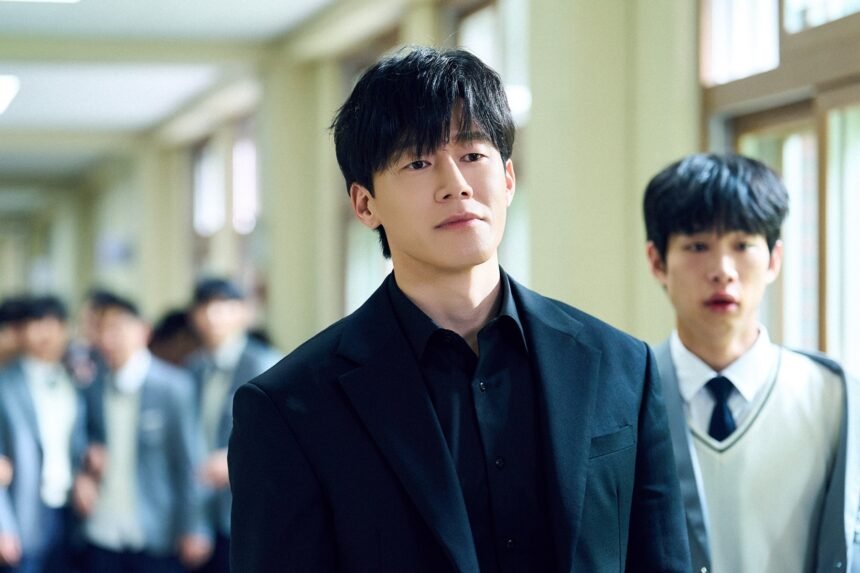
The agency dispatches supervisors into problem schools to dismantle student hierarchies built on intimidation and expose administrative corruption that has allowed bad behavior to fester. At the center of Teach You a Lesson is Na Hwa-jin, a special agent who is efficient, no-nonsense, and genuinely dangerous when the situation calls for it. Alongside him is investigator Im Han-rim, whose wilder approach contrasts with Hwa-jin’s controlled demeanor in a way that creates real chemistry and occasional humor.
The series follows an episodic structure where each entry focuses on a new school and a new crisis—a spoiled politician’s son terrorizing classmates in episode one. A teen influencer falsely accuses teachers in episode three. An obsessive mother feeds her pre-med son illicit pills in episode eight. Each case that Teach You a Lesson brings to the screen feels ripped from real anxieties about modern education, and that grounding in recognizable frustration is part of why the show works so well.
While the individual cases form the backbone of Teach You a Lesson, a larger political conspiracy slowly builds beneath the surface, connecting the bureau’s enemies in ways the team does not fully see until the final episodes. It gives the series a momentum that goes beyond the case-of-the-week format and rewards patient viewers.
Cast and Characters: The Performances That Make It Work
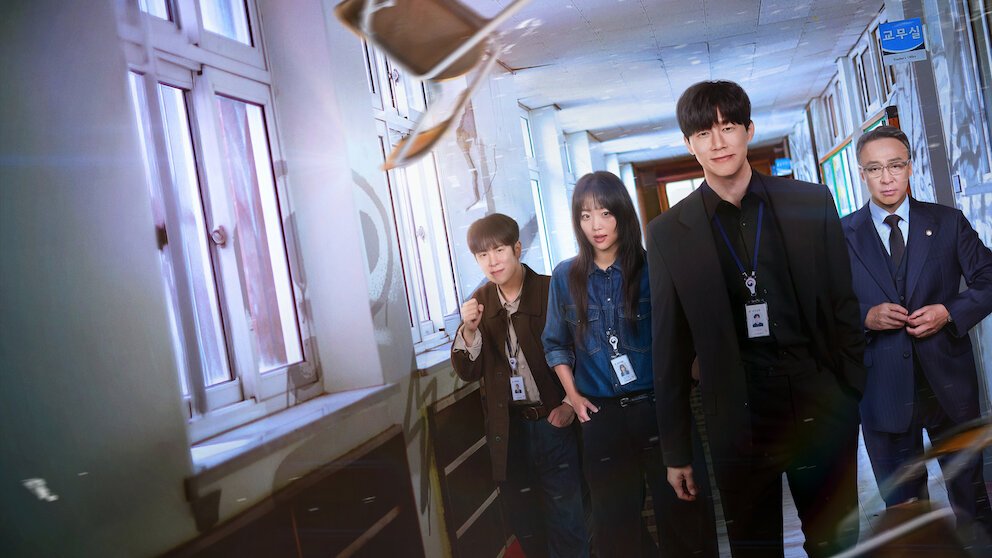
Teach You a Lesson brings together a cast that elevates the material at every turn.
Kim Mu-yeol plays Na Hwa-jin, the lead inspector and special agent of ERPB. Kim Mu-yeol brings a quiet intensity to the role that makes Hwa-jin feel genuinely formidable without turning him into a caricature. Viewers who remember him from Juvenile Justice will recognize the same disciplined screen presence, now paired with more action-oriented material.
Lee Sung-min plays Choi Gang-seok, the head of the bureau and the political operator who keeps the agency alive despite constant pressure from powerful enemies. Lee Sung-min is a veteran of Korean drama, and he anchors the institutional side of Teach You a Lesson with the kind of effortless authority that only comes from serious craft.
Jin Ki-joo plays Im Han-rim, the team’s investigator who brings energy, unpredictability, and warmth to a show that could easily tip into relentless grimness. Jin Ki-joo is a genuine highlight of Teach You a Lesson, and her character’s undercover work in episode nine stands out as one of the season’s most entertaining sequences.
Pyo Ji-hoon plays Bong Geun-dae, a quieter member of the team whose unassuming nature makes him surprisingly effective in the field. Pyo Ji-hoon gives the character a grounded likability that serves as a useful counterpoint to Hwa-jin’s intensity.
The show is directed by Hong Jong-chan and written by Lee Nam-kyu, Kim Da-hee, and Moon Jong-ho, based on the webtoon Get Schooled. The creative team handles the balance between serious subject matter and crowd-pleasing action sequences with real skill, never letting Teach You a Lesson become gratuitously grim or irresponsibly shallow.
Ratings: What Critics and Audiences Are Saying
Teach You a Lesson has connected strongly with viewers since its premiere. On Rotten Tomatoes, the series currently holds an 89% Tomatometer score based on early critic reviews, a solid endorsement for a genre show tackling thorny social territory.
Critics have described Teach You a Lesson as an enjoyable watch that looks great and is acted superbly, noting that the series is well-written and leaves viewers engrossed in what comes next. One critic called the overarching story fascinating and unexpected. Another pointed out that Teach You a Lesson tries to have fun while delivering its message about bullying and education issues in South Korea, and that it succeeds more often than not.
Not every critic is fully convinced. One reviewer who described herself as a longtime K-drama viewer found the show somewhat shallow in places and felt it struggled with some double standards in how it treats its characters. That is a fair observation, and Teach You a Lesson is not a show that pretends to offer nuanced policy analysis. It is more interested in delivering justice with flair than in exploring every shade of gray.
On IMDb, audience enthusiasm has been strong. On Rotten Tomatoes, audience reviews have been glowing, with viewers calling Teach You a Lesson one of the best K-dramas of 2026, praising the acting, the fast-paced storytelling, and the emotional payoff of watching bad behavior finally meet consequences. Comments range from calling it absolute cinema to meaningful television that reflects what teachers and students experience every day.
The series is rated TV-MA, meaning it does not shy away from intense bullying sequences, violence, and mature themes. Parents should take that into account if younger viewers are in the household.
What teaches you a lesson gets it right.
The single biggest strength of Teach You a Lesson is pacing. The show never lingers. Each episode is tight, purposeful, and ends with a sense of resolution that makes the viewing experience feel genuinely satisfying rather than endlessly deferred. In a television landscape full of shows that stretch thin premises across too many hours, Teach You a Lesson knows what it is and delivers it cleanly.
The action sequences are well-choreographed and believable within the show’s logic. Hwa-jin is not a superhero. He is a trained operative using skill and preparation, and the show is careful to show the limits of what he can do alone versus what the team can accomplish together.
The social commentary in Teach You a Lesson is also handled with more intelligence than the premise might suggest. The show acknowledges that the problems ERPB is dispatched to solve are symptoms of deeper failures, including absent parents, administrative cowardice, class privilege, and systemic corruption. It does not pretend that punching a bully solves structural inequality. But it also makes the argument, convincingly, that some situations require someone to show up and say enough, finally.
As Paradox Media has noted in coverage of global streaming trends, Korean drama has become one of the most consistent sources of quality genre storytelling on Netflix, and Teach You a Lesson is a strong example of why that reputation holds.
What Could Have Been Better
Teach You a Lesson is not a perfect show, and it is worth being honest about where it falls short. The episodic structure, while satisfying on a case-by-case basis, can feel repetitive by the midpoint of the season. The formula of arriving at a school, assessing the situation, dismantling the hierarchy, and restoring order repeats with enough regularity that some viewers may feel they have seen the moves before.
There are also moments where Teach You a Lesson simplifies complex situations in ways that feel convenient. The villains are often painted clearly and without much ambiguity, which makes the victories feel clean but occasionally rings false. Real school dynamics are messier, and the show sometimes sacrifices that messiness for the satisfaction of a clear win.
The female characters, particularly Im Han-rim, are strong presences, but a critic’s observation about double standards in the writing is not without merit. A deeper look at how the show frames gender and authority within its school settings might reveal some unexamined assumptions.
These are not dealbreakers. They are the kinds of limitations you often find in shows that are trying to be entertaining first and challenging second. Teach You a Lesson knows what it is and delivers reliably within those parameters.
Should You Watch Teach You a Lesson?
If you are someone who has ever felt frustration at watching bad behavior go unchecked, whether in a school, a workplace, or any institution where power is abused, Teach You a Lesson will scratch an itch you probably did not know needed scratching.
The show is a genre of television operating at a high level. It is fast, well-acted, emotionally intelligent in its best moments, and consistently entertaining. Teach You a Lesson manages the rare trick of making social commentary feel like action entertainment rather than a lecture, and the performances from Kim Mu-yeol, Lee Sung-min, Jin Ki-joo, and Pyo Ji-hoon give it the credibility to land its more serious punches.
Teach You a Lesson is already being discussed as one of 2026’s standout Netflix originals in the Korean drama space, and that conversation feels earned. If you have been looking for a show that moves quickly, delivers genuine satisfaction, and leaves you thinking about why schools sometimes fail the people inside them, Teach You a Lesson is exactly what you need right now.
Quick Story Summary
When South Korea passes the Teacher Rights Protection Act after years of escalating school violence and collapsing classroom authority, the government creates the Educational Rights Protection Agency. Special inspector Na Hwa-jin, played by Kim Mu-yeol, is dispatched to the most troubled schools in the country alongside investigator Im Han-rim, played by Jin Ki-joo, and supported by bureau chief Choi Gang-seok, played by Lee Sung-min. Together with the unassuming but effective Bong Geun-dae, played by Pyo Ji-hoon, the team confronts school gangs, corrupt administrators, abusive parents, and student influencers who have never faced real consequences.
But beneath the individual cases lies a dangerous political conspiracy that threatens to destroy the bureau before it can finish its work. Teach You a Lesson asks a simple question and answers it with action: what happens when someone finally shows up and refuses to look the other way?