


Article Highlights / Key Points
- Larry Page co-founded Google in 1998 alongside Sergey Brin while both were PhD students at Stanford University.
- As of 2025, Larry Page’s net worth is estimated at over $140 billion, making him one of the wealthiest individuals on the planet.
- Larry Page served as Google’s CEO twice and later became CEO of Alphabet Inc., Google’s parent company, before stepping down in 2019.
- Beyond Google, Larry Page has invested heavily in futuristic ventures, including flying-car companies and life-extension research.
- Larry Page is known for his unconventional leadership style, deep focus on moonshot thinking, and long-term vision for technology.
Why Larry Page Still Matters
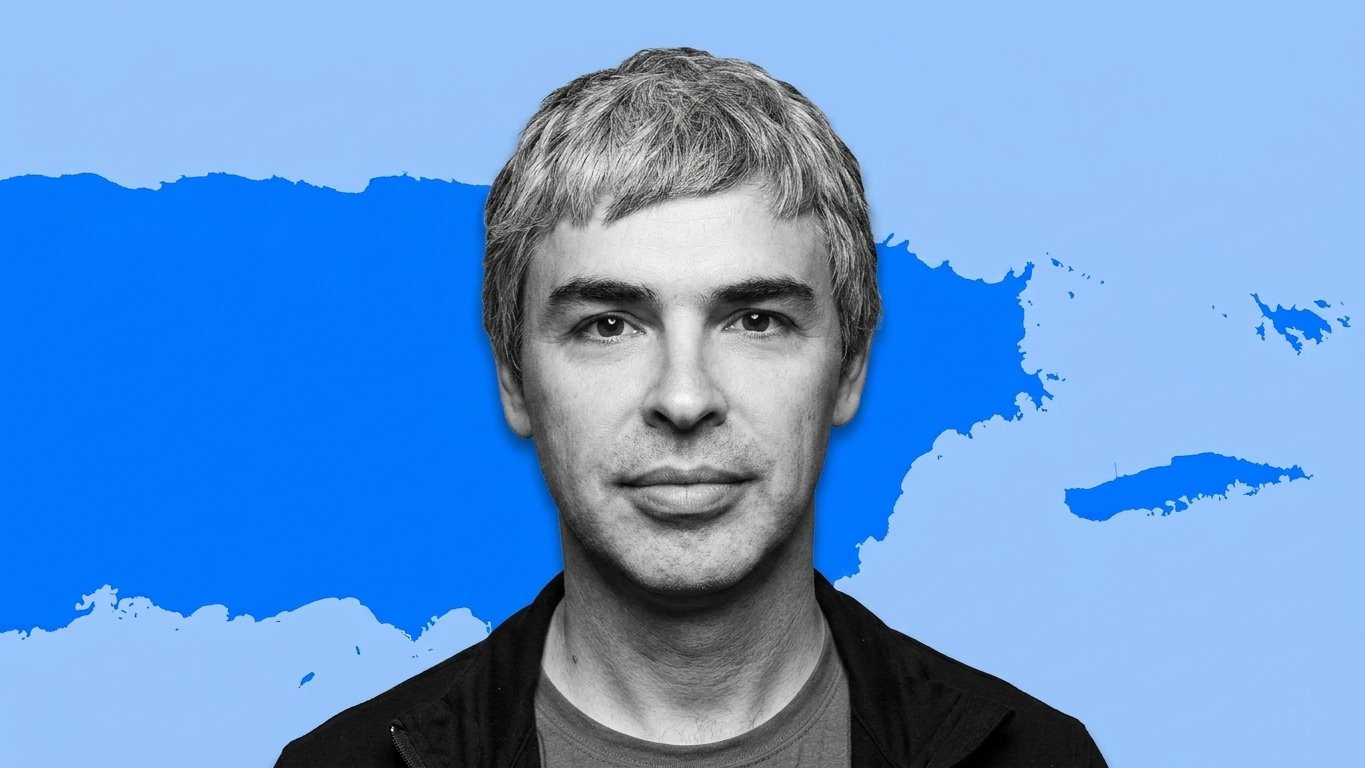
When people think about the internet age, a few names come to mind immediately. Larry Page is absolutely one of them. As the co-founder of Google and one of the primary forces behind Alphabet Inc., Larry Page did not just build a company. He helped reshape how the entire world finds, shares, and processes information. Today, his name is synonymous with innovation, wealth, and a quiet but relentless ambition to solve the world’s hardest problems.
At Paradox Billionaires, we take a close look at figures like Larry Page because their stories go far beyond money. They reveal how curiosity, timing, courage, and a willingness to think differently can turn a graduate school project into a global empire worth trillions.
Early Life and Family Background
Lawrence Edward Page was born on March 26, 1973, in East Lansing, Michigan. He grew up in an academic household where technology and science were part of everyday conversation. His father, Carl Victor Page Sr., was a computer science professor at Michigan State University and a pioneer in artificial intelligence research. His mother, Gloria Page, taught computer programming at the same institution.
This environment played a huge role in shaping who Larry Page would become. From a very young age, he was surrounded by computers, academic journals, and people who believed that technology could change the world. By the age of six, he was already experimenting with early personal computers, and by the time he reached middle school, he was thinking about problems most adults would not dare to touch.
Larry Page has spoken publicly about how his father inspired his love for technology, and his mother influenced his structured thinking. Growing up in that environment was not just helpful; it was transformational.
Education: Where the Google Idea Was Born
Larry Page completed his undergraduate degree in computer engineering from the University of Michigan in 1995. During his time there, he stood out as someone who not only studied technology but also thought deeply about its future applications. He was also a leader outside the classroom, serving in student government and showing an early interest in systems and how things could be made to work better.
After Michigan, Larry Page enrolled in the PhD program at Stanford University in 1995. This is where everything changed. It was at Stanford that Larry Page met Sergey Brin, a fellow PhD student who would become his business partner and co-founder of Google. Their initial dynamic was reportedly competitive. Brin was assigned to show Page around the campus, and the two argued about nearly everything. That intellectual friction, however, turned into one of the most productive partnerships in modern history.
Larry Page began working on a research project he called “BackRub,” which focused on understanding relationships among websites through their backlinks. The insight was simple but powerful. If many other high-quality websites linked to a website, it was likely more authoritative and relevant. This concept became the foundation of PageRank, the algorithm that made Google’s search engine dramatically more accurate than anything else available at the time.
The Founding of Google
In 1998, Larry Page and Sergey Brin officially incorporated Google in a garage in Menlo Park, California. The name was a play on the mathematical term “googol,” referring to the number 1 followed by 100 zeros. It was a subtle nod to the massive scale of information they intended to organize.
The early years were scrappy but exciting. Larry Page and Brin ran the company with a clear philosophy: build something genuinely useful, and the rest will follow. Google’s search engine quickly became the go-to tool for internet users because it delivered more relevant results than its competitors. Word spread fast, and the company grew rapidly.
By 2000, Google had indexed over one billion web pages, a milestone no other search engine had reached. In 2001, as Google began attracting serious investor attention, the board brought in Eric Schmidt as CEO to provide experienced executive leadership. Larry Page moved to the role of President of Products, and Brin became President of Technology. The three formed a leadership triumvirate that guided Google through its most explosive growth years.
Google Goes Public and Changes Everything
In August 2004, Google held its initial public offering on the NASDAQ. The IPO was unconventional in almost every way, reflecting the personalities of Larry Page and his co-founder. Instead of the traditional investment bank-driven process, they used a Dutch auction format to give ordinary investors a fair shot at buying shares.
The IPO raised around $1.67 billion and valued the company at nearly $23 billion. Overnight, Larry Page became a billionaire. More importantly, Google now had the capital to expand its ambitions well beyond search.
Over the following years, Google launched or acquired products that became central to the daily lives of billions of people. Gmail, Google Maps, YouTube, Android, Google Docs, and Chrome all emerged during this period. Larry Page was directly involved in many of these decisions, always pushing for products that were not just improvements on existing tools but genuine leaps forward.
Larry Page as CEO: Leading Google Into a New Era
In 2011, Larry Page returned as Google’s CEO, taking over from Eric Schmidt. A sharper focus marked his second stint at the top, faster decision-making, and a clear push toward what he called “moonshots,” ambitious projects that had the potential to change the world rather than improve existing products fundamentally.
Under Larry Page’s renewed leadership, Google invested aggressively in artificial intelligence, self-driving cars through the Google X lab, life sciences through Calico, and high-speed internet through Google Fiber. He was not interested in running a company that maintained its position. He wanted Google to be a place that took on challenges most organizations would not even consider.
Larry Page was also known for restructuring the company’s internal culture during this period. He cut projects that lacked a clear purpose, pushed teams to move faster, and was famously demanding about product quality and long-term thinking. His management style was not always conventional, but it was effective.
The Creation of Alphabet Inc.
In August 2015, Larry Page made one of the most significant organizational announcements in tech history. Google would be restructured under a new parent company called Alphabet Inc. This was not just a corporate reorganization. It was Larry Page’s way of creating a structure that could support a diverse portfolio of companies, each with its own focus and leadership, without the constraints of being tied to a single brand or business model.
Under Alphabet, Google remained the core business. Still, it sat alongside ventures like Waymo (self-driving cars), Verily (life sciences), DeepMind (artificial intelligence), Loon (internet via balloons), and Wing (drone delivery). Larry Page became the CEO of Alphabet, while Sundar Pichai took over as CEO of Google.
This restructuring was widely praised as a smart and forward-thinking move. It allowed each subsidiary to operate with more focus and accountability while giving Larry Page the freedom to think at a higher level about where technology and humanity were heading.
Stepping Back from Day-to-Day Leadership
In December 2019, Larry Page made a quiet but significant announcement. He stepped down as CEO of Alphabet, handing that role to Sundar Pichai, who also continued as Google’s CEO. Sergey Brin simultaneously stepped down from his role as Alphabet President. Both men said they felt the company was in capable hands and that they wanted to focus on other interests.
Since then, Larry Page has largely stayed out of the public spotlight. He still holds a significant stake in Alphabet, which keeps him actively invested in the company’s performance, but his day-to-day involvement has reduced considerably. He has been seen at board meetings and reportedly stays in touch with company leadership, but the era of Larry Page running Google as an operating executive has passed.
Larry Page Net Worth
Larry Page’s net worth as of 2025 is estimated at $140- $150 billion, depending on the fluctuating value of Alphabet’s stock. This consistently places him among the top ten wealthiest people in the world, often jostling for position with fellow tech billionaires like Jeff Bezos, Elon Musk, and his own Google co-founder, Sergey Brin.
The vast majority of Larry Page’s wealth comes from his shareholding in Alphabet Inc. He holds both Class A and Class B shares, with the Class B shares carrying 10 votes each, giving him substantial influence over the company’s direction even as a non-executive.
Over the years, Larry Page has also diversified his personal investment portfolio. He is known to have funded several projects outside Alphabet, particularly in aviation and life-extension research.
Investments and Ventures Beyond Google
One of the most fascinating things about Larry Page is what he chooses to invest in, given his freedom to pursue anything. Flying cars have been a genuine passion of mine. He quietly funded two companies working on electric vertical takeoff and landing aircraft, Kitty Hawk and Opener, years before the broader market showed serious interest in urban air mobility.
Larry Page has also reportedly been a significant financial backer of research into longevity and human lifespan extension. Alphabet’s own Calico project, which focuses on understanding the biology of aging, reflects this personal interest. The idea of using technology and science to extend healthy human life is something Larry Page has spoken about with genuine conviction.
Beyond these areas, Larry Page has maintained a relatively low public profile in philanthropy. Unlike some billionaires who create highly publicized foundations, he has preferred to channel resources into research and for-profit ventures that he believes will have the greatest long-term impact.
Personal Life
Larry Page married Lucinda Southworth in December 2007 on Necker Island, Richard Branson’s private Caribbean retreat. Lucinda is a research scientist and the sister of actress Bridget Moynahan. The couple has two children together.
Larry Page is known to be extremely private about his family life and personal affairs. He rarely gives interviews and is not as active on social media as many tech leaders are. This has contributed to an air of mystery around him, especially since he left his executive role at Alphabet.
Reports have suggested that Larry Page spends considerable time in New Zealand, where he was reportedly granted residency. He has also been seen in various international locations, maintaining a lifestyle that reflects the freedom his extraordinary wealth provides.
Leadership Philosophy and Thinking Style
Anyone who has studied Larry Page closely will tell you that his most distinctive quality is not his intelligence, though that is exceptional. It is his ability to think at a scale that others find uncomfortable. Larry Page has consistently argued that if you aim for a ten percent improvement in something, you are competing with everyone else aiming for the same thing. But if you aim to make something ten times better, you are thinking in a completely different space where innovation becomes possible.
This philosophy, sometimes called “10x thinking,” became a defining principle of Google’s culture under his leadership. It attracted people who were not just talented but genuinely motivated by difficult problems. It also led to failures, because not every moonshot lands. But Larry Page has always argued that the cost of being too cautious is much greater than the cost of occasional failure.
His leadership style has been described as demanding and intensely focused on long-term outcomes rather than short-term metrics. He is not a charismatic public performer in the traditional CEO mold. Instead, he operates with quiet intensity and lets the work speak for itself.
Legacy and Influence on the Tech World
It is almost impossible to overstate Larry Page’s influence on the modern technology industry. Google’s search engine fundamentally changed how people access information. Android became the world’s most widely used mobile operating system. YouTube became the dominant platform for online video. Google Maps transformed navigation. DeepMind produced breakthroughs in artificial intelligence that are reshaping medicine, science, and software development.
All of these things trace back, at least in part, to decisions and directions that Larry Page either initiated or strongly influenced. His belief that technology should solve real problems at a massive scale has inspired an entire generation of entrepreneurs and engineers.
Larry Page also helped establish the model of the technology company as a platform for multiple businesses rather than a single product. The Alphabet structure has since been replicated in various forms by other large tech organizations, and it stands as one of his most underappreciated contributions to the industry.
The Quiet Giant of the Technology Age
Larry Page built something that genuinely changed the world, and then he stepped back from the spotlight while his creation continued to grow. That combination of ambition and restraint is rare in any industry. For someone who has accumulated the kind of wealth and influence that Larry Page commands, his relative absence from public life speaks to a man who was always more interested in building things than in being celebrated for building them.
Whether he is funding flying cars, studying human longevity, or quietly advising the leadership of one of the most powerful companies in history, Larry Page remains a defining figure of our era. His story is not just a biography of a billionaire. It is a reminder of what becomes possible when curiosity is taken seriously, and big thinking is treated as a discipline rather than a daydream.